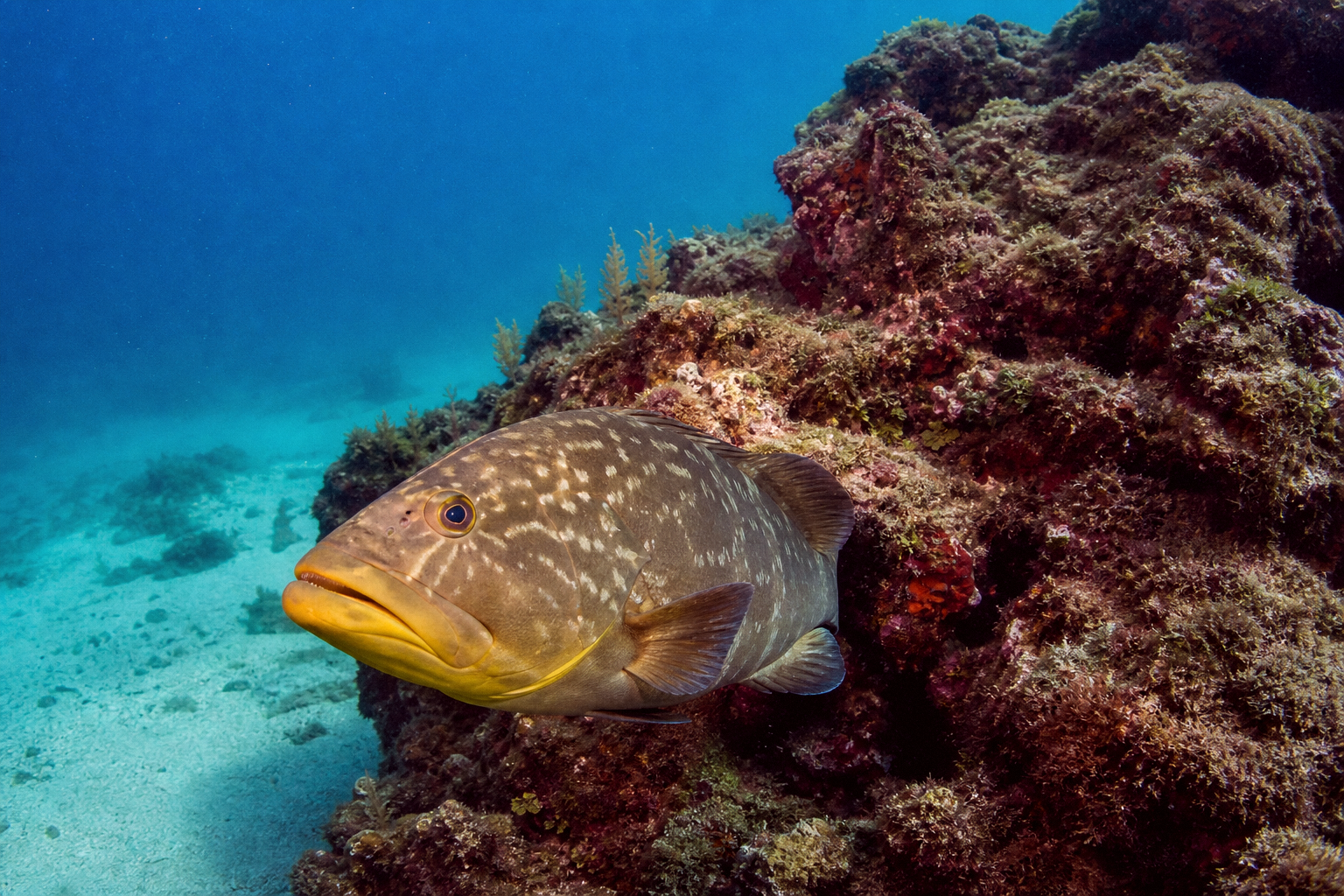
Yellowmouth Grouper
What They Look Like
Yellowmouth grouper are close relatives of the scamp and can be tricky to tell apart — until you look inside the mouth. The interior is a vivid yellow-orange, and the same bright coloration edges the gill covers. The body is tan to grayish-brown with darker mottling and dark fin margins. The snout is elongated and somewhat pointed, similar to scamp. Yellowmouth grouper are relatively uncommon in Virginia waters compared to scamp and gag, which makes them a prized catch for dedicated bottom fishermen. Most run 5 to 15 pounds.
Where They Live
Yellowmouth grouper favor deep rocky structure along the continental shelf edge, typically in 150 to 400 feet of water. They associate with ledges, deep-water wrecks, and rocky outcroppings far offshore. Like other groupers, they’re ambush predators — holding tight to structure and exploding out to seize prey. Their diet consists of small fish, squid, and crustaceans. Yellowmouth are less common than scamp in Virginia waters and are usually caught incidentally while targeting other grouper species on deep-bottom trips.
How to Catch Them
Standard bottom fishing with live or cut bait over deep structure produces yellowmouth grouper. Live pinfish or grunts on heavy bottom rigs — 12 to 20 ounces of lead, 80- to 100-pound leader, 6/0 to 8/0 circle hooks — are effective. Deep jigging with butterfly jigs in the 200- to 400-gram range over high-relief structure can trigger strikes. Because yellowmouth are uncommon, most are caught incidentally while targeting scamp, gag, or other deep-water groupers on the same structure.
What They’ll Eat
Live pinfish and small grunts are the top yellowmouth baits. Cut squid and sardine chunks fished on the bottom also produce. Butterfly jigs in natural color patterns — blue/silver, pink, amber — worked aggressively near structure draw strikes. The same baits and lures that work for scamp grouper work for yellowmouth, since they share the same deep-water habitat.
When and Where in the Chesapeake Region
Yellowmouth grouper are available year-round in deep water but are most commonly caught from May through October. They’re found on the same deep structure as scamp — ledges, wrecks, and hard bottom along the shelf edge in 150 to 400 feet. The deeper wrecks along the 50-fathom curve, the rocky ledges south and east of the Virginia Beach coast, and the shelf-edge structure off the Norfolk Canyon area are the zones where yellowmouth are most likely encountered. They’re a bonus fish on multi-species deep-bottom trips out of Rudee Inlet.
The Rules
Yellowmouth grouper are managed under South Atlantic Fishery Management Council regulations. The minimum size is 20 inches total length. The recreational bag limit falls within the aggregate grouper limit — typically 3 grouper total per person per day, combining all species. The season is open year-round. As with all grouper species, verify current VMRC and SAFMC regulations before fishing.