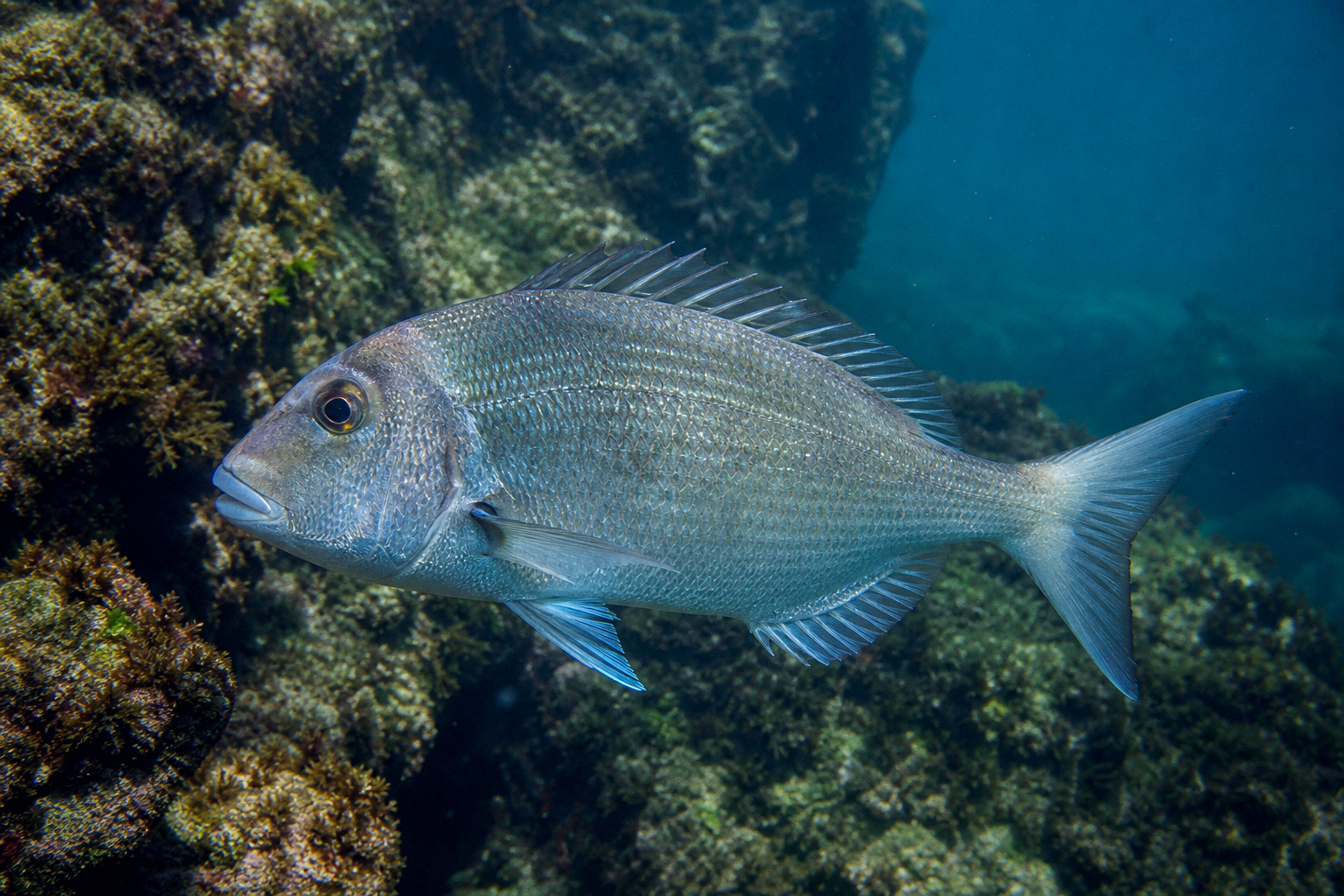
Whitebone Porgy
Appearance
Whitebone porgy are the smallest of the Calamus porgies encountered on Virginia reefs, typically running 10 to 14 inches and rarely exceeding a pound. The body follows the classic porgy template — deep, laterally compressed, silvery with a faint yellowish or brassy cast — but everything about the whitebone is scaled down. The name comes from the noticeably pale, almost white coloration concentrated around the mouth and jaw area. Like its larger cousins, it carries molar-like crushing teeth in the throat for processing shellfish. The absence of pronounced head knobs and the overall smaller, more delicate build separate it from knobbed and jolthead porgies sharing the same piece of structure. It’s the quiet, modest member of the family — easy to overlook but always welcome in the box.
Habitat and Behavior
Whitebone porgy occupy hard-bottom habitat — rocky ledges, coral rubble patches, wrecks, and artificial reef modules — in 50 to 140 feet off the Virginia coast. They mix freely with red porgy, knobbed porgy, and the broader reef fish community. Their diet centers on small crustaceans: crabs, shrimp, sea urchins, and tiny mollusks, all crushed by those pharyngeal teeth. They school, and multiple porgy species are frequently caught on the same drop. Whitebone porgy are rarely the primary target on Virginia bottom trips, but they’re a common and reliable contributor to the mixed reef catch, especially on shallower to mid-depth structure.
Fishing Techniques
A two-hook chicken rig with 3 to 5 ounces of lead is the most effective setup. Because whitebone porgy have relatively small mouths, use hooks in the size 1 to 1/0 range — anything larger and you’ll miss bites. Fish the rig vertically with the weight on the bottom over hard structure. Drift fishing over reef patches covers more ground and helps locate schools. Lighter fluorocarbon leaders in the 20- to 30-pound range can increase bites when the water is clear and the fish are being cautious.
Baits and Lures
Squid strips are the universal porgy bait and work just as well for whitebone porgy. Fresh shrimp is excellent. Bloodworms and small pieces of cut bait also produce. The key is matching bait size to hook size — a small strip of squid on a size 1 hook is ideal. Tipping small jigs with squid is another option when fish are actively feeding up off the bottom rather than hugging the substrate.
Best Times and Locations on the Chesapeake Bay
Whitebone porgy are most commonly caught from May through October when Virginia reef fishing is in full swing. They appear on the same hard-bottom areas off the Virginia Beach coast, the deeper structure near the CBBT, and the central Virginia reefs that produce red porgy, triggerfish, and other reef species. Party and charter boats running bottom trips out of Rudee Inlet and the Virginia Beach waterfront frequently pick up whitebone porgy while targeting larger reef fish. They’re more common on the shallower to mid-depth reefs in 50 to 100 feet than on the deepest drops.
Regulations
Whitebone porgy fall under the Virginia aggregate porgy regulation — typically 10 fish per person per day with a 10-inch minimum size. Regulations are subject to change, so verify current VMRC and SAFMC rules before your trip.