White Hake
What You’re Looking At
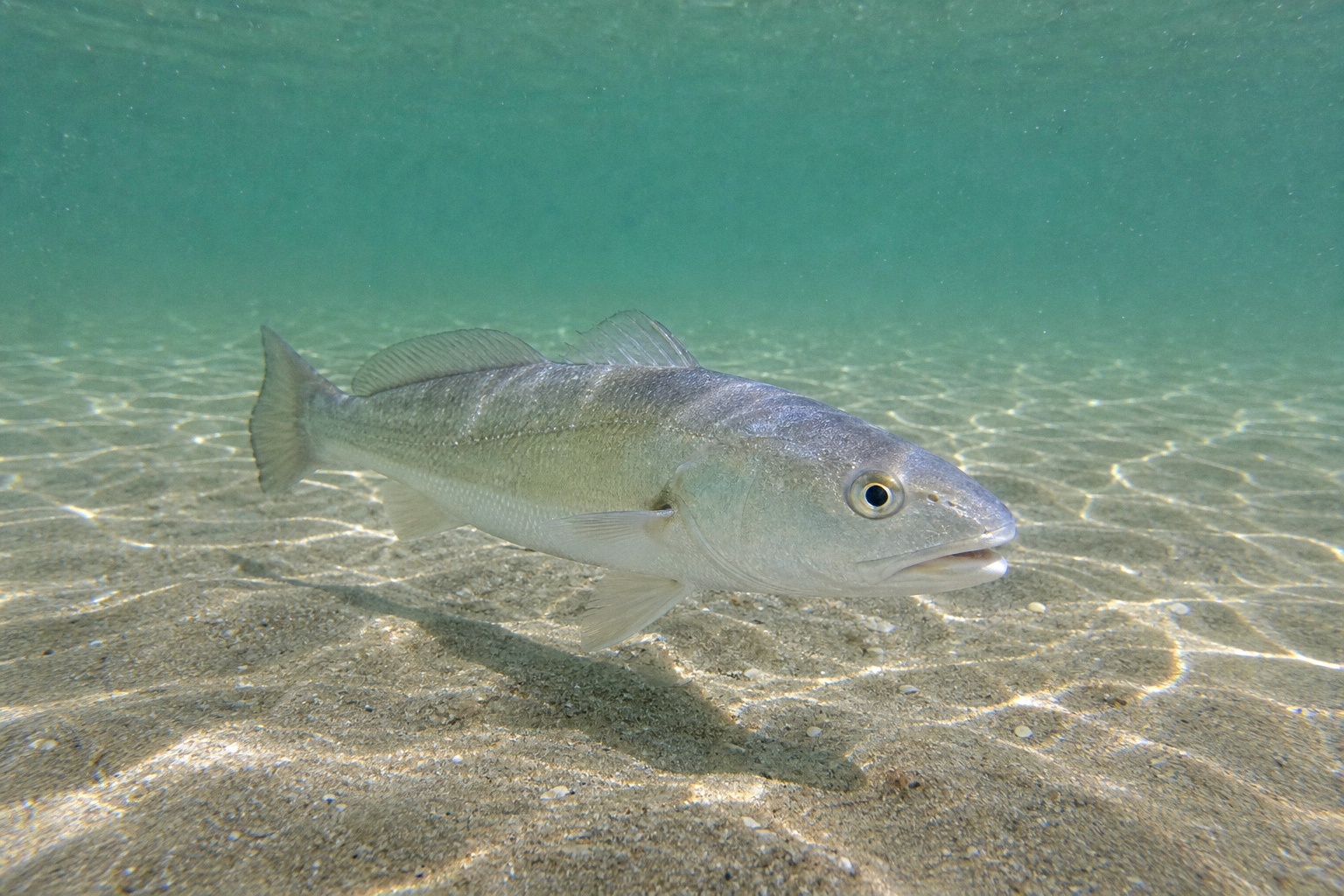
White hake belongs to the cod family and carries the group’s characteristic elongated form — almost serpentine, with a body that tapers gradually from head to tail. The dorsal surface is a muddy reddish-brown to olive, lightening to a silvery-white belly. A small fleshy barbel dangles from the lower jaw, a sensory tool for locating prey in the darkness of deep water. The first dorsal fin stands short and triangular; the second runs long and low, nearly reaching the caudal peduncle. The anal fin mirrors this extended profile along the underside. The pelvic fins are reduced to slender filaments. On the Virginia shelf, most white hake measure 20 to 30 inches and weigh 3 to 8 pounds, though fish exceeding 15 pounds are not unusual. They can be confused with red hake but grow larger, have a more laterally compressed body, and inhabit significantly deeper water.
Where They Live
White hake are creatures of the cold deep — they live on the outer continental shelf and along the shelf break where the seafloor begins its descent into the abyssal plain. Off Virginia, the productive zone lies in 300 to 600-plus feet over soft mud and sand substrate. Winter is their season here; as water temperatures drop, these fish push southward and onto the mid-Atlantic shelf in numbers. They are benthic predators that hunt across the seafloor rather than associating with hard structure. Their diet includes fish, squid, crustaceans, and polychaete worms. Unlike reef-oriented species, white hake roam across open bottom, foraging continuously.
How to Catch Them
Fishing for white hake is a deep-drop operation that demands specialized equipment. Electric reels — Daiwa Tanacom and Lindgren-Pitman models are the standards — handle the repetitive cranking from 300-plus feet. A single or double-hook bottom rig carrying 16 to 32 ounces of lead, depending on depth and current, is the standard terminal setup. Hooks should be stout, size 4/0 to 7/0, and leaders need to be heavy — 80- to 130-pound fluorocarbon — to manage the combination of depth, water pressure, and the fish’s own weight. Drifting is the only practical method since anchoring at these depths is not feasible. The non-negotiable rule: weight must stay on the seafloor. If the lead isn’t bouncing bottom, you’re not in the hake zone.
What to Put on the Hook
Squid is the primary offering — fished as large strips or whole small squid. Cut mackerel, herring, and bonito also produce well. Whole small fish can draw strikes from larger hake. Clam works but is less effective than fish-based baits. Bait size matters: small pieces get picked apart by the army of tiny deep-water scavengers long before a hake finds them. A substantial squid strip or a thick mackerel chunk on a 5/0 hook is a good starting point.
When and Where in the Chesapeake Region
White hake are strictly a winter and early-spring species in Virginia, available from November through April when cold water pushes them onto the mid-Atlantic shelf. The shelf-edge drops off the central Virginia coast — depths of 300 to 600 feet — are the target zone, accessed via dedicated deep-drop trips departing from Rudee Inlet and the Virginia Beach oceanfront. These are specialized excursions, not routine party-boat offerings; they require full-day or overnight trips with captains who know the shelf-edge terrain intimately. Calm winter days with manageable current provide the best conditions for this demanding fishery.
The Rules
White hake do not carry a species-specific recreational bag limit in Virginia but are subject to general finfish regulations. The New England Fishery Management Council manages the commercial fishery, and federal rules may apply in offshore waters. Always verify current VMRC and NOAA Fisheries regulations before targeting deep-water species, as rules for shelf-edge fish can be complex and are periodically updated.