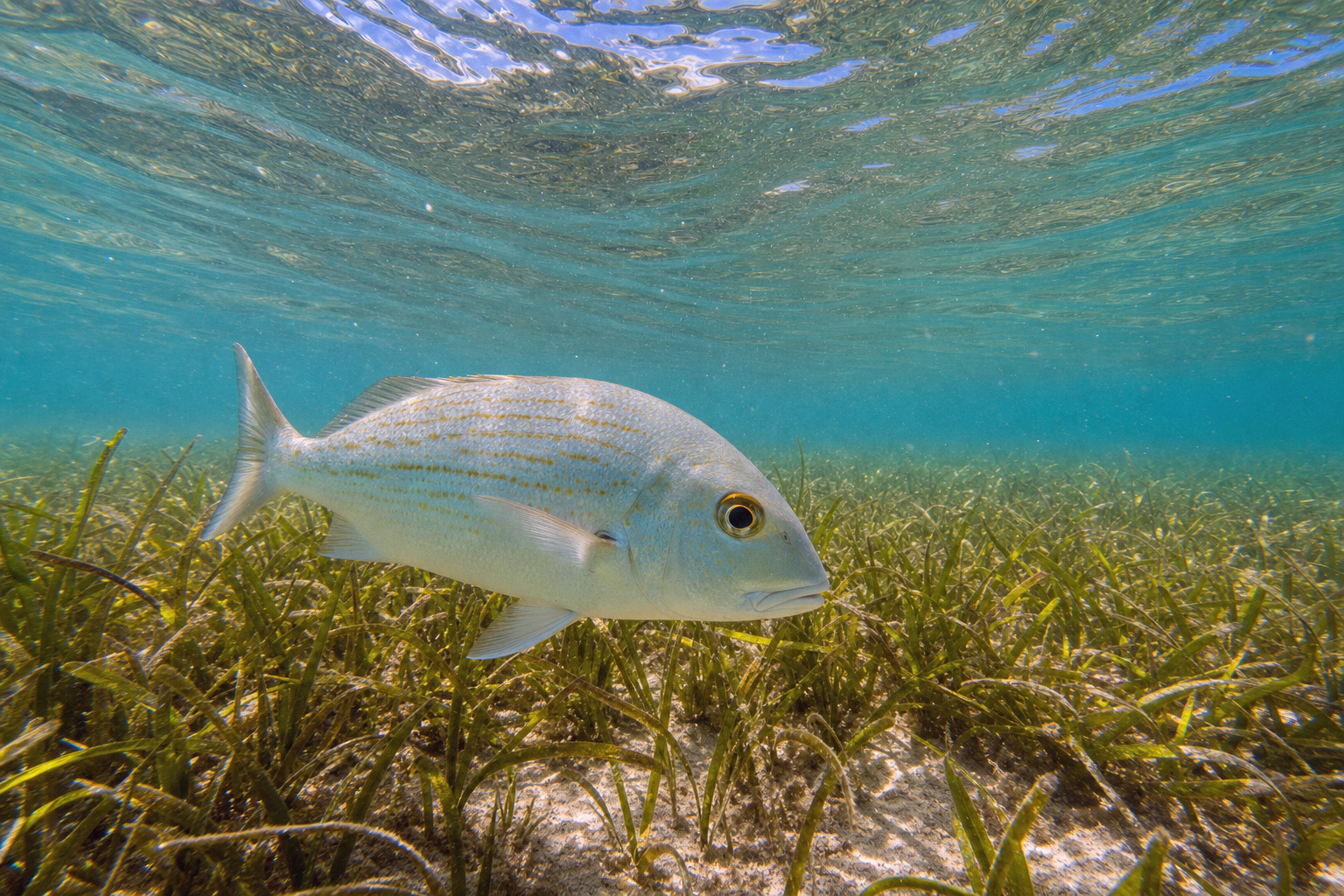
White Grunt
Identification
White grunt are medium-sized reef fish, typically 10 to 15 inches and 1 to 2 pounds, with larger specimens reaching 18-plus inches. The body is elongated and silvery with a subtle yellow-bronze cast, marked by a series of narrow horizontal stripes in yellow or bronze running from head to tail. The diagnostic feature is the inside of the mouth — bright red or orange, visible the moment the fish opens its jaws. The head is blunt, the eyes are small, and the mouth is moderately large. The name “grunt” comes from the grinding sound the fish produces with its pharyngeal teeth when handled — a deep, croaking protest that’s unmistakable on a party boat deck.
Habitat and Behavior
White grunt are structure-dependent fish found on hard-bottom reefs, wrecks, artificial reef modules, and rocky ledges. Off Virginia, they appear on mid-shelf reefs in 60 to 130 feet of water, often mixed in with porgy, triggerfish, and sea bass. They school tightly around structure, and once a school is located, the action is fast and sustained. In their core range further south, grunt are primarily nocturnal feeders, but on Virginia reef trips they bite readily throughout the day. Their diet consists of small crustaceans, shrimp, crabs, small fish, and polychaete worms, all foraged along the bottom near structure.
Fishing Techniques
A standard two-hook bottom rig with 3 to 5 ounces of lead is the primary setup. Hooks in size 1 to 2/0 match the grunt’s medium-sized mouth. Circle hooks work well and reduce deep-hooking. Fish straight down over structure — grunts hold tight to the bottom and around reef edges. Drift fishing over wrecks and hard bottom covers ground and locates schools. White grunt aren’t leader-shy, so standard 30- to 40-pound mono or fluorocarbon leaders are fine. When the bite is on, doubles on a two-hook rig are common.
Baits and Lures
Squid strips are the universal grunt bait and work as well as anything. Fresh shrimp is equally effective and sometimes preferred when grunt are the primary target. Cut mullet or menhaden strips and bloodworms also produce. Keep bait pieces moderate — grunts have decent-sized mouths for reef fish but still benefit from properly sized offerings. Tipping small jigs with squid adds a different presentation that can trigger aggressive strikes from actively feeding fish.
Best Times and Locations on the Chesapeake Bay
White grunt are primarily a warm-water species in Virginia waters, most common from May through October. They’re more frequently encountered on the southern Virginia reefs off the Virginia Beach coast and the deeper structure near the North Carolina line than on the northern reefs off the CBBT, as they’re near the northern edge of their common range. The wrecks and hard-bottom areas in 70 to 120 feet off Rudee Inlet are prime grunt territory. Party boats running bottom trips out of the Virginia Beach waterfront regularly catch white grunt as part of the mixed reef catch, especially during the heat of summer.
Regulations
White grunt do not carry a specific federal bag limit in the South Atlantic region but are managed as part of Virginia’s unclassified reef fish category. Aggregate or state-specific regulations may apply. Always verify current VMRC regulations for the latest size and bag limits before fishing, as reef fish rules are periodically updated.