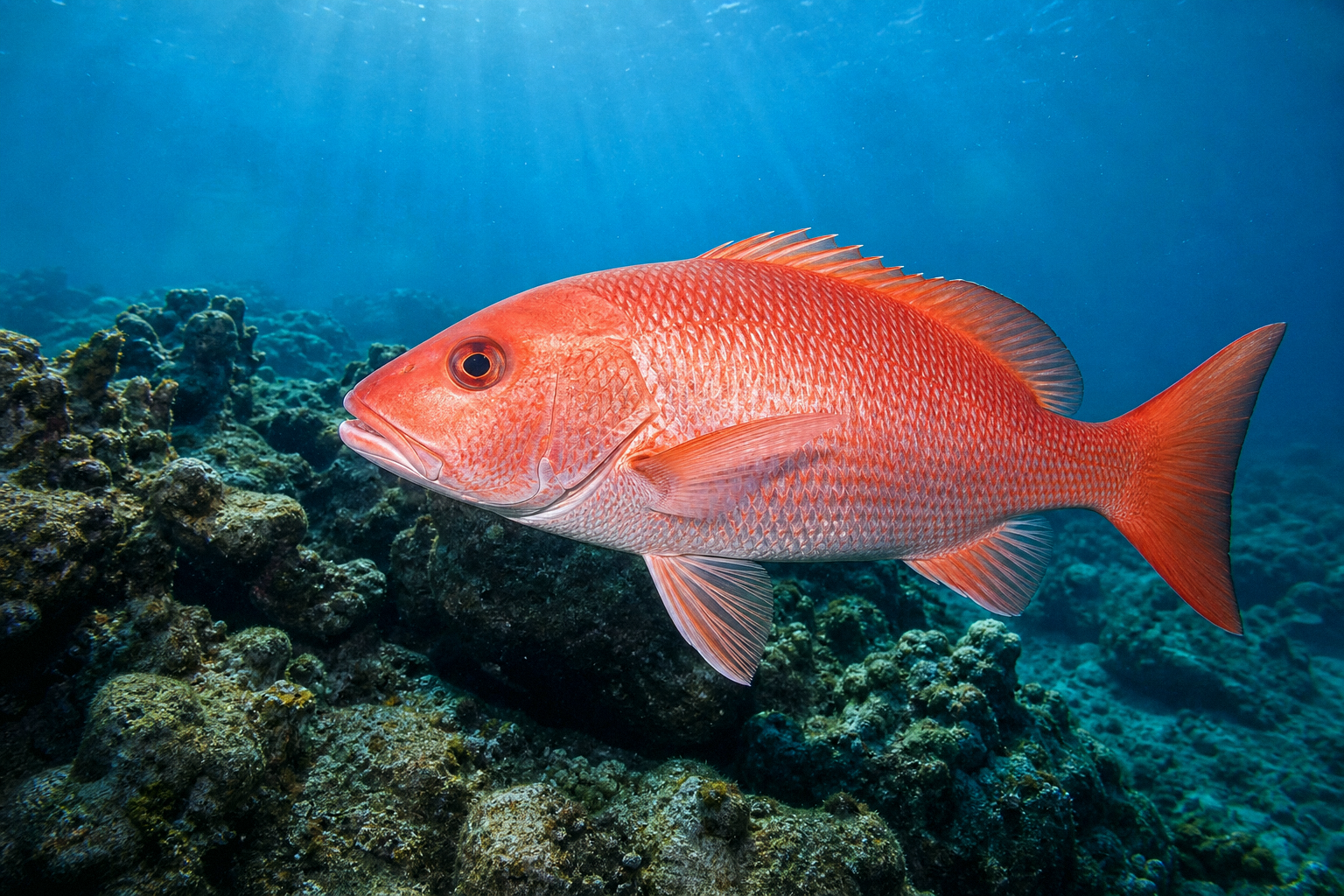
Vermilion Snapper
Identification
Vermilion snapper — “beeliners” to every mate and captain running out of Rudee Inlet — are small, brilliantly colored reef fish. The body is a vivid vermilion red with narrow horizontal stripes of gold or yellow running from gill to tail. The belly fades to pinkish-white, the tail is deeply forked, and the dorsal fin carries a dark margin. Most beeliners run 1 to 3 pounds, with a 5-pounder being exceptional. What they lack in individual size they make up for in numbers and table quality — a good wreck can produce nonstop action, and the fillets are among the finest eating of any bottom fish.
Habitat and Behavior
Beeliners school over hard bottom, wrecks, reefs, and artificial structure in 60 to 300 feet of water. Unlike many bottom species that hug the structure, vermilion snapper often suspend in the water column above it in dense schools. They’re aggressive, competitive feeders — once a school is located, the bite is fast and furious. Their diet consists of small fish, shrimp, squid, and other invertebrates. Beeliners are also a primary forage species for larger predators, and where you find them, grouper and king mackerel are often nearby.
Fishing Techniques
The standard approach is a multi-hook bottom rig — a chicken rig or two-hook setup — with small hooks in size 2 to 2/0 on 30- to 40-pound leader. Drop to the bottom, then slowly retrieve to find the depth where the school is holding. Since beeliners suspend, dialing in the right depth is the key to fast action. Vertical jigging with small 1- to 2-ounce jigs tipped with squid is equally effective. Chumming while drifting over structure can lift schools toward the surface and create wide-open bites.
Baits and Lures
Squid strips are the universal beeliner bait — cheap, durable, and irresistible. Cut menhaden or sardine chunks also produce. Small live baitfish, when available, tend to catch larger individual fish. Small bucktail or tube jigs in pink, white, or chartreuse, tipped with a sliver of squid, are excellent for vertical jigging. The cardinal rule: small hooks and small bait pieces. Beeliners have modest mouths and will steal oversized baits without hooking up.
Best Times and Locations on the Chesapeake Bay
Vermilion snapper are available year-round, with the strongest action from May through October. They’re abundant on virtually every offshore wreck, reef, and hard-bottom patch in 60 to 300 feet. The artificial reef sites off the Virginia Beach coast, the deeper wrecks east of the CBBT, and the hard-bottom ledges along the 30-fathom curve all hold solid beeliner populations. Party boats running bottom trips out of Rudee Inlet and the Virginia Beach waterfront regularly fill coolers with these fish. They’re a staple of the mixed-bag bottom catch, often making up the bulk of the take on a good day.
Regulations
Vermilion snapper are managed under the South Atlantic Fishery Management Council. The minimum size is 12 inches total length. The recreational bag limit is 10 per person per day within the snapper aggregate, which may include vermilion, silk, queen, and other snapper species. The season is open year-round. Commercial harvest is quota-managed. Always verify current VMRC and SAFMC regulations before fishing.