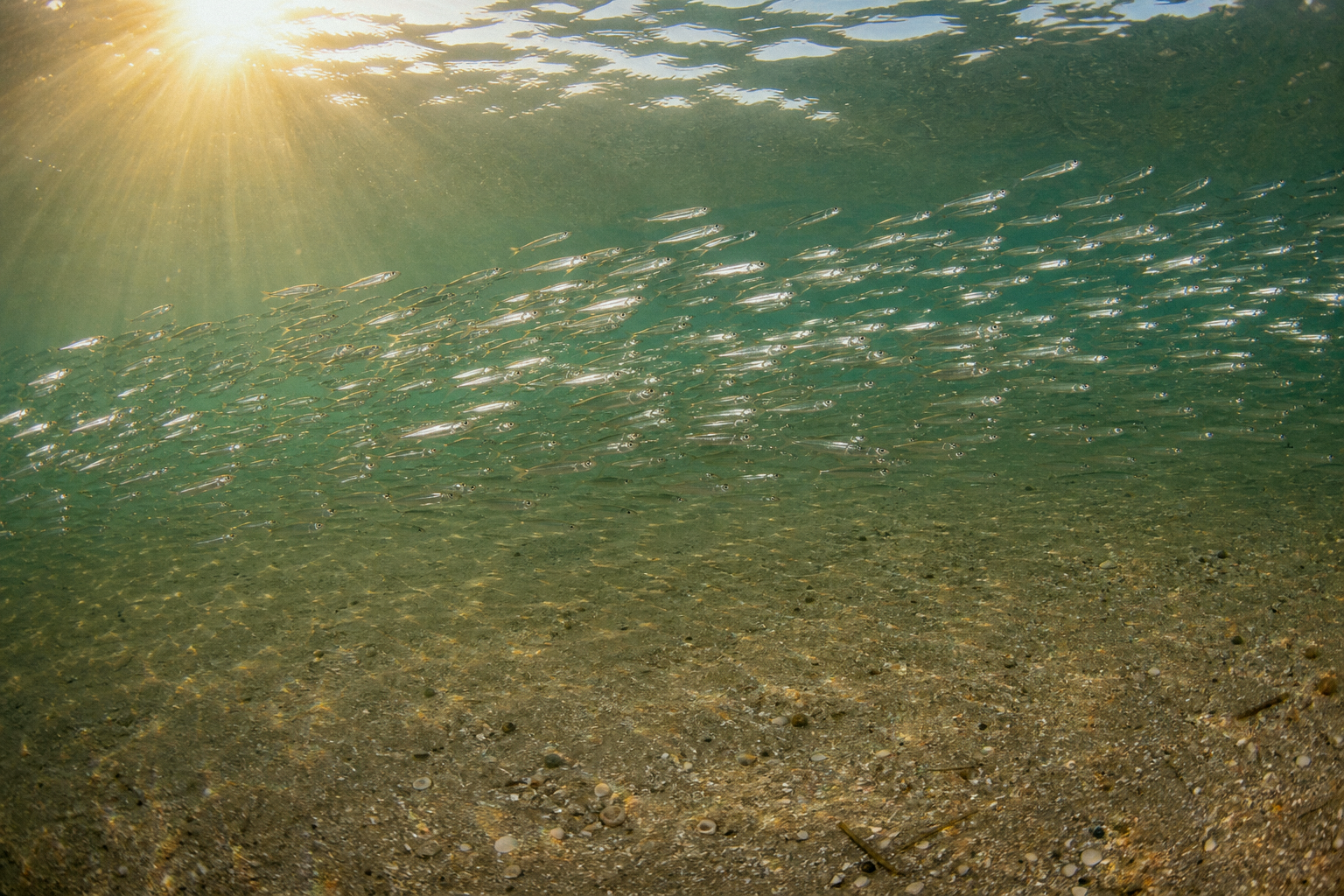
Silversides (Spearing)
Identification
Silversides — called “spearing” or “minnows” by local anglers — are small, slender baitfish of the genus Menidia. They run 2 to 5 inches long, with a translucent silver body and a bright, mirror-like stripe running the full length of each flank. The mouth is small and slightly upturned. Two species are common in Virginia waters: the Atlantic silverside (Menidia menidia) and the inland silverside (Menidia beryllina). They are nearly identical in the hand — small, quick, and brilliantly reflective — and are among the most visible forage species in the shallows of the lower Chesapeake Bay.
Habitat and Behavior
Silversides are everywhere in Virginia’s estuarine waters — shallow flats, tidal creeks, grass beds, dock basins, and the surf zone. They form dense, shimmering schools that flash and ripple just below the surface, a sight familiar to anyone who has spent time on the water in the Lynnhaven River or Back Bay. They are euryhaline, tolerating salinities from nearly fresh to full salt, which is why they thrive throughout the Chesapeake Bay and its tributaries. Silversides feed on plankton, tiny crustaceans, and organic detritus. They are a critical forage species — speckled trout, flounder, puppy drum, bluefish, and striped bass all key on silverside schools, especially in the shallow grass flats where gamefish ambush them.
Fishing Techniques
Silversides are caught primarily with fine-mesh cast nets — 1/4-inch mesh or smaller — in shallow creeks and along grass flats where they school. Dip nets work well when fish are concentrated against banks or in tidal pools. Sabiki rigs tipped with tiny bits of shrimp or fish belly can catch silversides around docks and piers. In the surf, silversides can sometimes be scooped with a dip net when wash pools concentrate them at high tide. For fly anglers, tiny white flies in size 10 to 14 on a slow retrieve can catch silversides, though most anglers simply net them.
Baits and Lures
Silversides are not caught with conventional bait — they are too small and are plankton-feeders. But as bait, they are exceptional. Live silversides fished on a small hook, size 4 to 8, under a float rig are deadly for speckled trout in the shallows, particularly around grass beds in the Lynnhaven River and the lower Bay. They are also excellent live bait for flounder when fished on a bottom rig or Carolina rig near creek mouths. Dead silversides are used as cut bait for smaller species and can be added to chum mixtures to attract speckled trout and puppy drum. Many Virginia anglers match the hatch with small silver lures — 2-inch paddletail jigs or silver spoons — when silversides are the dominant forage.
Best Times and Locations on the Tidewater region
Silversides are present year-round but are most active and abundant from spring through fall. In the lower Chesapeake Bay, the grass flats behind the Eastern Shore — particularly around the Lynnhaven River, Sandbridge, and the marsh creeks feeding Back Bay — hold thick schools of silversides from April through October. The shallow creeks around the Nansemond River and the Elizabeth River are also prime spearing territory. In the surf zone, silversides move through the wash on rising tides, drawing speckled trout and bluefish behind them. For catching your own, the small creeks off the lower Bay at low tide often concentrate silversides in deeper holes, making them easy targets for a cast net.
Regulations
There are no specific recreational bag limits or size restrictions for silversides in Virginia waters. Standard cast net regulations — mesh size, radius limits — apply depending on the water body. Some designated nursery areas and certain Bay waters have restrictions on net use — always check VMRC regulations for the specific area you plan to fish. Purchased frozen spearing from bait shops is always an option when live silversides cannot be caught.