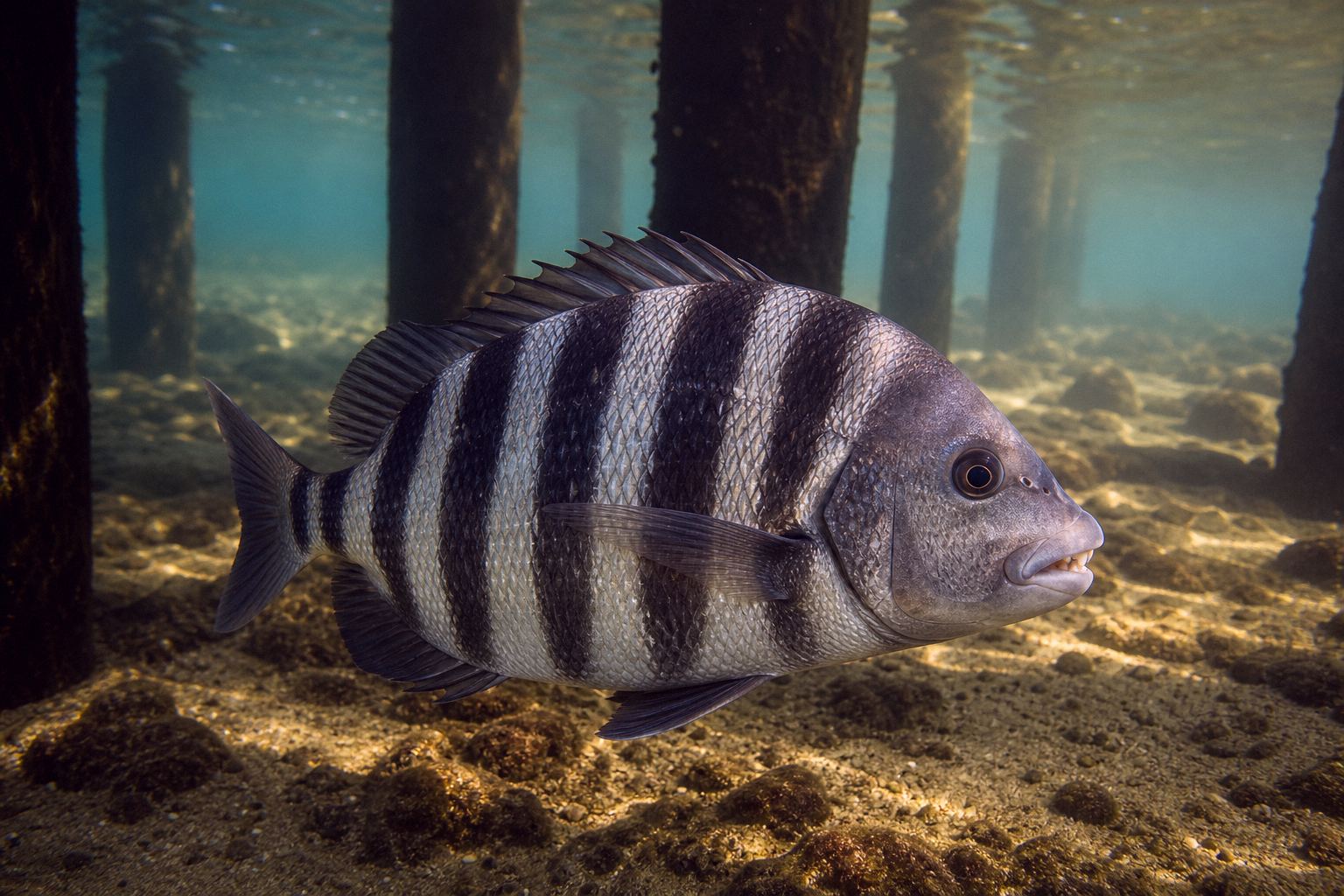
Sheepshead
Identification
Sheepshead are the “convict fish” of the porgy family — a deep, slab-sided body dressed in silvery-gray with five to seven bold black vertical bars that make identification instant. The back is darker than the belly, and the bars are sharpest on younger fish. What truly sets sheepshead apart is their dentition: prominent, human-like incisors in the front of the mouth, backed by flat molar-like teeth designed for crushing shells. It’s an unsettlingly familiar grin. In Virginia waters, sheepshead typically run 12 to 20 inches and 1 to 5 pounds, though larger fish are caught around inlet jetties and nearshore structure.
Habitat and Behavior
Sheepshead are structure specialists. They are almost never found in open water — they live tight against pier pilings, jetty rocks, bridge abutments, and wreckage. Their diet revolves around hard-shelled prey: barnacles scraped from pilings, mussels, crabs, and shrimp. Those specialized teeth allow them to crush shells that other fish can’t handle. In Virginia, sheepshead appear in late spring and stay through early fall, with the CBBT rock islands and bridge structure, the jetties at Rudee Inlet and Little Creek, and the pilings of the Ocean View and Buckroe piers all holding fish.
Fishing Techniques
Sheepshead fishing is a game of finesse and proximity. The standard rig is a Carolina rig or simple bottom setup with a size 1 to 1/0 hook and just enough weight — 1/2 to 2 ounces — to get the bait down alongside the structure. The bait must be placed directly against the piling or rock face. Many experienced sheepshead anglers use a float rig to suspend bait at a precise depth next to pilings. The bite is famously subtle: sheepshead rarely slam a bait. Instead, they mouth it lightly, and the old saying holds true — “set the hook before you feel the bite.” Watch the line for the slightest twitch or movement and strike immediately. Hesitate, and the bait is gone.
Baits and Lures
Fiddler crabs are the gold standard. Collected from mud flats and marsh edges around the Lynnhaven River and Back Bay, a fiddler crab hooked through the body and lowered next to a piling is nearly irresistible. Barnacles scraped from the pilings themselves and fished on a small hook are also excellent. Fresh shrimp will catch sheepshead but also draw attention from every other species in the area. Small pieces of clam work as well. The common thread is small, hard-shelled baits that match the sheepshead’s natural diet. Artificial lures are generally ineffective.
Best Times and Locations on the Tidewater region
Sheepshead appear in Virginia waters by late May and remain through October, with July through September being peak months. The CBBT complex — both the rock islands and the bridge pilings — is the region’s premier sheepshead destination. The jetties at Rudee Inlet and Little Creek hold fish, as do the pilings of the Ocean View, Buckroe, and Virginia Beach Fishing Piers. Nearshore wrecks and artificial reefs also hold sheepshead for boat anglers. Fishing the slack tide is often most productive, as sheepshead are more likely to feed actively around structure when the current isn’t ripping. Look for pilings thick with barnacle growth — that’s sheepshead habitat.
Regulations
Sheepshead are managed by the Virginia Marine Resources Commission. The minimum size limit is 12 inches total length. The recreational daily bag limit is 10 fish per person. There is no closed season. Always verify current VMRC regulations, as size and bag limits can be updated.