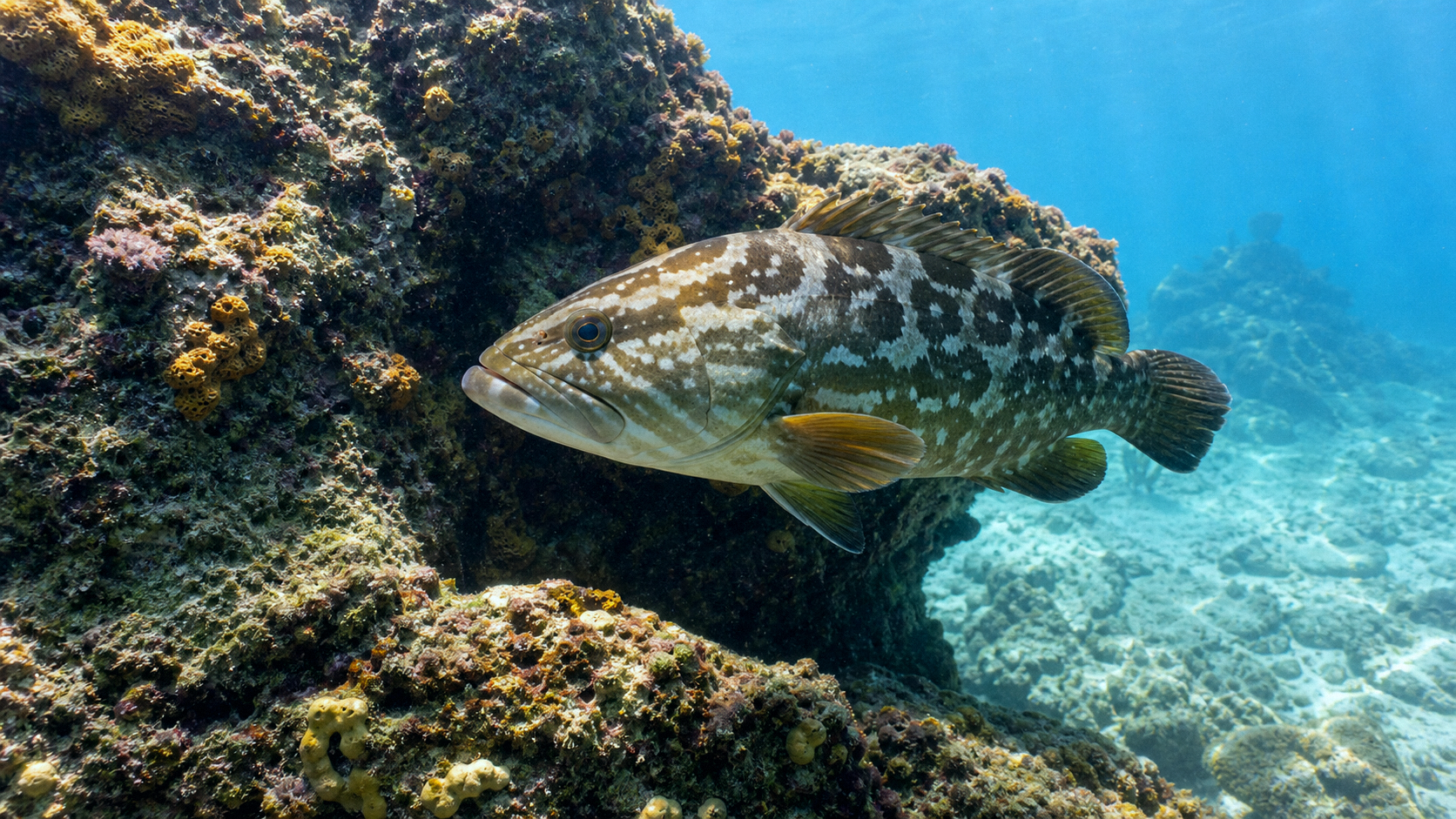
Scamp Grouper
Identification
Scamp are the most streamlined of the groupers encountered off Virginia, with an elongated body and a noticeably pointed snout that sets them apart from the heavier, blockier gag and red grouper. The coloration is a mottled reddish-brown to gray, with darker blotches and fin margins edged in black. The tail is slightly concave, and the lower jaw projects just beyond the upper. Scamp are often confused with yellowmouth grouper but lack the vivid yellow-orange interior of the mouth that gives that species its name. In Virginia offshore waters, scamp typically run 5 to 20 pounds.
Habitat and Behavior
Scamp favor deeper water than most other grouper species on the Virginia shelf, typically holding in 150 to 400 feet along the continental slope. They associate with high-relief hard bottom — deep-water wrecks, rocky ledges, and the steep faces of shelf-edge dropoffs. Scamp are ambush predators that press tight against structure, launching short, explosive attacks on passing prey before retreating into cover. Their diet consists of small fish, squid, and crustaceans. Like other groupers, scamp are protogynous hermaphrodites, beginning life as females and transitioning to males with age.
Fishing Techniques
Bottom fishing with live or cut bait over deep structure is the primary method. A heavy bottom rig with 12 to 20 ounces of lead, an 80- to 100-pound leader, and a 6/0 to 8/0 circle hook is the standard approach. Scamp hold extremely tight to structure, so heavy tackle is needed to muscle fish away from cover before they can reach a hole. Deep jigging with butterfly jigs in the 200- to 400-gram range is increasingly popular and effective — the vertical drop puts the jig directly into the strike zone where scamp wait. Jigs worked with sharp upward snaps followed by controlled drops trigger reaction strikes.
Baits and Lures
Live pinfish and small croaker are the top scamp baits. Cut squid and sardine chunks are reliable for consistent action. Butterfly jigs in blue-and-silver, pink, and amber patterns in the 200- to 400-gram range are the top jigging lures. Bucktail jigs tipped with squid strips also produce. Because scamp are in deep water, baits that stay on the hook during the long descent are important.
Best Times and Locations on the Tidewater region
Scamp are available year-round but most are caught May through October during calmer weather. They are found on deep structure along the shelf edge, typically 150 to 400 feet of water. The deep-water wrecks and rocky ledges along the 50-fathom curve southeast of the Chesapeake Bay entrance are prime scamp habitat. Most scamp are caught on multi-species bottom fishing trips from Rudee Inlet and Little Creek charter boats running to the shelf edge.
Regulations
Scamp grouper are managed under the South Atlantic Fishery Management Council. The minimum size is 20 inches total length. The recreational bag limit falls within the aggregate grouper limit, typically 3 grouper total per person per day across all species. The season is open year-round. Commercial trip limits and quotas apply. Check current Virginia Marine Resources Commission and SAFMC regulations before fishing.