Sandbar Shark
How to Identify One
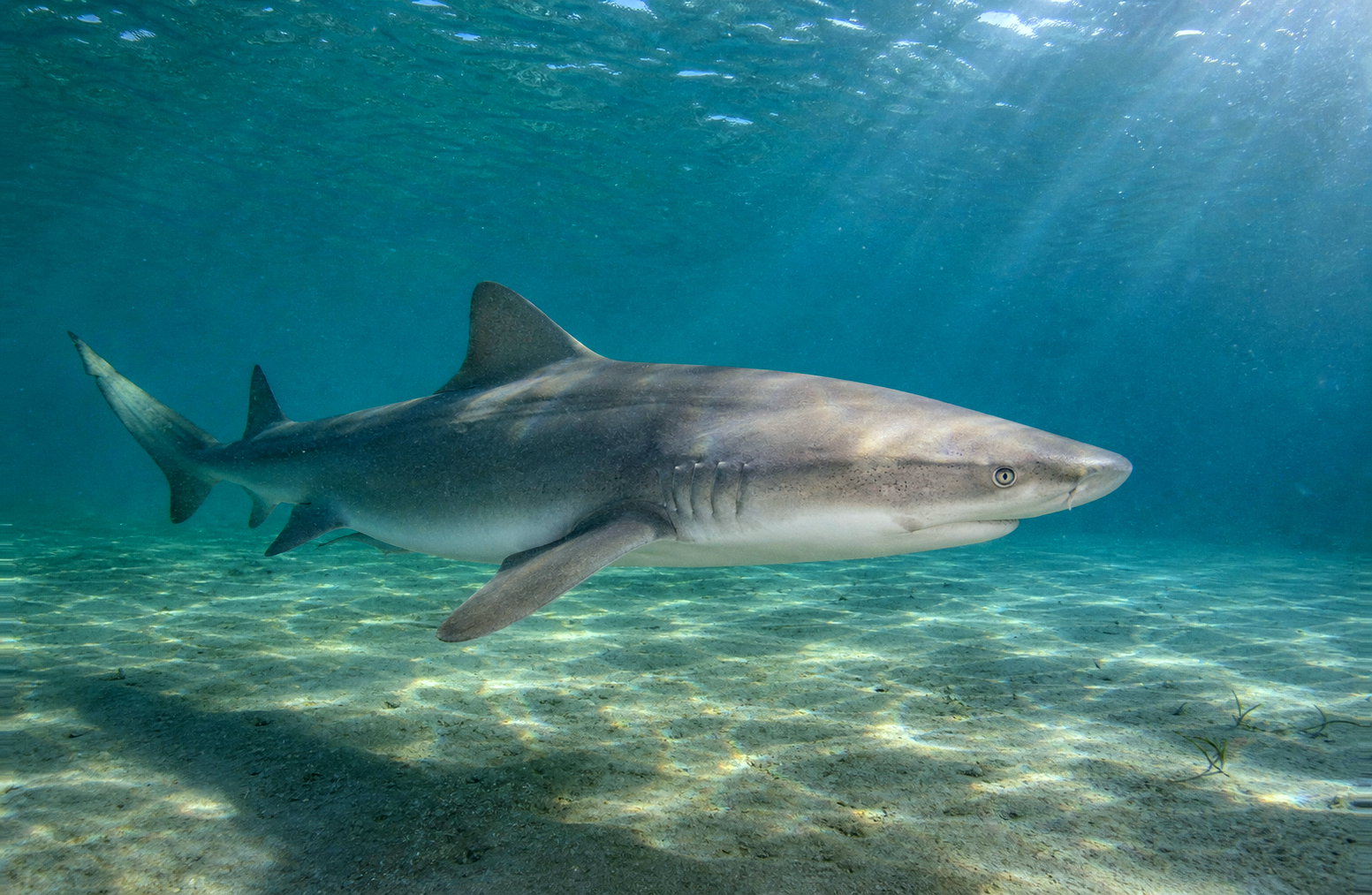
The sandbar shark is the large shark most Virginia surf anglers will encounter — a thick-bodied, heavy-shouldered requiem shark that typically spans 5 to 7 feet, with some individuals approaching 8. The signature feature is unmistakable: an extraordinarily tall, triangular first dorsal fin that originates directly over or just forward of the pectoral fin insertion. No other common Virginia shark carries a dorsal of these proportions. The body is brownish-gray to bronze across the back, fading to white below, with a broad, blunt snout and a stocky, muscular build. Once the fish is alongside, the dorsal alone makes identification straightforward — if it looks like a sail attached to a freight train, it’s a sandbar.
Where They Cruise
Sandbar sharks favor shallow coastal waters, bays, and estuarine environments. In Virginia, they’re found in the surf zone, around sandbars and shoals, and throughout the lower Chesapeake Bay. They are bottom-oriented predators that feed on fish, rays, crabs, and squid. Sandbar sharks are highly migratory, moving north along the coast in spring and south in fall. They tend to stay in water less than 60 feet deep and are often found in the same sloughs as sharpnose and blacktip sharks, though sandbars typically hold closer to the bottom.
The Surf Setup
Surf fishermen targeting sharks on Virginia beaches account for most sandbar encounters. Heavy gear is essential: a 12- to 13-foot rod paired with a 7000- to 8000-size reel, 40- to 50-pound braid, and a wire leader of at least 100-pound test. A fishfinder rig with 6 to 10 ounces of lead keeps baits pinned to the bottom where sandbars feed. Kayak delivery of baits beyond the sandbar is the standard approach at Sandbridge and along the Eastern Shore. Bottom fishing from a charter boat in the lower Bay or along the nearshore ocean waters also produces sandbar sharks. Keep baits on or near the bottom — sandbars are less likely to rise in the water column than blacktips or spinners.
What They’ll Hit
Fresh cut bait is the most effective offering. Large chunks of menhaden, mullet, or bluefish fished on the bottom produce consistently. The oil content and scent trail from fresh bunker is particularly effective. Live baits such as spot or small menhaden can work, but sandbars are primarily scent-driven feeders that respond to the oily trail of cut bait. Use larger bait chunks than you would for sharpnose — a 4- to 6-inch piece of fresh bunker is ideal. The fresher the bait, the better the results.
Prime Season and Spots in Tidewater
Sandbar sharks are present in Virginia waters from May through October, with peak encounters in July and August. Sandbridge is the top surf-fishing location, where the mixing of the Labrador Current and Gulf Stream creates ideal conditions. The Eastern Shore side of the lower Bay and the waters around Kiptopeke also produce sandbar sharks, especially in the deeper channels. The CBBT area and the beaches north of it can hold sandbars in the summer sloughs. Fish at night or during tide changes for the best action. Calm conditions with moderate surf make it easier to hold bottom and detect bites.
The Rules
Sandbar sharks are a prohibited species for recreational harvest in Virginia state waters — catch and release only. They are managed under the large coastal shark complex by NOAA Fisheries and the Atlantic States Marine Fisheries Commission. If you catch a sandbar shark, handle it carefully, keep it in the water, and release it as quickly as possible. If the shark is tagged, record the tag number, location, and date and report it to NOAA Fisheries. Use circle hooks to minimize injury and never remove a sandbar shark from the water for photos. These sharks are slow-growing and have low reproductive rates, making responsible release critical.