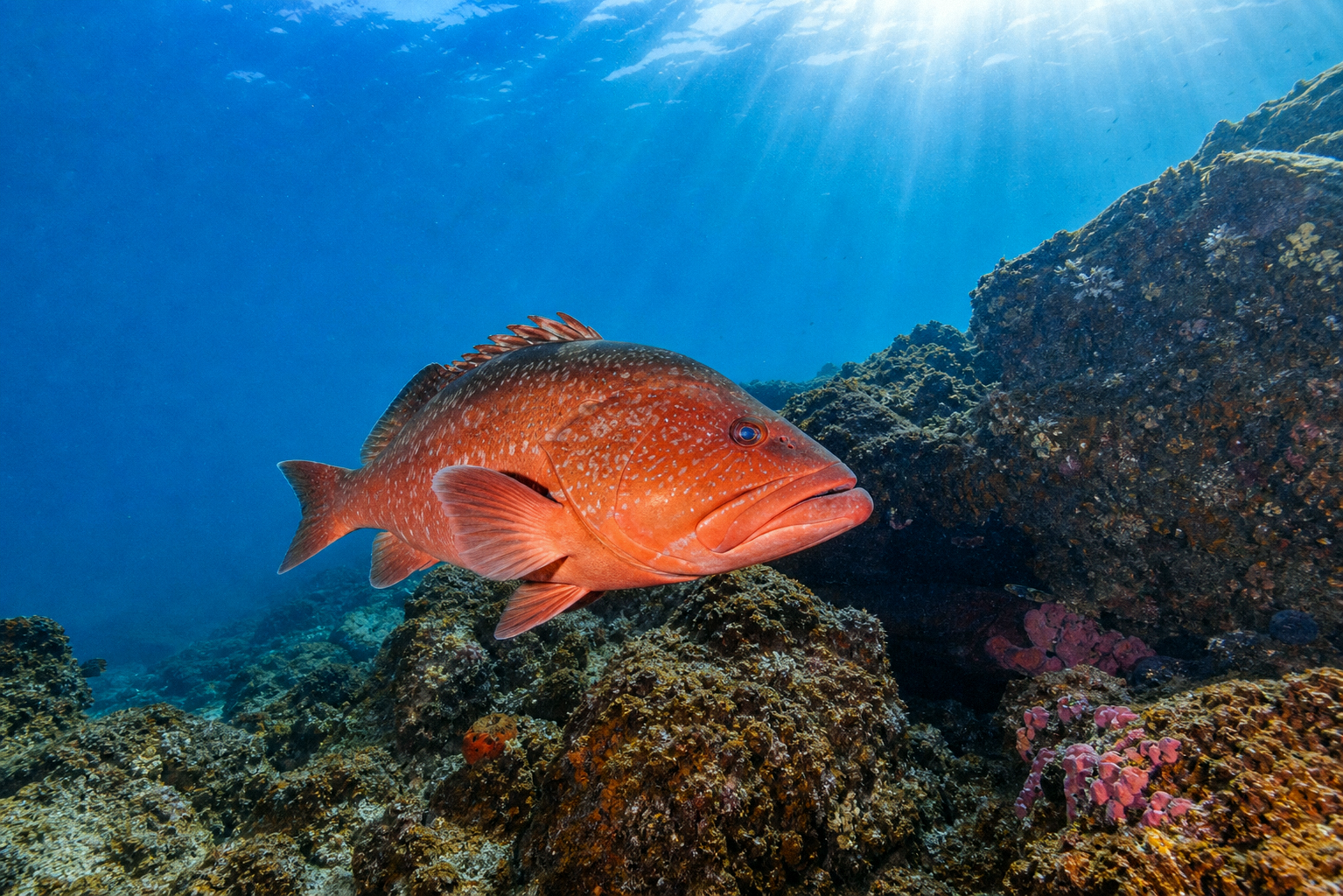
Red Grouper
Identification
Red grouper wear a mottled coat of reddish-brown, scattered with pale blotches and small white spots along the flanks. The body is thick and muscular, tapering to a rounded tail. Unlike the gag grouper, red grouper lack the dark “mustache” marking on the lower jaw. The dorsal fin runs continuous — spiny forward, soft-rayed aft — and the fin margins often carry a darker edge. In Virginia offshore waters, red grouper typically run 5 to 15 pounds, with fish over 20 pounds coming from deeper structure. The fillets are firm, white, and mildly sweet — excellent table fare.
Habitat and Behavior
Red grouper favor hard-bottom terrain — limestone ledges, live-bottom patches studded with sponges and soft corals, rocky reefs, and artificial structure. They differ from gag grouper in their preference for lower-relief bottom; red grouper are often found on expansive hard-bottom flats in 80 to 400 feet rather than tight against high-relief wreckage. They are territorial fish that excavate depressions in the sand and rubble, creating “grouper holes” that serve as home base. Their diet consists of fish, squid, crabs, and shrimp. Red grouper are protogynous hermaphrodites, beginning life as females and transitioning to males as they mature.
Fishing Techniques
A standard bottom rig with 6 to 16 ounces of lead, a 60- to 80-pound fluorocarbon leader, and a 5/0 to 8/0 circle hook is the go-to setup. Baits are fished directly on the bottom over hard-bottom areas. Red grouper are less tightly wedded to structure than gag, giving the angler a slightly longer window to turn the fish’s head before it reaches cover. Jigging with bucktails or butterfly jigs worked near the substrate over hard bottom also produces, especially when fish are actively feeding. A sharp hookset and immediate, steady pressure are essential — once a grouper reaches a hole, the fight is effectively over.
Baits and Lures
Cut squid is the most consistent offering — it stays on the hook through the long drop, and red grouper find it irresistible. Cut menhaden and sardine chunks are also productive. Live pinfish excel for larger fish. Bucktail jigs in white or pink, tipped with a squid strip, work well for jigging. Butterfly jigs in the 200- to 400-gram range, dropped over hard bottom and worked with sharp upward snaps, can trigger aggressive strikes from feeding fish.
Best Times and Locations on the Tidewater region
Red grouper are available year-round off the Virginia coast, with the best action from May through October when weather allows consistent offshore runs. They are found on hard bottom in 80 to 300 feet, typically farther offshore than gag grouper. The 50-fathom curve and live-bottom areas southeast of the Chesapeake Bay entrance are productive. The deeper artificial reef sites and wrecks accessible from Rudee Inlet and Little Creek hold red grouper. Most fish are caught as part of mixed bottom-fishing trips targeting multiple reef species.
Regulations
Red grouper fall under South Atlantic Fishery Management Council jurisdiction. The minimum size is 20 inches total length. The recreational bag limit is 2 per person per day within the aggregate grouper limit, which typically allows a combination of grouper species. The season is open year-round. Commercial harvest requires appropriate permits and is subject to quotas. Verify current rules with the Virginia Marine Resources Commission and SAFMC before fishing.