Florida Pompano
Identification
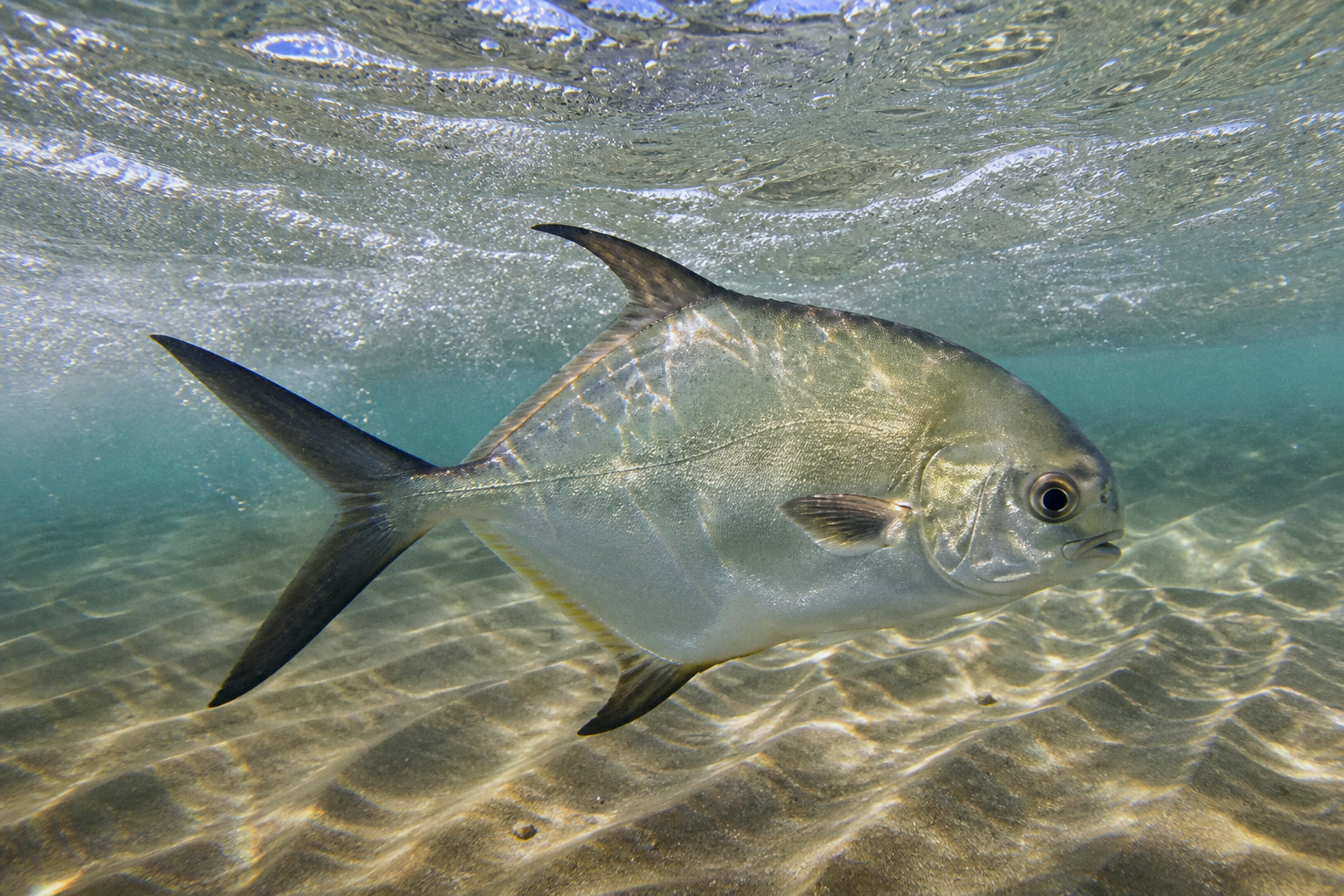
Florida pompano are the crown jewel of the surf zone — a member of the jack family with a deep, slab-sided body that gleams like polished silver. The back carries a subtle green-gold tint, and the anal fin glows orange-yellow, a detail that separates them from the similar-looking permit. The face is blunt and rounded, with a small, underslung mouth adapted for rooting crustaceans from the sand. In Virginia waters, pompano typically run 12 to 18 inches and weigh 1 to 3 pounds, though fish pushing 4 pounds show up during warm late-summer stretches. Their flesh is white, flaky, and exceptionally rich — one of the finest-eating fish that swims the Virginia surf.
Habitat and Behavior
Pompano are warm-water specialists that push into Virginia’s coastal waters when temperatures climb above 75°F, usually by mid-July. They favor clean, clear surf over sandy bottom, working the sloughs and troughs between sandbars where wave action exposes their primary food source: sand fleas. They travel in loose schools, moving along the beach with the tide, and can appear and vanish with little warning. Pompano are powerful swimmers for their size, and a hooked fish on light tackle puts up a spirited, zigzagging fight that belies its modest dimensions.
Fishing Techniques
The pompano rig is purpose-built for this species — a two-hook bottom rig with small, brightly colored floats above each hook to lift the bait off the sand and away from crabs. Hooks should be small, size 4 to 1, and a pyramid sinker of 2 to 4 ounces holds the rig in the surf. Cast into the slough — the deeper water between the beach and the first sandbar, or between the first and second bars — where pompano cruise in search of dislodged sand fleas. Light to medium spinning tackle with 8- to 12-pound test is ideal. Pompano have soft mouths, so a steady, patient retrieve works better than horsing them in. Some anglers also score by bouncing small bucktail or soft-plastic jigs tipped with shrimp or sand flea along the bottom in the wash.
Baits and Lures
Fresh sand fleas, scooped from the swash zone with a rake or by hand, are the number-one pompano bait on Virginia beaches. Nothing else comes close. When sand fleas are scarce, small pieces of fresh shrimp work well. Fish Bites in crab or shrimp flavor — especially the “Max” formula — are a serviceable backup. Clam strips can also produce. The key is small, fresh offerings on small hooks. Pompano mouths are modest, so keep bait pieces roughly dime-sized.
Best Times and Locations on the Tidewater region
Pompano arrive in Virginia waters by July and peak from August through October. The beaches from Sandbridge south toward False Cape are the traditional hotspots, though fish are caught as far north as Ocean View during warm late-summer periods. The stretch of beach near Little Creek Inlet and the surf along the Eastern Shore side of the CBBT also produce. The falling tide and the early push of the incoming are the most productive windows, as moving water churns sand fleas out of the sand. Look for clean, warm water with well-defined sandbars and sloughs — pompano avoid murky or cold water. Early morning, before the beach fills with swimmers, is prime time.
Regulations
Florida pompano are managed by the Virginia Marine Resources Commission. There is no closed season and no minimum size in Virginia recreational waters. The daily bag limit is 50 fish per person, combined with other unregulated species. Always verify current VMRC regulations before heading out.