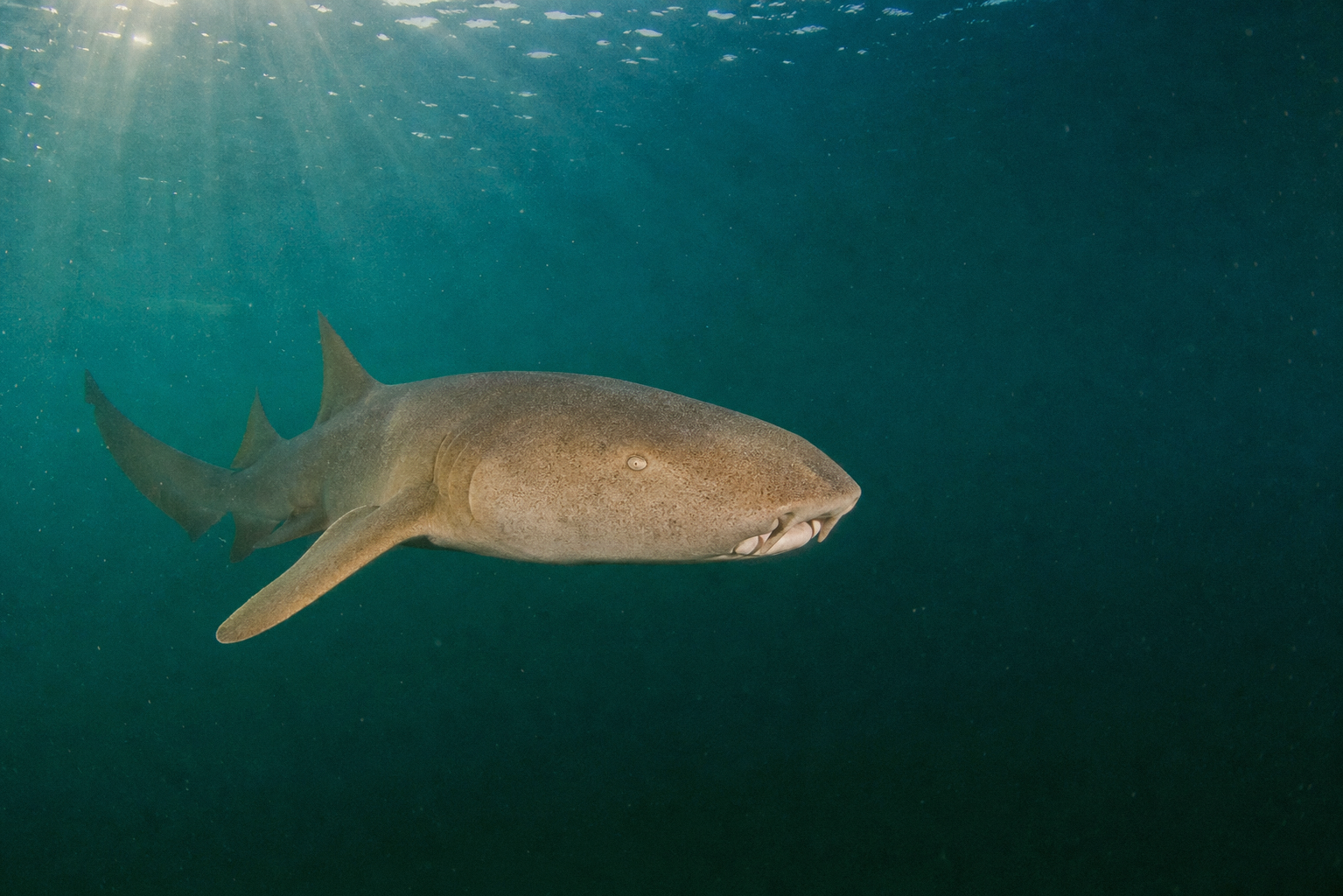
Nurse Shark
Identification
Among the sharks that visit Virginia waters each summer, the nurse shark stands apart. Its head is broad and flattened, with tiny eyes set far forward and a pair of fleshy barbels — whisker-like sensory organs — flanking each nostril. No other shark in the lower Chesapeake region carries this feature. The body is stout and muscular, typically 7 to 10 feet long, colored a uniform caramel-brown to deep bronze above and pale cream below. Both dorsal fins sit well back toward the tail, and the upper lobe of the caudal fin is noticeably elongated. The teeth are small and pavement-like, built for crushing shells rather than slicing flesh — a clue to the animal’s bottom-foraging lifestyle.
Habitat and Behavior
Nurse sharks hug the seafloor, favoring shallow coastal structure — rock piles, wreckage, reef ledges, and the hard-bottom patches scattered through the lower Bay. Around Virginia Beach, they turn up near the CBBT rock islands, around the artificial reefs off Rudee Inlet, and in the deeper channels behind Sandbridge. They are strongly nocturnal, spending daylight hours motionless under ledges or resting on sand, then cruising actively after dark. Their diet revolves around crabs, lobsters, squid, sea urchins, and small benthic fish, all detected with those sensitive barbels. Though sluggish by nature, a hooked nurse shark becomes a stubborn anchor — it will lie flat on the bottom and refuse to budge, turning the fight into a test of patience and tackle.
Fishing Techniques
Boat anglers anchor over known structure — wrecks, reef balls, or hard-bottom patches in the lower Bay or just outside the inlet — and deploy a bottom rig with 6 to 10 ounces of lead to keep the bait stationary. The bite is subtle: the line goes slack, then slowly tightens as the shark picks up the bait and moves off. Surf fishermen targeting nurse sharks at night use a heavy fishfinder rig with fresh cut bait in the slough, particularly along Sandbridge and the Eastern Shore beaches. A 12-foot surf rod, 50-pound braid, and a wire leader of at least 100-pound test are the minimum. Expect a grinding, bulldogging fight rather than a screaming run.
Baits and Lures
Fresh squid is the top producer — nurse sharks key heavily on cephalopod scent, and a whole squid or large strip fished on the bottom is hard for them to pass up. Cut mullet, bluefish chunks, and fresh menhaden also work well. The common denominator is freshness and oil content; nurse sharks follow scent trails to the bait. Live spot or small croaker can draw strikes, but cut bait is generally more consistent. Rig on an 8/0 to 10/0 circle hook with a wire leader. The bait must rest directly on the bottom — nurse sharks rarely feed more than a few inches above the substrate.
Best Times and Locations on the Tidewater region
Nurse sharks arrive with the warm water in June and stay through October. The CBBT rock islands and the hard-bottom areas around the bridge-tunnel complex are the most reliable boat-fishing zones. The artificial reef sites off Rudee Inlet and the deeper channels near Little Creek also hold fish. Surf encounters happen most often at night along Sandbridge and the lower Eastern Shore beaches, particularly when fresh bait is fished in the trough. The piers at Ocean View and Buckroe occasionally produce nurse sharks during summer nights. Fish exclusively after dark and during tide changes for the best results.
Regulations
Nurse sharks are prohibited from recreational harvest in Virginia state waters — catch and release only. Despite their docile reputation, these animals have powerful jaws and can inflict serious injury if provoked. Keep your hands clear of the mouth. Use a long-handled dehooker or cut the leader as close to the hook as possible. Leave the shark in the water throughout the release, support the body, and allow it to rest in moving water until it swims away under its own power. Nurse sharks are slow-growing and long-lived; responsible release is essential to the health of the nearshore ecosystem.