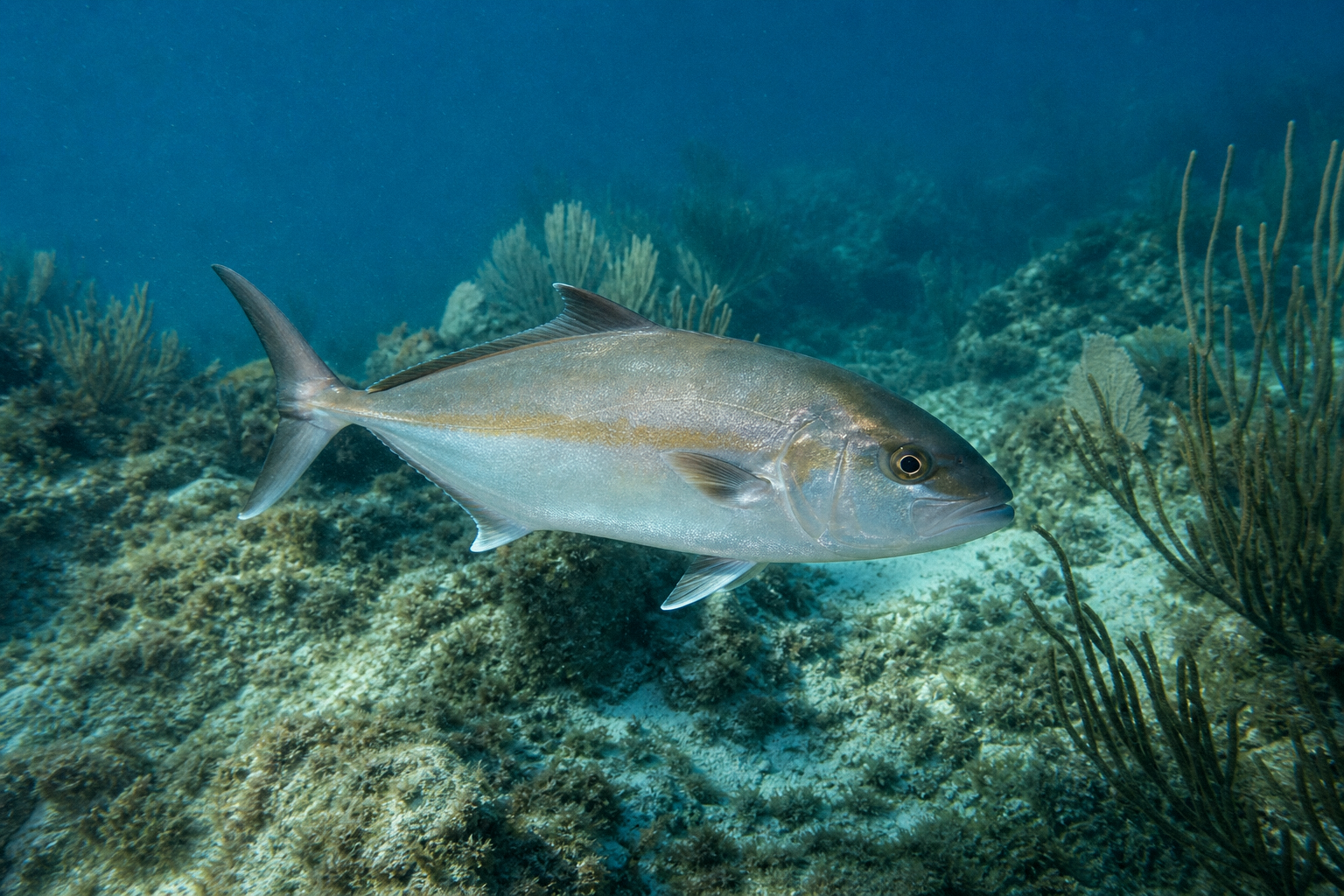
Lesser Amberjack
Spotting the Difference
Lesser amberjack are the compact, streamlined member of the Seriola trio that visits Virginia waters — noticeably leaner through the midsection than the burly greater amberjack, with a more elongated profile overall. The back is olive-green to dark brown, the flanks are silver, and the signature dark stripe traces from the snout through the eye to the origin of the first dorsal fin. The most reliable separator from greater amberjack is the eye: lesser amberjack carry proportionally larger eyes relative to head size, giving them an almost perpetually alert expression. The anal fin also originates further forward on the body. Most Virginia specimens run 3 to 10 pounds, with the occasional fish reaching 15. If you’re looking at an amberjack with big eyes and a lean, athletic build, you’re holding a lesser.
Where They Live
Lesser amberjack occupy nearshore and offshore structure from 30 to 150 feet off the Virginia coast — wrecks, reefs, hard-bottom patches, and live-bottom areas. They’re less rigidly tied to large offshore structure than greater amberjack and will readily associate with smaller live-bottom patches, floating debris, and Sargassum weed lines. They school readily and often mix with almaco jack and juvenile greater amberjack around the same structure. Their diet consists of small baitfish, squid, and pelagic crustaceans. They’re active throughout the water column but frequently hold mid-water over wrecks and reefs rather than hugging the substrate.
How to Catch Them
Lesser amberjack are most often caught incidentally while jigging or live-bait fishing for other species over wrecks and reefs. They respond aggressively to vertical jigs in the 40- to 80-gram range — smaller than what you’d throw for greater amberjack. Drop the jig to the bottom and work it up through the water column with sharp lifts and controlled drops. Lesser amberjack will often hit on the drop, so watch for line slack. Live bait fishing with small minnows or squid on a dropper loop or fish-finder rig also produces. They’re not particularly leader-shy, but fluorocarbon is still recommended for the best presentation.
What to Put on the Hook
For jigging, 40- to 80-gram knife jigs in blue/silver, pink, and glow patterns are effective. Smaller butterfly jigs and slow-pitch jigs also work well since these fish have smaller mouths than their larger cousins. Live cigar minnows, sardines, and small squid strips on 4/0 to 6/0 circle hooks with 30- to 50-pound fluorocarbon leader are standard live bait offerings. Small metal jigs of 1 to 2 ounces and soft plastic swimbaits can also produce when casting around floating structure. Lesser amberjack are aggressive feeders and will eat a wide variety of offerings when you locate them.
When and Where
Lesser amberjack are a summer and early fall species in Virginia, appearing from June through October. They’re found on both nearshore and offshore structure — from reefs 10 to 15 miles out to wrecks 30-plus miles offshore. Nearshore reefs off the Virginia Beach coast and the CBBT area hold lesser amberjack alongside Spanish mackerel and other nearshore species. Offshore wrecks that hold greater amberjack will also produce lesser amberjack, often higher in the water column. The waters off Rudee Inlet are particularly productive due to the concentration of wrecks and reefs in the area.
Regulations
Lesser amberjack are part of the amberjack complex managed by the South Atlantic Fishery Management Council. They are less commonly encountered than greater amberjack, but the same aggregate regulations may apply. Check current SAFMC regulations for the amberjack complex bag limits, minimum sizes, and seasonal closures. In Virginia state waters, specific regulations for lesser amberjack may differ from federal rules. Always verify current regulations with VMRC and SAFMC before your trip, as amberjack management measures change frequently.