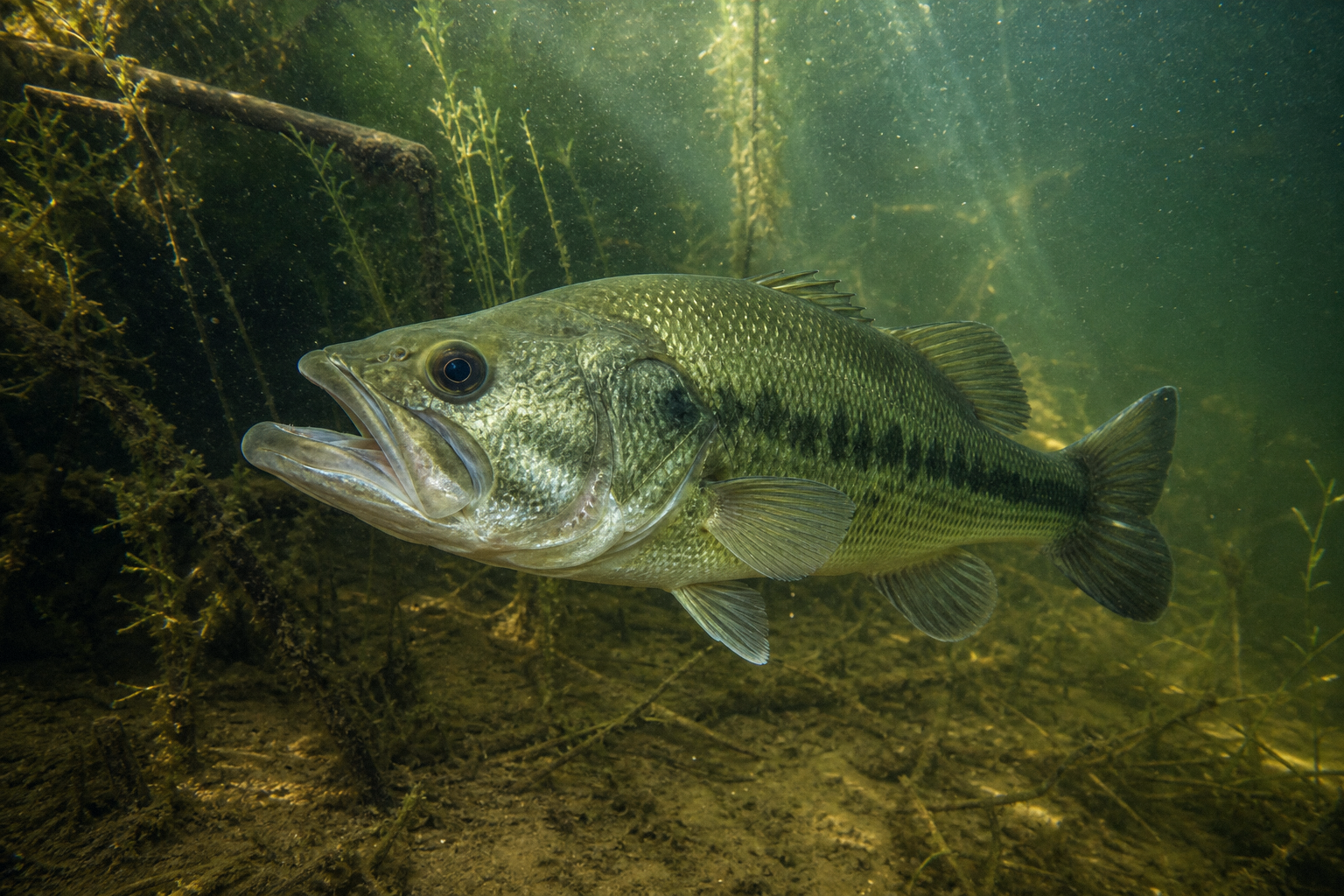
Largemouth Bass
Identification
Largemouth bass are the undisputed kings of freshwater fishing across America, and Virginia’s Tidewater region offers a unique twist: brackish-water bass that grow fat on a rich estuarine forage base. The body is olive-green to dark green above, fading to a whitish belly, with a distinctive dark lateral stripe running from gill plate to tail. The mouth extends past the back of the eye when closed — the definitive field mark separating largemouth from smallmouth. Tidewater bass typically run 1 to 3 pounds, with fish over 5 pounds earning bragging rights. The brackish-adapted bass in the Northwest River system can push 7 to 8 pounds, thriving on a diet of shad, bream, crawfish, and whatever else swims within range.
Habitat and Behavior
The Northwest River system, flowing through Chesapeake and into Back Bay, is the crown jewel of Tidewater bass fishing. This vast, shallow, brackish-to-freshwater network is loaded with submerged vegetation, dock pilings, cypress knees, and winding creek channels. The bass here tolerate salinity levels that would stress or kill bass in typical inland lakes — a unique adaptation that defines the character of the fishery. They are ambush predators, holding tight to cover: lily pads, cattails, flooded grass, dock posts, and downed timber. Bass are most active in moderate water temperatures (60-75°F), feeding aggressively during spring and fall, and becoming sluggish in the heat of midsummer and the cold of winter. The tidal influence in the lower sections of these rivers adds another dimension — bass position differently on incoming versus outgoing tides, using current to ambush prey.
Fishing Techniques
Standard bass techniques all work, but the heavy cover in the Northwest River and Back Bay demands specific approaches. Flippin’ and pitchin’ soft plastics — creature baits, beaver-style baits, and worms — into cattail edges, dock pilings, and pad fields is the bread-and-butter technique. Topwater frogs worked across lily pad fields produce explosive strikes on summer mornings. Spinnerbaits and chatterbaits excel around scattered grass and after cold fronts. In cooler months, suspending jerkbaits and crankbaits fished along creek channel edges produce quality fish. For pond fishing around Hampton Roads — there are productive borrow pits and retention ponds from Norfolk to Suffolk that hold bass — small jigs, Senko-style worms, and topwater poppers are effective. The tidal rivers feeding the lower Chesapeake, including the James, York, and Nansemond, also hold bass in their upper freshwater reaches.
Baits and Lures
Soft plastic stick baits (Senkos in green pumpkin, watermelon, and Junebug) are the most reliable producers. Topwater frogs like the Booyah Pad Crasher are essential for fishing the thick pad fields of the Northwest River. Spinnerbaits in white or chartreuse-and-white work well in stained water. Crankbaits that dive 4-8 feet cover creek channels effectively. Live shiners fished under a float are a tried-and-true method for bigger bass, particularly in the canals and drainage ditches of the Northwest River and Back Bay area. For pond hopping, a 4-inch Senko weightless or wacky-rigged is hard to beat.
Best Times and Locations
The Northwest River and its tributary creeks — including the waters around Chesapeake and Suffolk, and the canals feeding Back Bay — are the top bass destinations in Tidewater Virginia. The best fishing is from March through June (pre-spawn through post-spawn) and again in October and November when bass feed heavily before winter. Spring bass can be caught shallow around spawning flats in 1-3 feet of water. Summer pushes fish to deeper creek edges and under heavy shade cover — fish early and late. The borrow pits and ponds around Hampton Roads offer casual bass fishing without a boat; try the ponds around the Chesapeake/Suffolk area and retention ponds in Norfolk and Virginia Beach. Access to the Northwest River is via public ramps at Chesapeake and the Northwest River Park area. Back Bay offers additional access from the Virginia Beach side.
Regulations
Largemouth bass in Tidewater waters fall under Virginia DWR inland fishing regulations. The statewide creel limit is 5 bass per day in inland waters, with no minimum size limit in most waters. However, some water bodies have special regulations (size limits, reduced creel limits, or catch-and-release only). The Northwest River and associated waters may have specific regulations depending on the section. A valid Virginia inland fishing license is required. Check the current Virginia DWR Inland Fishing Regulations digest for waterbody-specific rules before fishing.