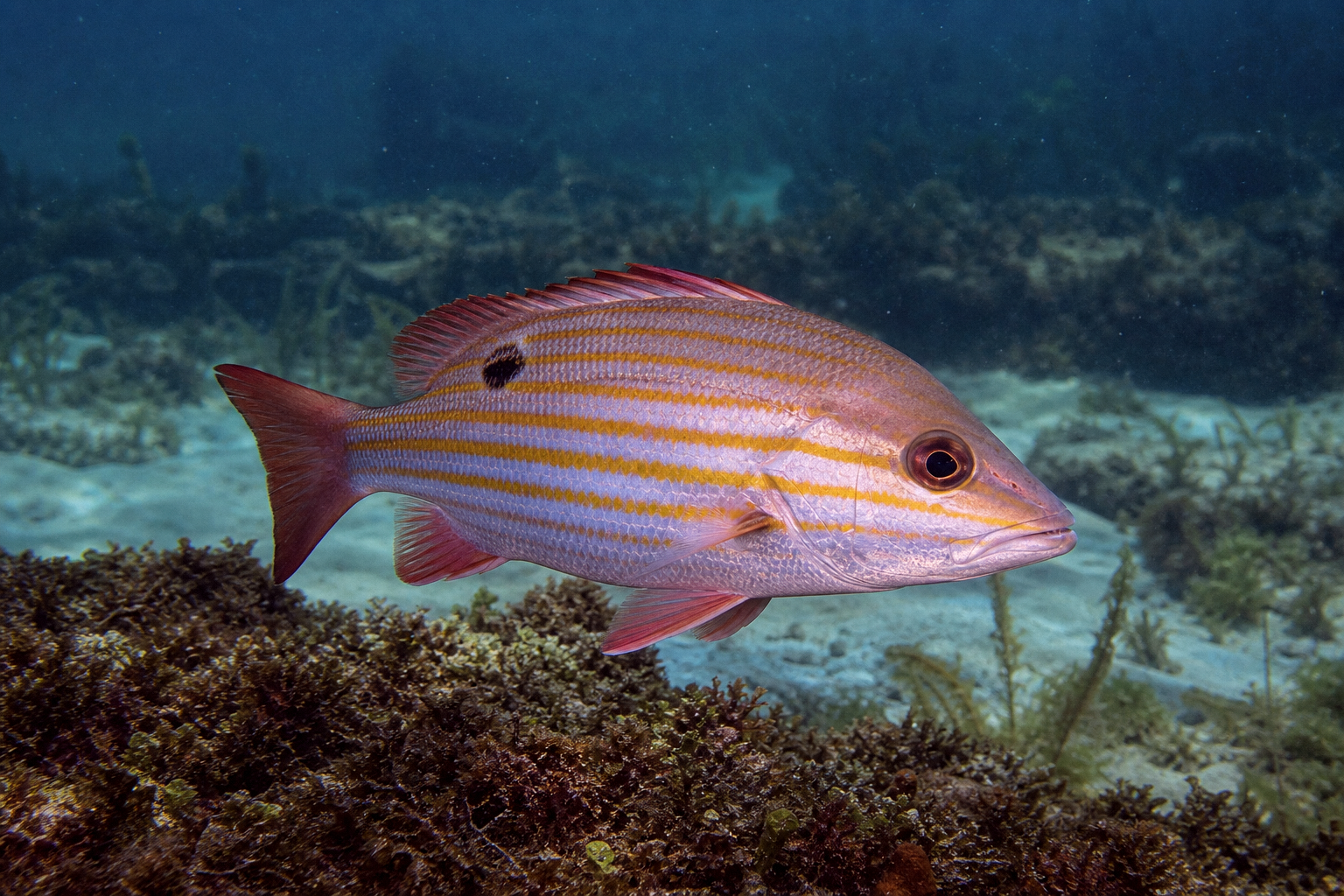
Lane Snapper
What They Look Like
Lane snapper are the jewel-toned members of the snapper family on Virginia reefs — smaller than their cousins but arguably the most beautiful. The body is silvery-pink with distinctive yellow horizontal stripes running the length of the flanks, a dark spot below the dorsal fin, and a reddish margin on the tail. The body is moderately deep and compressed, with a forked tail. They’re relatively small, typically running 1 to 3 pounds in Virginia waters. The combination of pink body, yellow stripes, and that dark dorsal spot makes them one of the easiest snapper species to identify at a glance. They’re not abundant here — Virginia is near the northern edge of their range — but they show up regularly on deeper structure during the warm months.
Where They Live
Lane snapper prefer hard bottom, reefs, and structure in 60 to 200 feet of water. They inhabit the same offshore structure as vermilion snapper but are less numerous in Virginia waters. Lane snapper are schooling fish that feed on small fish, shrimp, and squid near the bottom. They’re less tightly bound to structure than some snapper species and will forage over adjacent hard-bottom areas. Their core range is further south — Florida, the Caribbean, the Gulf — but they appear on Virginia’s deeper wrecks and reefs with enough regularity to be worth knowing. They’re typically an incidental catch on mixed bottom-fishing trips rather than a primary target.
How to Catch Them
Bottom fishing with small hooks and light tackle is the primary method for lane snapper. Chicken rigs or two-hook bottom rigs baited with squid strips, fished on or slightly above the bottom, are effective. Lighter leaders (20-30 pound fluorocarbon) and smaller hooks (size 1 to 1/0) produce more strikes from these smaller, more cautious fish. Vertical jigging with small jigs (1/2 to 2 ounces) tipped with squid also works. Lane snapper are typically caught as part of the mixed snapper catch on bottom fishing trips — you’re not usually targeting them specifically, but they’re a welcome addition to the box.
What They’ll Eat
Squid strips are the go-to lane snapper bait. Cut sardine chunks also work well. Live shrimp, when available, are excellent for larger fish. Small jigs in pink, white, or chartreuse tipped with squid strips produce strikes. The key is small hooks, small bait pieces, and light leaders — lane snapper have relatively small mouths and are more cautious than vermilion snapper.
When and Where
Lane snapper are available year-round but are most commonly caught May through October. They’re found on hard bottom and reef structure in 60-200 feet of water, often in the same areas that produce vermilion snapper. The artificial reef network off Virginia Beach, deeper wrecks accessible from Rudee Inlet, and hard bottom along the shelf edge all hold lane snapper. They are not abundant in Virginia waters and are typically encountered as incidental catches on mixed bottom fishing trips.
The Rules
Lane snapper are managed under the South Atlantic Fishery Management Council. The minimum size is 8 inches total length, making them one of the smaller snapper species with a legal size limit. The recreational bag limit falls within the snapper aggregate (typically 10 snapper total per person per day). The season is open year-round. Check current VMRC and SAFMC regulations before fishing.