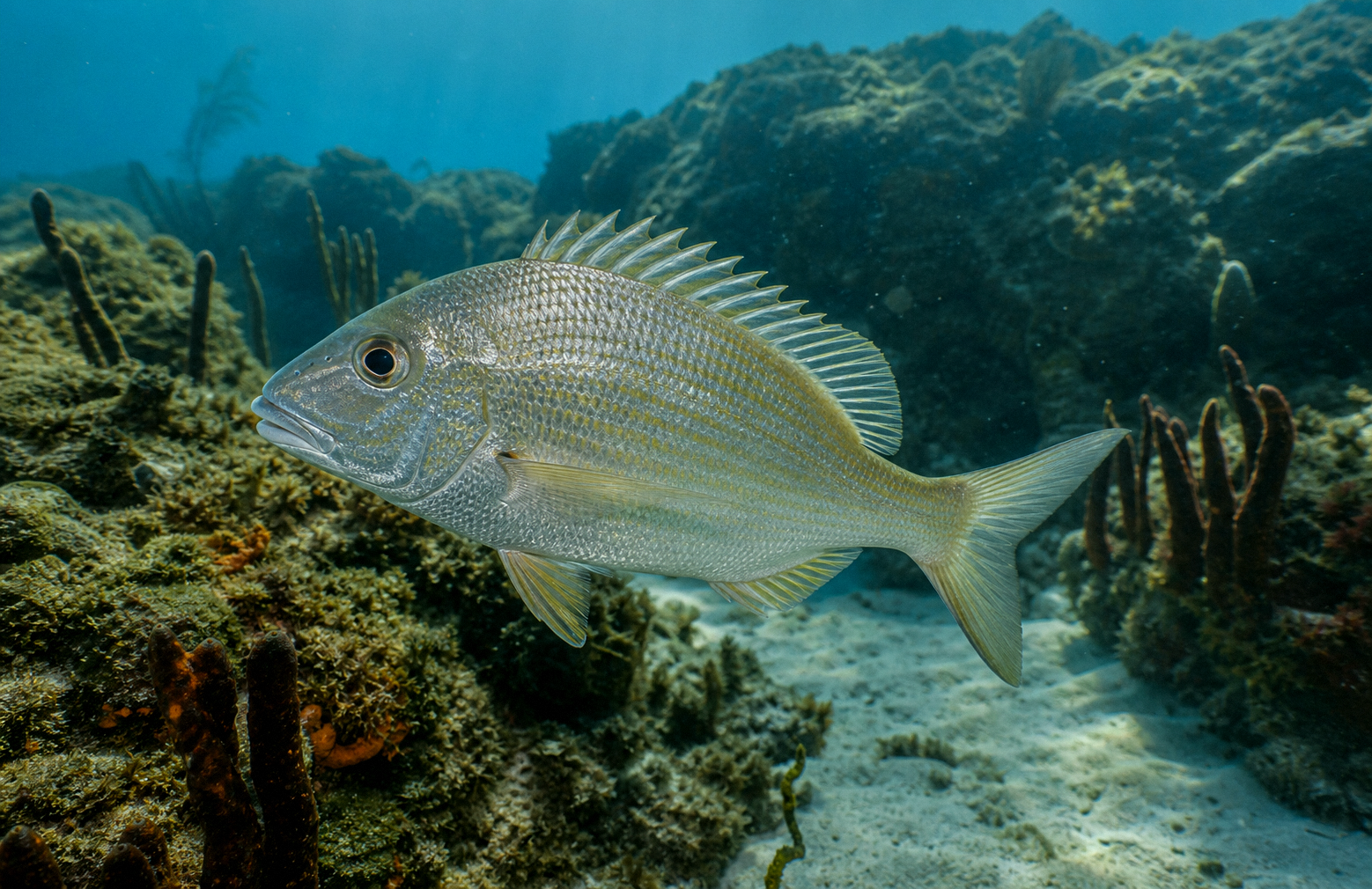
Jolthead Porgy
Identification
Jolthead porgy (Calamus bajonado) are the big brothers of the porgy family on Virginia reefs, commonly reaching 16 to 22 inches and 2 to 4 pounds. The body is deep and compressed, with a silvery-to-brassy sheen, but the giveaway is the head: a blunt, sloping forehead that looks like it ran into something — hence “jolthead.” The profile is more pronounced than in any other Calamus species, and it becomes more exaggerated with age. They have strong, molar-like teeth for crushing shellfish and a relatively large mouth for a porgy. Faint vertical bars may be visible on the sides, and the fins can show a pinkish or orange tint in good light. If you pull up a porgy with a noticeably sloped head and a mouth big enough to fit your thumb, you’ve got a jolthead.
Habitat and Behavior
Jolthead porgy inhabit hard-bottom structure — natural rock ledges, live bottom, wrecks, and artificial reefs — in 60 to 200 feet of water off the Virginia coast. They tend to hold on the deeper reef drops, deeper than where you’d typically find whitebone or knobbed porgy. Their diet is heavy on hard-shelled prey: crabs, sea urchins, snails, and small mollusks, crushed with those powerful molar teeth. They school with other porgy species, so a drop that produces joltheads often yields red porgy and triggerfish as well. When you find one, work the spot — there are usually more.
Fishing Techniques
A standard two-hook bottom rig (chicken rig) with a 4 to 8 ounce sinker is the go-to setup, adjusted for depth and current. Use slightly larger hooks (size 1/0 to 3/0) for joltheads — their mouths are bigger than smaller porgy species. Circle hooks are recommended for reducing gut-hooking. Drift fishing over hard bottom is productive and helps locate schools. When you connect with a jolthead, the fight is noticeably stronger than other porgy — they pull hard and use their deep body to create resistance. Vertical jigging with small jigs tipped with squid can produce larger fish, especially when they’re feeding aggressively on the bottom.
Baits and Lures
Squid strips remain the top all-around bait, but jolthead porgy have a particular fondness for crustacean offerings — crab pieces, shrimp, and even small whole crabs on larger hooks. Cut bait strips from mullet or menhaden also work well. Because they are shellfish crushers, offering a piece of crab or shrimp can sometimes out-fish squid when joltheads are the primary target. Keep baits fresh and firmly on the hook — porgy are notorious bait thieves that will pick a rig clean if the bait isn’t secured.
Best Times and Locations
Jolthead porgy are most available from late spring through fall, with peak catches in July through September. Target the deeper hard-bottom areas off the Virginia coast in 100 to 180 feet, the reef complexes south of the Chesapeake Bay entrance, and the wrecks along the central Virginia shelf. Charter boats running full-day bottom trips to the deeper reef zones are most likely to encounter good numbers. Calm days with moderate current provide the best conditions for holding bottom and presenting baits effectively on these deeper drops.
Regulations
Jolthead porgy are managed under the Virginia aggregate porgy limit — typically 10 fish per person per day with a 10-inch minimum size. As with all snapper-grouper complex species, regulations can change seasonally. Verify current rules with VMRC and the South Atlantic Fishery Management Council before your trip.