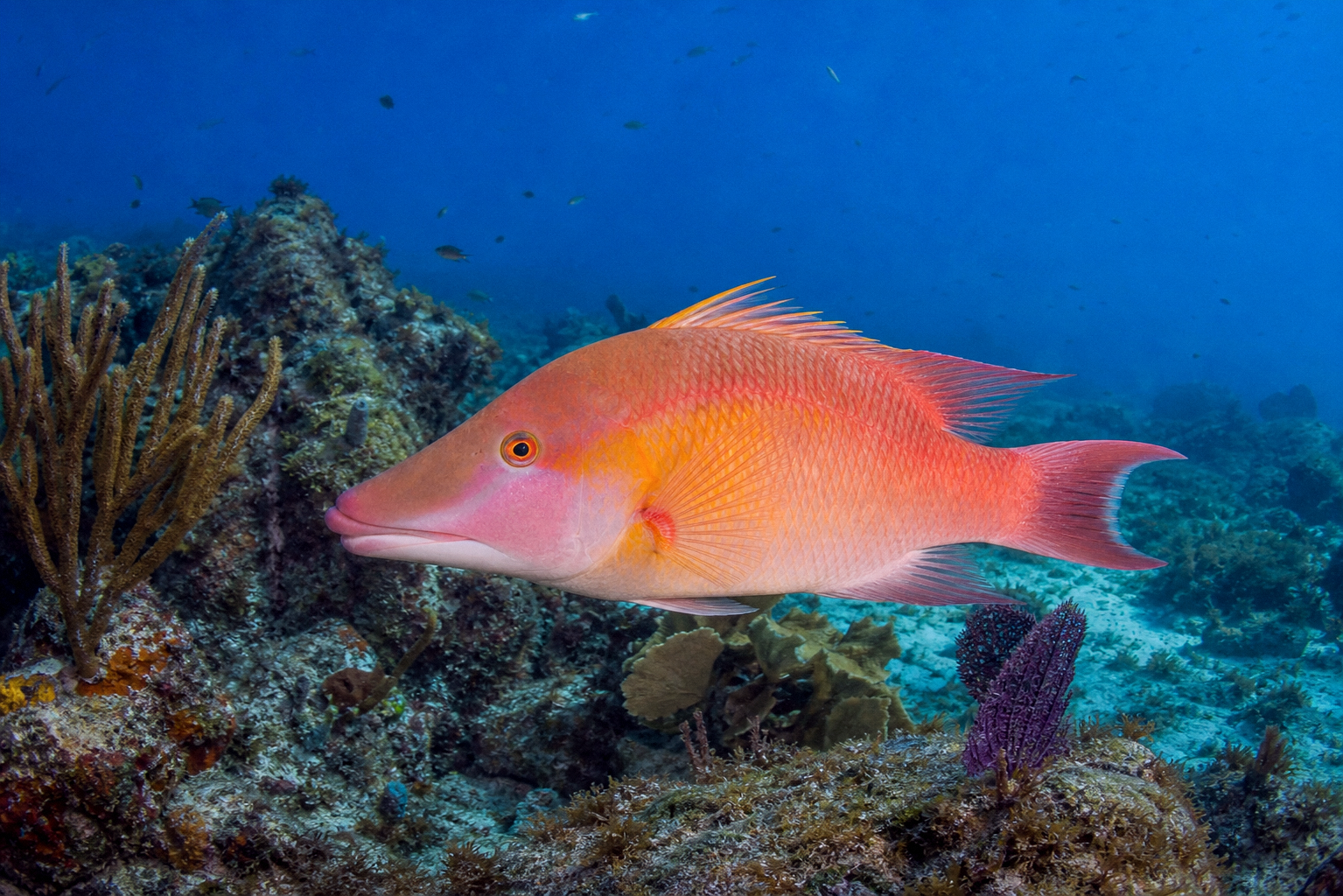
Hogfish
What They Look Like
Hogfish are one of the most visually striking fish you’ll encounter on a Virginia reef — and one of the most commonly misidentified. Despite the nickname “hog snapper,” they belong to the wrasse family (Labridae), not the snapper family. The body is deep and laterally compressed, with coloration that can shift dramatically: a pearlescent white to pinkish base with a dark reddish-brown to black blotch on the rear portion of the dorsal fin and across the top of the head. The namesake feature is the elongated, pig-like snout that protrudes forward — a specialized tool for rooting crustaceans out of the sand. Off Virginia, hogfish typically range from 12 to 24 inches and weigh 1 to 5 pounds. They are at the northern edge of their range here, making them an uncommon but celebrated catch.
Where They Live
Hogfish range from Nova Scotia to the Caribbean, but their core abundance is in Florida and the Gulf. In Virginia waters, they appear primarily in late summer when warm water pushes north, and they’re considered a special catch rather than a target species. They prefer hard-bottom habitats, reefs, wrecks, and areas with sponge growth. Hogfish are benthic feeders through and through — they use that elongated snout to root in sand and rubble for crabs, shrimp, mollusks, and small invertebrates. They feed during daylight hours and are protogynous hermaphrodites, beginning life as females and transitioning to males as they grow. This reproductive strategy means the largest fish on a reef are almost always males.
How to Catch Them
Hogfish are notoriously difficult to catch on hook and line because of their specialized feeding behavior. They don’t chase prey — they root in the bottom for crustaceans. When they do take a bait, the bite can be so subtle you’ll question whether anything happened at all. The standard setup is a bottom rig with a small hook (size 2 to 1/0) fished directly on hard bottom or near reef structure, using just enough weight to hold position. Most hogfish caught in Virginia are taken incidentally by anglers bottom fishing for triggerfish, black sea bass, and other reef species. Vertical fishing — dropping the bait straight down over structure — is the most effective presentation. Light to medium tackle (15-20 pound test) is appropriate. In Virginia waters, spearfishermen on nearshore wrecks and reefs take more hogfish than hook-and-line anglers.
What They’ll Eat
Live shrimp is the most effective natural bait for hogfish. Small crabs — fiddler crabs or tiny blue crabs — are also excellent and match their natural diet. Small pieces of squid fished on the bottom near hard structure will occasionally produce. Small live fish near the bottom can work. The key is fresh, natural baits that mimic what hogfish are rooting for — crustaceans are their primary food. Artificial lures are generally ineffective due to their bottom-rooting feeding behavior. For spearfishing, hogfish are relatively easy to approach on reefs and are considered one of the best-eating fish in the ocean.
When and Where
Hogfish appear in Virginia waters primarily from June through October, when water temperatures peak. They are not common — most are caught by boat anglers fishing nearshore artificial reefs and wrecks. The artificial reefs off Virginia Beach, the structure around the CBBT, and the lower Chesapeake Bay reefs are the most likely places to encounter them. They are occasionally caught from Virginia piers during late summer when warm, clear water is present. Anglers bottom fishing for triggerfish, black sea bass, and other reef species are the most likely to encounter hogfish incidentally. Spearfishing on nearshore wrecks and reefs is the most reliable way to target them.
The Rules
Hogfish are managed by the Virginia Marine Resources Commission. The minimum size limit is 12 inches fork length. The recreational daily bag limit is 5 fish per person. There is no closed season in Virginia state waters. Federal regulations in the South Atlantic may differ — always check both state and federal regulations before fishing. Hogfish are relatively uncommon in Virginia, so any catch should be verified against current rules.