Greater Amberjack
Identification
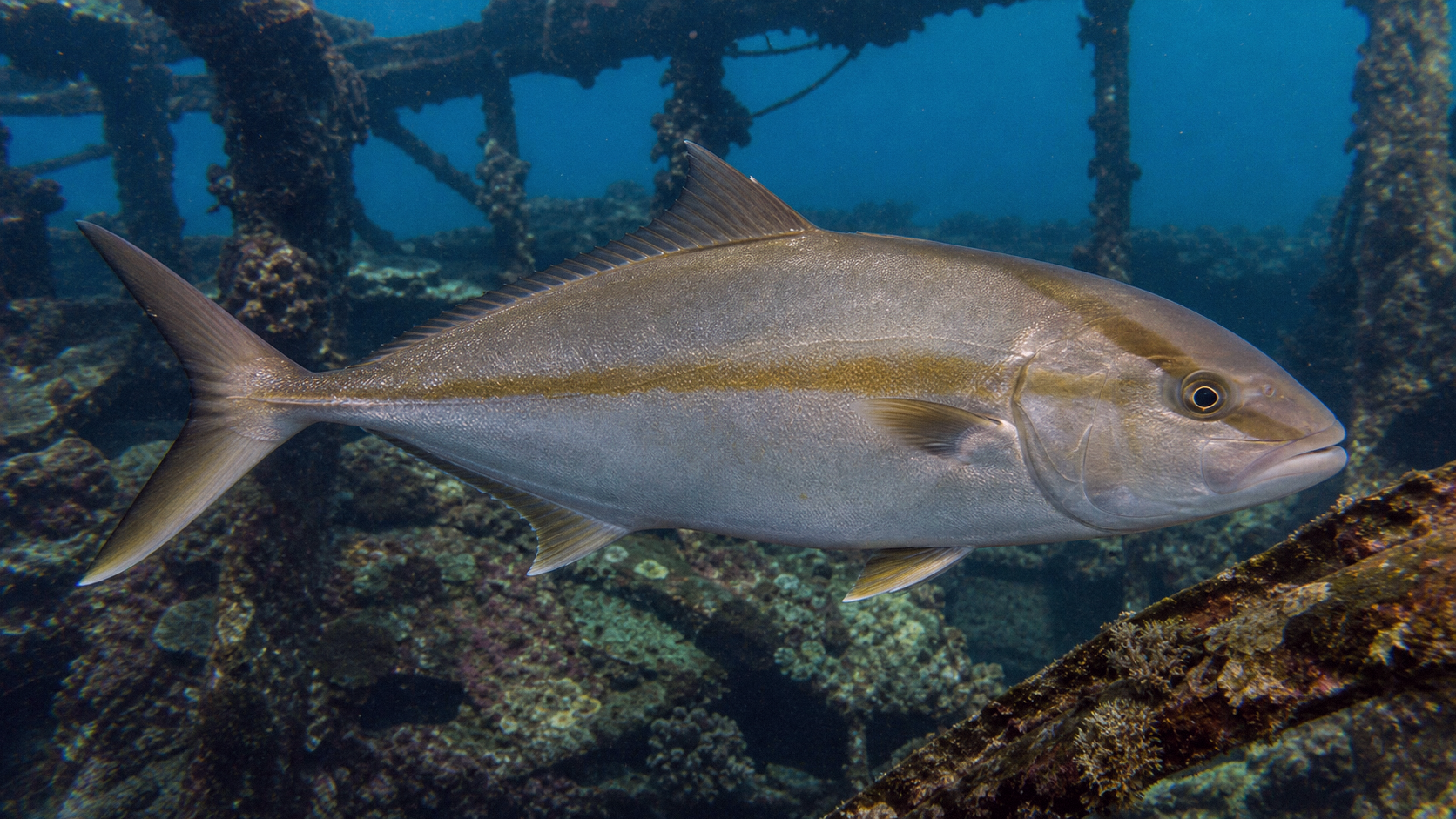
Greater amberjack are the undisputed heavyweights of the jack family in Virginia waters. These fish commonly run 20 to 50 pounds, with true bruisers exceeding 80 pounds showing up on the deeper wrecks each summer. The body is deep and compressed, with a dark amber-to-brown back, silver sides, and a distinctive dark olive-brown stripe that runs from the snout through the eye and along the back to the first dorsal fin. That amber stripe is the key field mark. Greater amberjack have a deeper, more robust body profile than almaco or lesser amberjack, and their head is distinctly blunt compared to other Seriola species. When you see one boatside, there’s no mistaking it — these are thick, powerful fish built for brute force.
Habitat and Behavior
Greater amberjack are structure-oriented predators that stake out offshore wrecks, artificial reefs, and hard-bottom ledges in 60 to 200 feet of water. Off Virginia, they’re typically found 15 to 40 miles offshore, holding on the up-current side of wrecks where baitfish concentrate. They are aggressive, powerful feeders that prey on baitfish, squid, and crustaceans. The fight is legendary — an amberjack hits hard and immediately dives for the wreck, using every ounce of its strength to cut you off on structure. They often school in groups of similar-sized fish, with the largest individuals patrolling just above or beside the main structure. If you hook one, there are probably more below.
Fishing Techniques
Vertical jigging is the most exciting way to target greater amberjack. Drop a 100-200 gram knife jig to the bottom near a wreck, then rip it upward with long, fast strokes followed by a controlled drop. Amberjack respond aggressively to jigs in blue/silver, pink, and zebra patterns — the speed and flash trigger their predatory instinct. Live bait fishing is the other primary method: drop a live blue runner, cigar minnow, or large sardine on a fish-finder rig directly over structure. Use heavy tackle — 50 to 80 pound class — because an amberjack’s first move is always toward the wreck. You need the backbone to turn its head immediately after the strike. If the fish reaches the structure, the fight is over.
Baits and Lures
Live blue runners are the top bait for big amberjack — tough, lively, and irresistible. Live cigar minnows, large sardines, and live croaker also produce. Rig live baits on a 7/0 to 9/0 circle hook with 60-80 pound fluorocarbon leader. For jigging, 100-200 gram knife jigs from River2Sea, Shimmy, or Williamson in blue/silver, pink/white, and mackerel patterns are standard. Squid and butterfish on bottom rigs will catch amberjack feeding lower in the water column. Always use heavy enough tackle — amberjack are arguably the hardest-fighting fish per pound in Virginia offshore waters.
Best Times and Locations
Greater amberjack are a summer species in Virginia, arriving in May and staying through September. They require a run to offshore wrecks and reefs — typically 20 to 40 miles from Rudee Inlet or the Virginia Beach coast. The artificial reef network, World War II wrecks off the Virginia coast, and the deeper ledges along the shelf edge all hold amberjack. The waters off the Eastern Shore, accessed from Wachapreague, offer less-pressured structure. Amberjack fishing is best when current is moving — slack tide produces fewer strikes. Early summer and late summer produce the most consistent action, with July often being the peak month.
Regulations
Greater amberjack are managed by the South Atlantic Fishery Management Council. The recreational bag limit is 1 per person per day with a minimum fork length of 34 inches. Seasonal closures have been implemented in federal waters (typically November-December and/or March-April). A federal Greater Amberjack recreational permit is not required for private anglers, but charter vessels need appropriate permits. Verify current rules with VMRC and SAFMC before your trip.