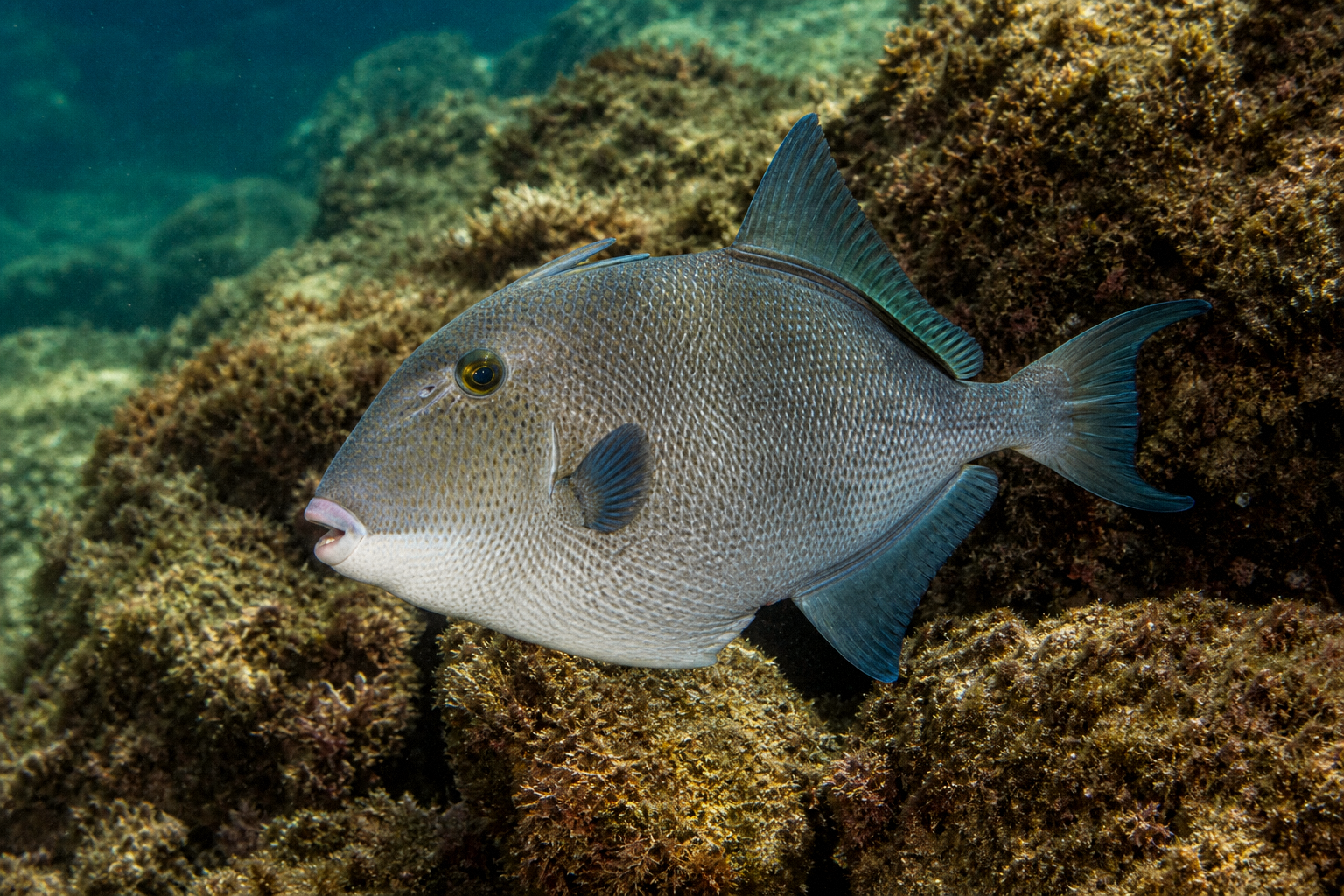
Gray Triggerfish
Identification
Gray triggerfish look like something from a different planet — and once you’ve seen one, you’ll never mistake it for anything else. The body is deep, laterally compressed, and roughly diamond-shaped, covered in tough, sandpaper-like skin that ranges from gray to olive-green with lighter spots and wavy lines. The first dorsal spine is the signature feature: a large, rigid spike that can be locked upright, which is how triggerfish got their name. The mouth is small but armed with strong, chisel-like teeth purpose-built for crushing shells and crustaceans. Eyes are set high on the head, giving them a perpetually surprised expression. Off Virginia, triggerfish typically run 1 to 5 pounds, with larger specimens pushing 8-10 pounds. Their firm, white fillets are outstanding table fare — often compared to tautog or sheepshead.
Habitat and Behavior
Triggerfish are reef residents through and through. They hold on offshore wrecks, artificial reefs, and hard-bottom areas in 40 to 150 feet of water, with a preference for live bottom that supports sponges, coral, and crustacean growth. They feed by picking and nibbling at the bottom with those chisel teeth, targeting crabs, shrimp, sand fleas, sea urchins, and other shellfish. Triggerfish are territorial and often stake out a specific piece of structure. They are also notorious bait thieves — a triggerfish can clean a hook before you even feel the bite, which makes them both a frustration and a sought-after catch. The meat is worth the effort.
Fishing Techniques
Bottom fishing with small hooks is the standard approach. A two-hook chicken rig or standard bottom rig baited with squid or cut bait, dropped directly over wrecks and hard bottom, will produce triggerfish. The challenge is detecting the bite — triggerfish have small mouths and nibble delicately. The tap is subtle, almost a vibration rather than a pull. Pay close attention and set the hook quickly. Use small hooks (size 1 or 1/0) and expect to miss some fish. A slow, steady retrieve brings them up; they don’t fight hard but use their broad, flat body to create surprising drag. Small vertical jigs (20-40 grams) tipped with squid strips, worked near the bottom over reefs, will also draw strikes.
Baits and Lures
Squid is the top bait — cut into small strips and threaded onto small hooks. Cut bait from fresh menhaden, mullet, or any oily fish also works. Sand fleas (mole crabs) are a natural triggerfish food and excellent bait when you can find them along the surf line. Shrimp, fresh or frozen, produces well. The key is small hooks and small bait pieces — triggerfish mouths are tiny relative to their body size. A two-hook chicken rig with 20-30 pound fluorocarbon leader is the standard terminal setup. Small bucktails or vertical jigs tipped with squid strips will catch triggerfish when jigging over reefs.
Best Times and Locations
Gray triggerfish are available from May through September off Virginia, with June through August being the peak months. They inhabit offshore reefs and wrecks 15 to 40 miles from Rudee Inlet and the Virginia Beach coast. The artificial reef network off Virginia Beach, the deeper wrecks along the shelf, and hard-bottom areas in 60-120 feet of water all hold triggerfish. They are frequently caught alongside black sea bass, vermilion snapper, and other reef species on mixed-bag bottom trips. Nearshore artificial reefs in 50-80 feet can also hold triggerfish when warm water pushes inshore. Targeting triggerfish is typically part of a broader bottom-fishing trip rather than a dedicated effort — but when you find them, they provide steady action and excellent eating.
Regulations
Gray triggerfish are managed by the South Atlantic Fishery Management Council. The recreational bag limit is 1 per person per day with a minimum fork length of 12 inches. Seasonal closures have been implemented in federal waters, typically during the January-February period. Virginia state waters may have different regulations. Always verify current rules with VMRC and SAFMC before your trip, as triggerfish management is subject to frequent updates based on stock status.