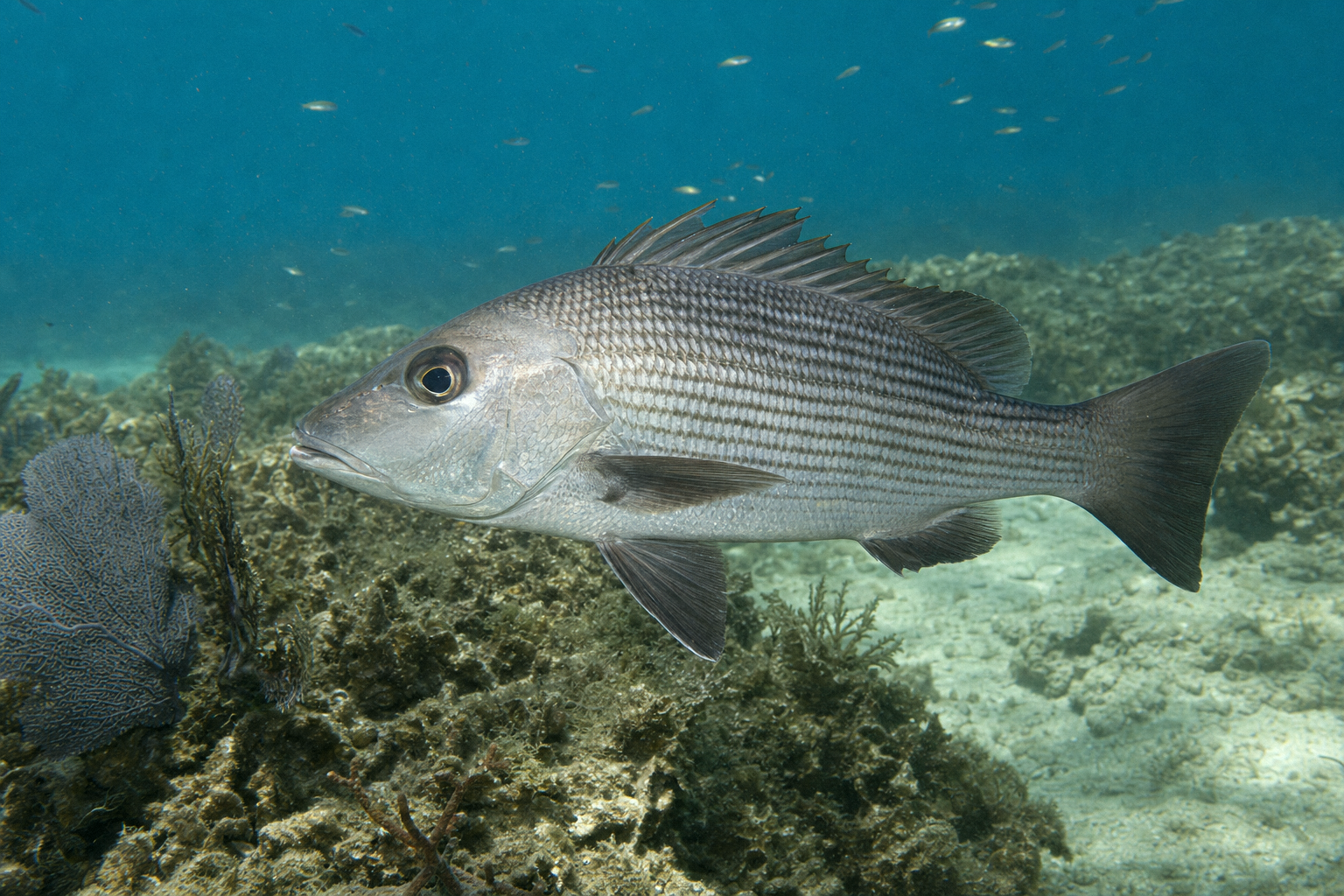
Gray Snapper
Identification
Gray snapper — also called mangrove snapper throughout their range — are the wary intellectuals of the snapper family. Their body is slender and streamlined compared to the deeper-bodied red snapper, with coloration running from grayish-brown to dark charcoal above, fading to a lighter belly. A dark band cuts across the eye, and juveniles often display a pronounced dark lateral stripe. When excited or feeding, faint vertical bars may appear on the flanks. The tail is moderately forked, and the mouth is large relative to body size. Off Virginia, most gray snapper run 1 to 5 pounds, though fish exceeding 10 pounds are caught on deeper structure. They’re not the biggest snapper on the reef, but they may be the smartest — and that makes catching them satisfying.
Habitat and Behavior
Gray snapper are structure-oriented but not structure-bound. They hold on offshore wrecks, artificial reefs, and hard-bottom areas in 60 to 250 feet of water, but unlike vermilion snapper that school openly above structure, grays hug tight to the wreck itself — tucked into crevices, positioned near the base, always close to cover. They are cautious, selective feeders that study a bait before committing. This wariness makes them a challenging target, especially during daylight. Gray snapper feed most actively at night and during low-light periods, which is why evening trips and overnight anchor jobs produce the best catches. Their diet consists of small fish, shrimp, crabs, and squid.
Fishing Techniques
Finesse is everything with gray snapper. Lighter leaders (30-40 pound fluorocarbon) and smaller hooks (2/0 to 4/0) dramatically improve hookup rates — these fish will inspect and reject heavy terminal tackle. Chumming is critical. A steady slick of ground menhaden or sardine chunks draws grays out of the structure and into a feeding posture. Once they’re up in the slick, free-lining a live shrimp or small minnow back into the chum line is the deadliest presentation. Night fishing with submerged lights is another proven approach: the lights draw baitfish, the baitfish draw snapper, and the reduced visibility makes grays less cautious. Anchor up over a wreck at sunset, deploy a light, and fish small baits on light tackle through the evening.
Baits and Lures
Live shrimp are the premier offering — irresistible to gray snapper and easy to present naturally in a chum slick. Live minnows, small pinfish, and tiny croaker also produce. Cut squid on small hooks is reliable for numbers. Sardine chunks fished in the slick work well. Small jigs tipped with shrimp or squid strips can draw strikes from more aggressive fish. The common thread is natural presentation and light tackle — gray snapper are more leader-shy than any other snapper species on Virginia reefs.
Best Times and Locations
Gray snapper are available year-round, with May through October being the most productive window. They inhabit the same offshore structure as other snapper and grouper — wrecks, artificial reefs, and hard bottom in 60-250 feet. The artificial reef network off Virginia Beach, the deeper wrecks accessible from Rudee Inlet, and hard-bottom areas along the shelf edge all hold gray snapper. They are typically encountered as part of a mixed bottom-fishing catch rather than targeted exclusively. Night trips and sunset-to-dark fishing windows are especially productive. Charter boats running overnight anchor trips to the deeper wrecks offer the best shot at quality gray snapper.
Regulations
Gray snapper are managed under the South Atlantic Fishery Management Council. The minimum size is 12 inches total length. The recreational bag limit is 10 per person per day within the snapper aggregate (which includes vermilion and other snapper species). The season is open year-round. Commercial harvest is subject to quota management. Check current VMRC and SAFMC regulations before fishing.