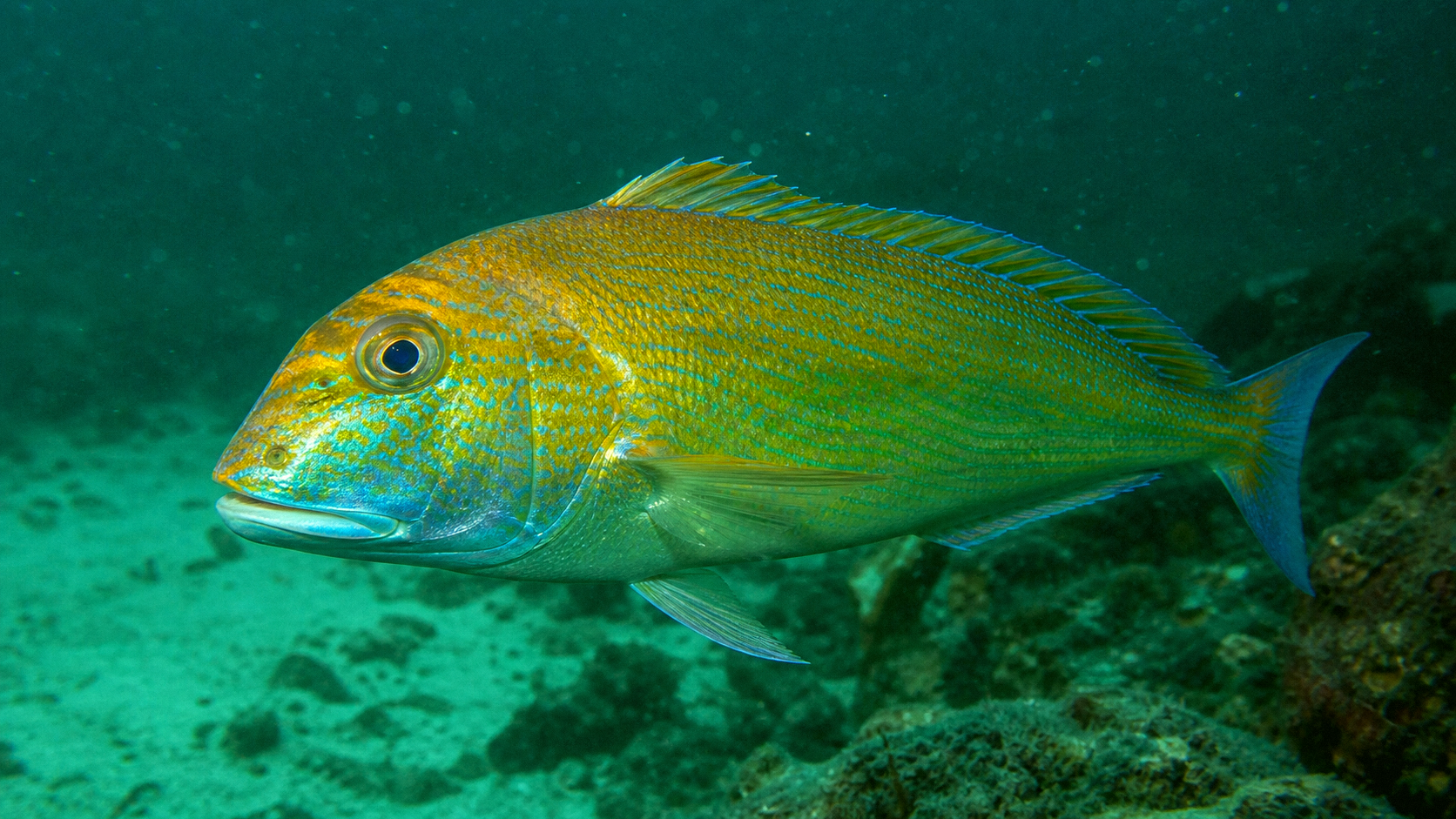
Golden Tilefish
Identification
Golden tilefish are the buried treasure of Virginia’s deep-water fishery — a fish so striking in appearance and so exceptional on the plate that anglers willingly make the 50-mile run to the continental slope to find them. The body is elongated and robust, with a blue-green back that fades into brilliant golden-yellow sides dotted with small yellow spots. A fleshy, prominent crest rises from the head — the “chameleon head” that gives the species its scientific name Lopholatilus chamaeleonticeps. A fleshy appendage hangs from the lower jaw. The dorsal fin runs nearly the full length of the body. Off Virginia, golden tilefish commonly run 10 to 30 pounds, with fish over 50 pounds possible on the deepest drops. Their flesh is legendary — firm, white, and sweet, often compared to lobster in both texture and flavor.
Habitat and Behavior
Golden tilefish are burrow-dwellers of the deep. They excavate and inhabit burrows in the mud and clay substrate along the continental slope, typically in 400 to 800 feet of water. These are long-lived fish — 40-plus years — that grow slowly and stay close to home. They feed on bottom-dwelling organisms: squid, shrimp, crabs, small fish, and various invertebrates. Because of their depth and specialized habitat, golden tilefish are accessible only through dedicated deep-drop fishing. They are not a species you stumble upon; you have to go find them, and that requires the right gear, the right weather window, and a willingness to run 45 to 65 miles offshore from Rudee Inlet.
Fishing Techniques
Deep-drop fishing with electric reels is the practical standard. A Daiwa Tanacom 1000 or Lindgren-Pitman electric reel spooled with 80-130 pound braid handles the extreme depths without exhausting the angler. The terminal rig is straightforward: a 2-5 pound lead weight at the bottom, with two or three dropper loops above carrying large circle hooks (6/0 to 8/0). The rig is lowered to the bottom in 400-800 feet and fished stationary. When a golden tilefish takes, the fight is a heavy, steady grind — not fast or flashy, but a genuine test of gear and endurance. Hand-cranking from these depths is possible but punishing; an electric reel is strongly recommended for anyone planning to target tilefish seriously. Multi-hook rigs maximize each drop, often producing two or three fish from a single descent.
Baits and Lures
Cut squid is the standard — large strips on big hooks, substantial enough to be detected in the dark, deep environment and durable enough to survive the long descent. Whole small squid, sardine chunks, and cut bait strips from bonito or menhaden also produce. The bait needs to stay on the hook through hundreds of feet of freefall and still look appetizing when it reaches the bottom. Multiple squid strips on a multi-hook rig increase the odds of a multi-fish drop.
Best Times and Locations
Golden tilefish are available year-round in deep water, but the practical season runs May through October when weather permits the long offshore runs required. The prime grounds lie along the continental slope in 400-800 feet, typically 45-65 miles offshore from Rudee Inlet and the Virginia Beach coast. Mud and clay bottom along the 70-100 fathom curve is the target zone. Specialized deep-drop trips from Virginia Beach and the lower Chesapeake combine golden tilefish with blueline tilefish, snowy grouper, and other deep-water species. These are full-day, weather-dependent trips — not something you decide on a whim. Plan ahead, watch the forecast, and go with a captain who knows the deep-drop game.
Regulations
Golden tilefish are managed by the South Atlantic Fishery Management Council. The recreational minimum size is 24 inches total length, with a bag limit typically set at 5 per person per day, subject to annual catch limits and potential in-season adjustments. The commercial fishery operates under separate quotas. Deep-water species regulations change frequently based on stock assessments — always verify current NOAA Fisheries and SAFMC rules before planning a golden tilefish trip.