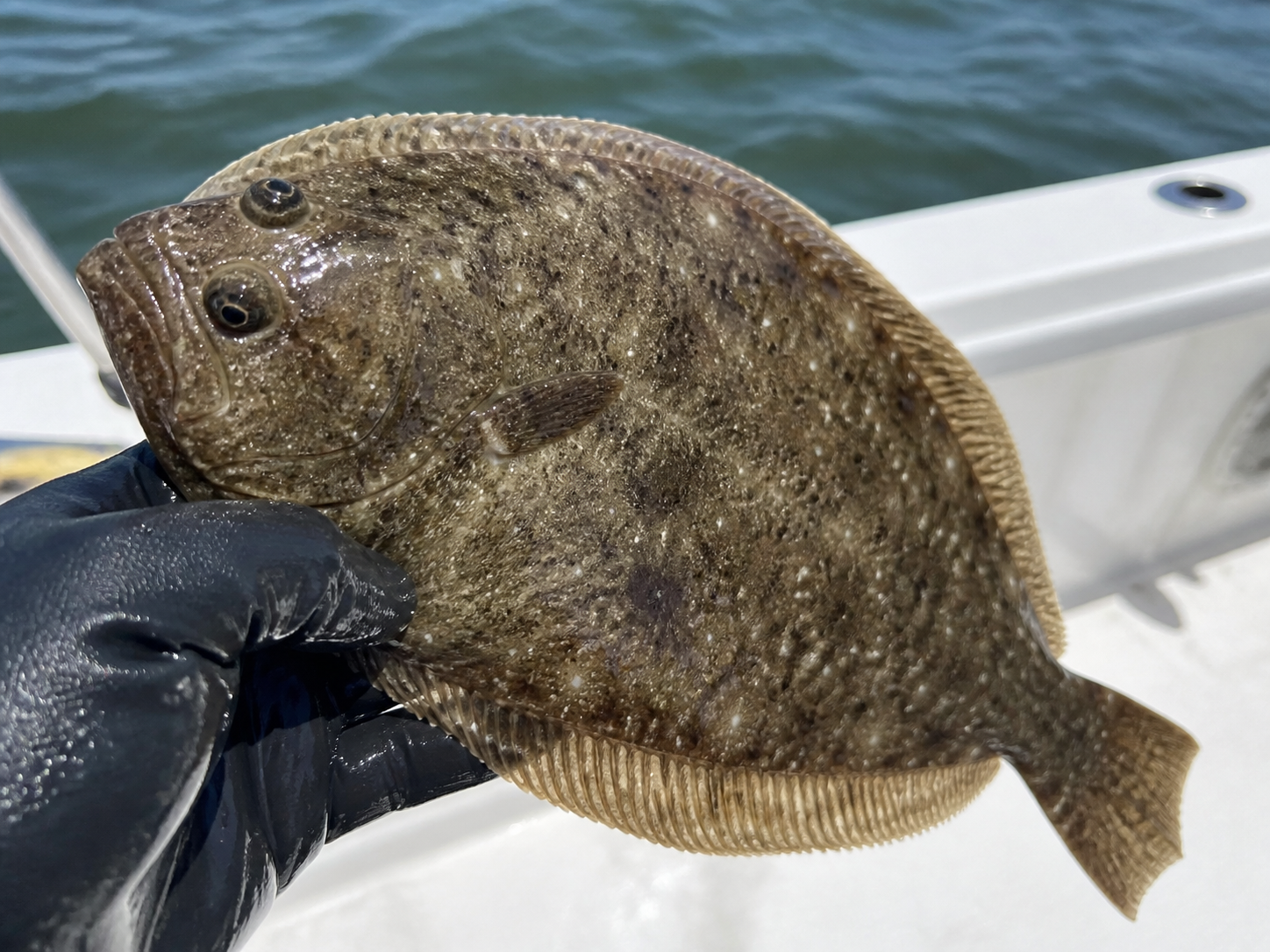
Flounder (Paralichthys dentatus)
Few fish define Chesapeake Bay inshore angling quite like summer flounder. These left-eyed flatfish are the prize of bottom fishermen from the Lynnhaven River to the CBBT, offering both a worthy challenge and some of the finest white fillets in Virginia waters. Whether you’re drifting the flats behind Sandbridge or working a bucktail around the pilings at Little Creek, flounder deliver consistent action from late spring through the first chill of autumn.
Identification
Summer flounder are unmistakable once you know what to look for. Both eyes sit on the left side of a broad, oval body that can shift from sandy tan to mottled olive depending on the bottom they’re lying on. The blind side is chalk-white. Their mouth is surprisingly large and lined with well-developed teeth — these are active predators, not passive bottom-sitters. Most Chesapeake fish run 14 to 22 inches, but true “doormats” exceeding 24 inches and tipping scales past 6 pounds are caught every season around the CBBT and Rudee Inlet. The scientific name Paralichthys dentatus nods to those prominent teeth. Don’t confuse them with southern flounder (Paralichthys lethostigma), which have fewer spots and are far less common in Virginia waters.
Habitat and Behavior
Flounder are masters of the ambush. They settle into sandy or muddy bottom, wiggle until partially buried, and wait for a meal to drift within striking range. Structure is everything — pier pilings, dock supports, channel edges, and the rock piles of the CBBT all concentrate flounder. In the lower Chesapeake, they move into the Bay’s river mouths and shallow flats as water warms in April and May, then stage around inlet areas and nearshore structure through summer before sliding back toward deeper ocean water in late fall.
The bite is distinctive: a flounder doesn’t grab and run. It inhales the bait, pauses to reposition, then swallows. Impatient anglers lose fish. Count to five — or even eight — after the first tap before lifting the rod. That pause is the difference between a landed flounder and a missed opportunity.
Fishing Techniques
Drifting live bait is the bread-and-butter approach on the Chesapeake. Rig a live mud minnow, spot, or small croaker on a Carolina rig with just enough weight to hold bottom, then drift across channel edges, flats, and around the CBBT rock islands. The moving presentation covers water and triggers strikes from fish that might ignore a stationary bait.
Bucktail jigging is the active angler’s game. A 1/4 to 3/8 ounce bucktail dressed with a Gulp! swimming mullet or strip of squid, bounced along the bottom near structure, is deadly. Work the pilings at Ocean View Pier, the rock edges of Rudee Inlet, and the channel drops off Buckroe. The key is keeping the jig in contact with the bottom — flounder won’t chase upward.
Kayak fishing has exploded in popularity around Lynnhaven and Back Bay. The shallow draft lets you slip into creek mouths and along marsh edges that powerboats can’t reach. Drift a live bait or work a jig along the grass line and you’ll find flounder stacked up in surprisingly skinny water.
Pier fishing at Ocean View, Buckroe, and the Virginia Beach Fishing Pier produces flounder all summer. Fish the down-current side of pilings with live bait or jigs. The shadow line where structure meets open bottom is the strike zone.
Baits and Lures
Live mud minnows are the undisputed champion — available at every tackle shop from Hampton to Virginia Beach. Hook them through the lips on a Carolina rig or jig head. Live spot and small croaker (2-4 inches) are the ticket for bigger fish, especially around the CBBT in late summer. Gulp! swimming mullet in chartreuse, new penny, and white dominates the artificial category. Bucktail jigs tipped with squid strip or cut bait add bulk and scent. Squid strips alone are a reliable backup, especially for smaller fish.
Tackle Recommendations
- Rod: 6.5–7.5 foot medium-action spinning rod
- Reel: 2500–4000 size spinning reel with 10–15 lb braid
- Leader: 20–30 lb fluorocarbon (flounder teeth abrade lighter leaders)
- Jig head: 1/4–3/8 oz depending on depth and current
- Hook: 2/0–3/0 Kahle or circle hook for live bait; jig head hook for plastics
Best Times and Locations
Flounder season in Virginia runs May through October, with peak action in August and September. The lower Chesapeake Bay is the heart of the fishery. The CBBT rock islands and adjacent channels hold fish all season. Rudee Inlet and the nearshore structure off Virginia Beach produce larger flounder, especially on outgoing tides. Lynnhaven Inlet and the surrounding creek mouths are kayak-friendly and consistently productive. Sandbridge and Back Bay offer excellent drift-fishing over expansive flats. Buckroe Pier and Ocean View Pier are reliable shore-based options. The Eastern Shore side — particularly around Kiptopeke and the concrete ships — is underrated and worth exploring. Fish moving water; slack tide kills the flounder bite.
Regulations
Summer flounder in Virginia are managed by the VMRC. The recreational limit is 4 fish per person per day with a 17-inch minimum total length. The season operates by proclamation and may include closures — always verify current VMRC regulations before heading out. Flounder management is responsive to annual stock assessments, so size and creel limits can shift. The fishery is healthy and well-managed, and the table quality of a fresh Chesapeake flounder is worth every minute spent on the water.