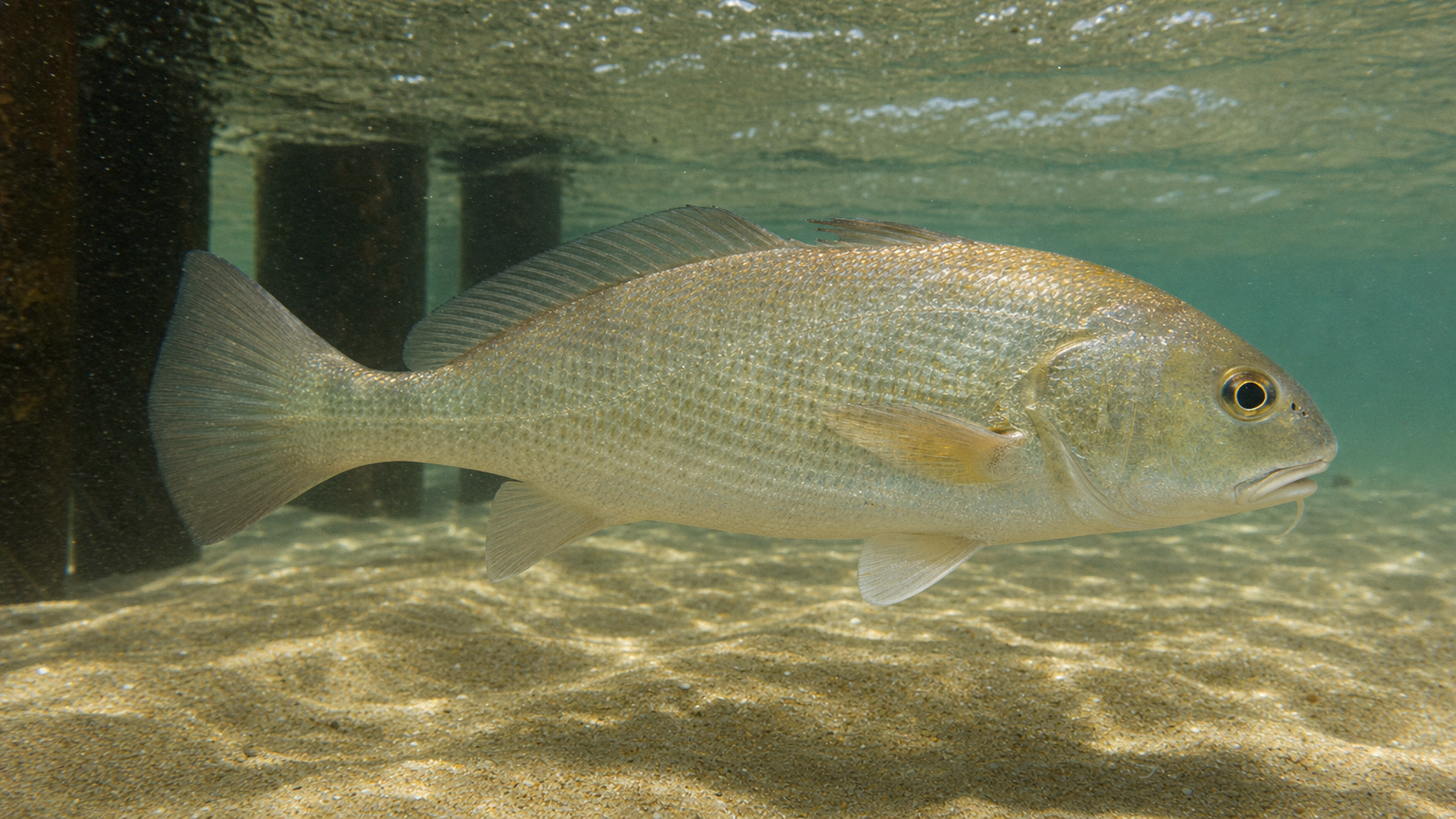
Atlantic Croaker
Identification
Atlantic croaker belong to the drum clan and are among the most dependable catches for Virginia pier and surf anglers. Most run 10–18 inches and weigh up to 2–3 pounds, though the typical fish is closer to 10–14 inches. The body is moderately elongated with a silvery-bronze sheen that often carries a pinkish or golden blush along the sides. The back is darker with subtle vertical mottling, and the underside is white. Three to five pairs of tiny chin barbels are the giveaway — spot have none, making this the quickest way to tell the two apart. Croaker earn their name honestly: muscles vibrate against the swim bladder to produce a distinct grunting sound when the fish is handled. A faint dark mark sits at the pectoral fin base, though it’s less conspicuous than the bold spot on a spot.
Habitat and Behavior
Croaker occupy the coastal strip from New England to the Gulf. They’re bottom-oriented fish that favor mud and sand substrates in shallow bays, estuaries, and the surf zone. Those chin barbels function as sensory probes, helping them detect worms, tiny crabs, and mollusks hidden in the sediment. Croaker travel in schools, frequently mixing with spot, pigfish, and other small drum. They handle wide swings in salinity and temperature without issue. In Virginia, croaker push into the lower Bay and along the ocean beaches in late spring, staying abundant through summer before shifting offshore and southward as autumn cools the water.
Fishing Techniques
The same bottom rig that catches spot works for croaker. A two-hook setup with small hooks — size 4 to 2 — fished on the bottom with 1–2 oz of lead depending on current. Croaker mouths are slightly larger than spot mouths, so you can scale up hooks and bait pieces a notch. Float rigs fished close to pier legs or along the surf edge produce when crabs and skates are stealing baits off the bottom. Light spinning gear in the 8–15 lb range is perfect for these modest-sized fish. Some anglers tip tiny jigs or spec rigs with shrimp or squid and bounce them along the bottom — more active than waiting for a rod-tip tap and often more productive.
Baits and Lures
Bloodworms and Fish Bites are the top producers, same as for spot. Squid strips are excellent — the rubbery texture survives repeated pickups and croaker seem genuinely attracted to the taste. Fresh shrimp pieces work. Use slightly larger bait chunks than you would for spot. Tipping a small jig with a sliver of shrimp or squid and working it slowly across the bottom can outfish stationary rigs when fish are scattered.
Best Times and Locations in the Chesapeake Bay
Croaker show up in Virginia waters during late spring (May–June) and stay thick through October. July and August are peak months. The Virginia Beach Fishing Pier and Ocean View Fishing Pier produce consistently all summer and into fall. The surf from Sandbridge up to Fort Story holds croaker, especially near inlet mouths and in the wash zone just beyond the breakers. Rudee Inlet and the CBBT area are strong producers. The lower Bay around Kiptopeke and the Eastern Shore channels hold fish through summer. Croaker bite best on slack tide and during the first hour of the incoming. Night sessions from piers often yield the largest fish, as bigger croaker move shallow under cover of darkness.
Regulations
Atlantic croaker are managed by the ASMFC and VMRC. Virginia has no closed season and no minimum size. The recreational daily bag limit is 50 fish per person, combined with spot and other unregulated sciaenids. Always verify current VMRC rules before fishing — management measures can change.