Conchs and Whelks
Identification
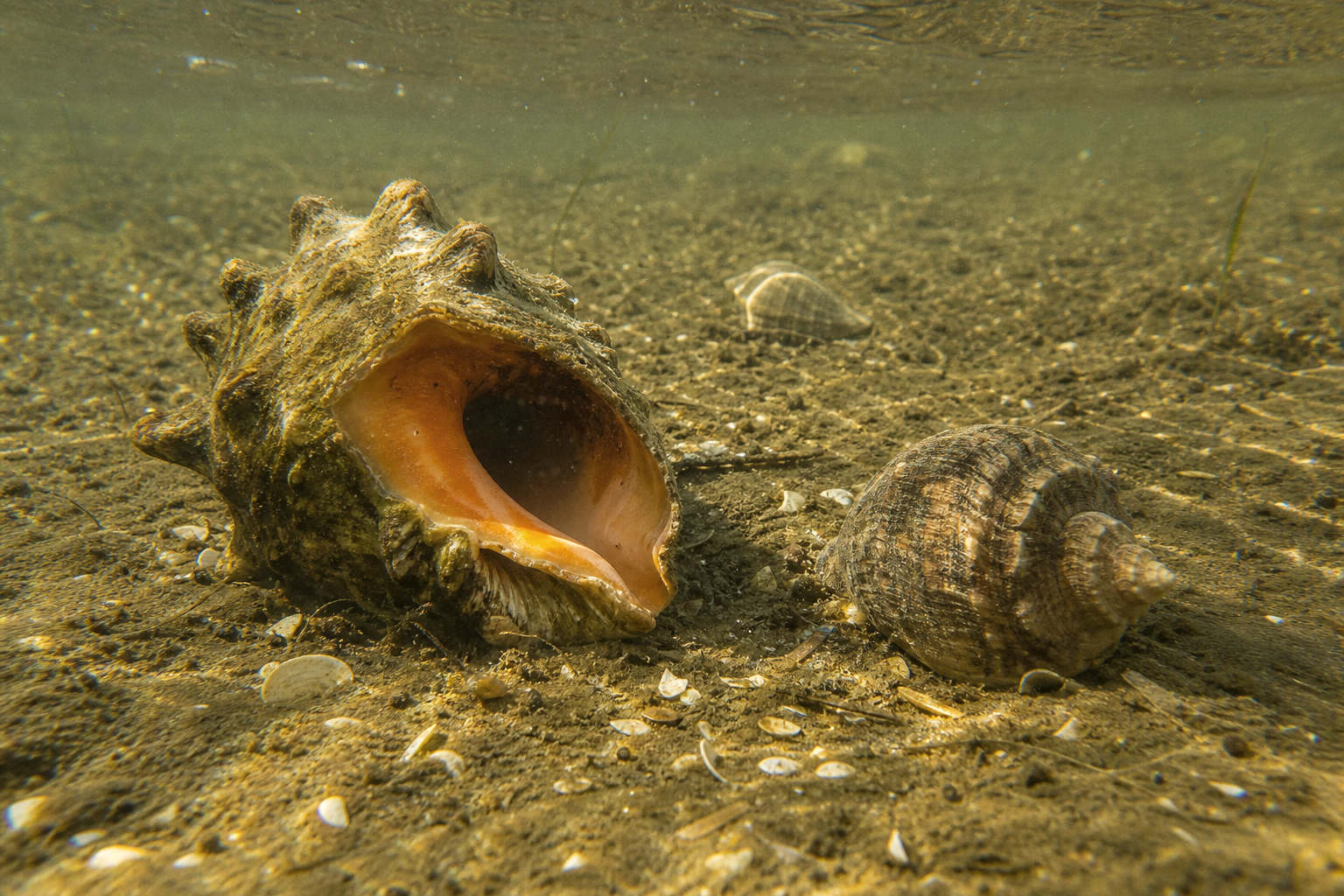
Three sizable gastropod species prowl the bottom of the lower Chesapeake, all lumped under the names whelk or conch. The knobbed whelk (Busycon carica) is the one you’ll see most often — a thick, cream-to-gray shell studded with blunt knobs along the shoulder of each spiral, reaching 6–9 inches. The channeled whelk (Busycotypus canaliculatus) wears a smoother exterior with a pronounced groove tracing the whorl and grows past 7 inches. The lightning whelk (Busycon sinistrum) is the least common of the trio, identifiable by its left-handed (sinistral) coiling and, on younger shells, a jagged lightning-bolt design. All three are active hunters equipped with a muscular foot for gripping prey and a proboscis that drills through clam and oyster shells. The meat inside is dense and pleasantly chewy — ideal for chowder, fritters, or Italian-style scungilli.
Habitat and Behavior
Whelks roam sand and mud-sand flats, hunting bivalves by sense of smell. They pin a clam or oyster with their foot, then deploy a file-like radula to bore a neat hole through the shell and extract the soft animal within. In the lower Bay, they inhabit deeper channels, the sandy expanses off the Eastern Shore, and the nearshore ocean floor. They concentrate where shell hash and firm sand meet — places where clams are plentiful. Cooler months bring increased activity; summer heat drives them into deeper water. Bottom fishermen regularly haul up whelks that have clamped onto a baited hook resting on the substrate. The flat, papery egg-case chains that litter Virginia Beach after storms — the “sea necklaces” kids collect — are whelk spawn, each disk containing dozens of developing embryos.
Harvesting Techniques
Conch pots are the workhorse method. These wire or wood traps, baited with horseshoe crab (the undisputed champion whelk attractant), fish racks, or mullet chunks, are set in channels and on sand flats in 5–20 feet and left to soak for a day or two. Whelks crawl through funnel entrances and can’t find their way out. Without pots, hand-collecting at low tide on exposed sand flats works, especially after storms when whelks get displaced. Hook-and-line bycatch is common — any bottom rig baited with squid or cut bait left on the sand will eventually attract a whelk. Some dedicated harvesters leave heavily weighted rigs on the bottom overnight and check them at first light.
Best Times and Locations in the Chesapeake Bay
Whelks are present year-round but are most accessible from October through May when cooler water keeps them active in shallower zones. The deeper channels of the lower Bay — particularly the areas off Kiptopeke and around the CBBT — are productive for potting. The sandy flats off the Eastern Shore from Cape Charles up toward Oyster hold good numbers. The nearshore ocean bottom off Sandbridge and False Cape in 20–40 feet produces whelks. After a strong nor’easter, walk the Bay-side beaches and inlet shorelines — displaced whelks often litter the tide line. The strand from Little Creek to Ocean View is a reliable post-storm collecting ground.
Regulations
Whelks face lighter regulation than oysters and clams in Virginia. No specific recreational bag limit exists, though standard VMRC shellfish rules apply. Commercial conch potting requires a valid Virginia commercial fishing license, and gear must meet specifications. Some species may carry minimum size thresholds — verify with VMRC. Never harvest from waters under shellfish sanitation closures. Leave egg-case strings on the beach or return them to the water if they’re still alive; each one represents the next generation.