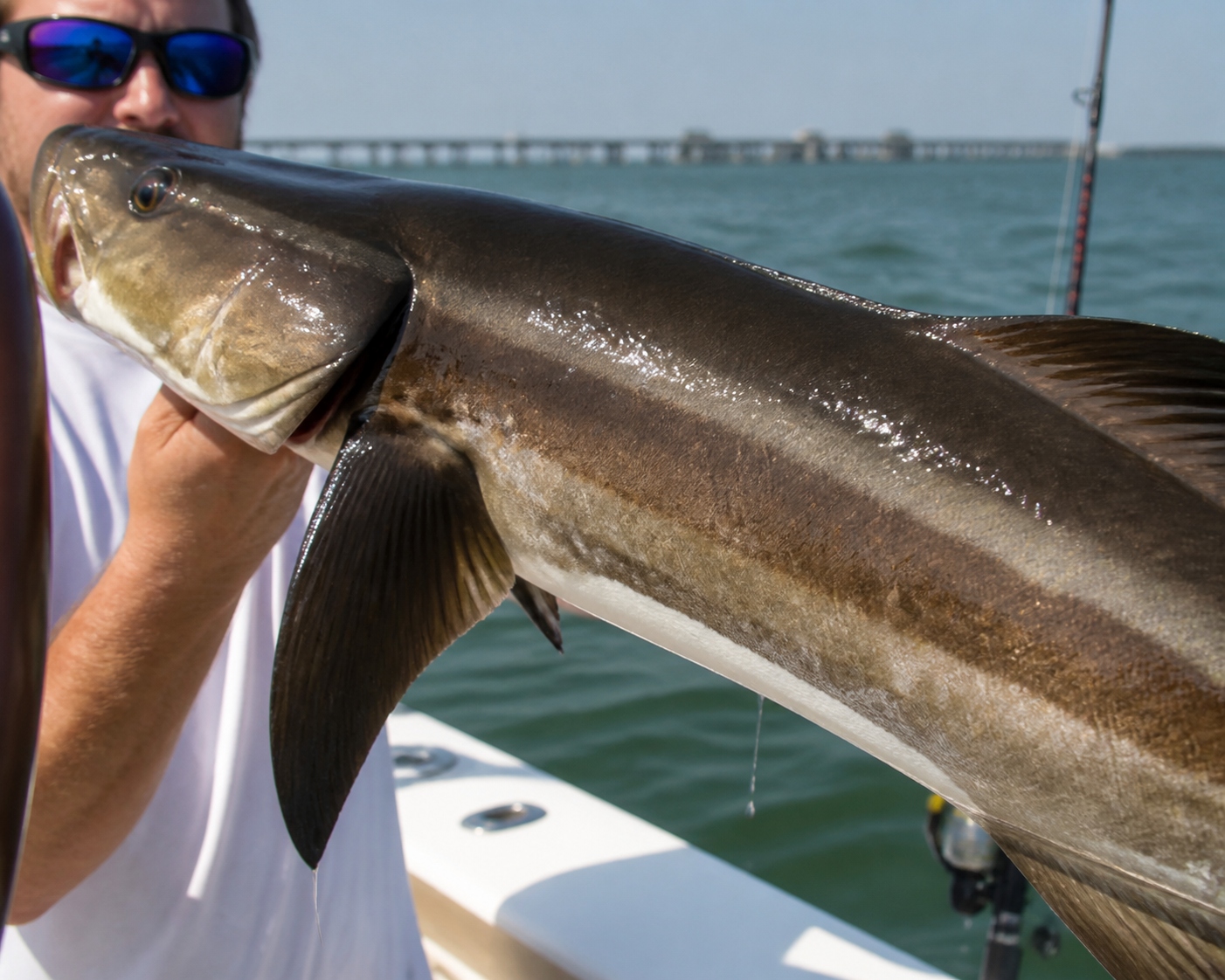
Cobia
Cobia are the heavyweight attraction of the Chesapeake Bay summer fishery — a fish that combines the visual thrill of sight-casting with brute-force fights and some of the finest fillets in the ocean. Each May, these brown-and-cream migrants push into Virginia waters, and for the next four months, they dominate the conversation at every tackle shop and boat ramp from Rudee Inlet to Kiptopeke.
Identification
A cobia looks like a cross between a shark and a catfish, and that’s meant as a compliment. The body is long and cylindrical, the head is broad and flattened, and the back is a rich chocolate brown that fades to cream along the sides and pure white underneath. A dark horizontal stripe runs from behind the gill plate to the base of the tail. When seen from a tower or bridge, their dark silhouette and steady cruising gait regularly get them mistaken for sharks. Chesapeake cobia commonly run 30–60 pounds, with fish cracking 80 pounds weighed in each season. They stand alone taxonomically — the sole member of Rachycentridae, more closely allied to remoras than to jacks, though they lack the remora’s suction pad.
Habitat and Behavior
Cobia arrive in the lower Bay in late May, triggered by water temperatures crossing 68°F. They’re drawn to vertical structure like a magnet: the CBBT’s rock islands, channel marker buoys, wreck sites, and reef modules all attract and hold fish. They also patrol sandbars, shoals, and inlet mouths, often in pairs or trios. Cobia are famous for their surface-cruising habit — on flat-calm days, you can spot them swimming just beneath the surface, making them one of the few large game fish regularly taken by sight-casting. When hooked, they make powerful, sustained runs and frequently launch clear of the water. They also shadow rays and sharks, picking off crabs and baitfish disturbed by the larger animal’s passage.
Fishing Techniques
Sight casting is the pinnacle. From a tower boat or elevated platform, scan for cruising fish, then lead them with a bucktail jig or live bait. A 2–4 oz bucktail in white or chartreuse with a soft plastic trailer is the standard sight-casting weapon. Pier and bridge fishing from the CBBT, the Virginia Beach Fishing Pier, and the Ocean View Pier produces cobia during late spring and early summer. Anglers use heavy rods with live eels or large jigs. Bottom fishing around reefs and wrecks with live croaker, spot, or crab on a fish-finder rig is effective when fish aren’t visible on the surface. Trolling with large surgical tube lures or live eels around structure and inlet mouths can produce when sight-casting conditions are poor.
Baits and Lures
Live eels are the gold standard cobia bait in Virginia waters. Fish them on a fish-finder rig or under a float — eels are available at most Hampton Roads tackle shops during cobia season. Live croaker and spot are excellent bottom-fishing baits on 7/0–9/0 circle hooks. Blue crabs, fished live on a bottom rig, are a natural cobia food source. Bucktail jigs of 2–4 oz in white, chartreuse, or pink with a swimbait trailer are the top artificials. Large soft plastic eel imitations and swimbaits in the 6–10 inch range also produce.
Tackle Recommendations
- Rod: 7-foot medium-heavy to heavy spinning or casting rod for sight-casting; 7–8 foot heavy rod for pier and bridge fishing
- Reel: Spinning or conventional reel with 30–50 lb braid and a smooth, strong drag
- Leader: 50–80 lb fluorocarbon or monofilament leader
- Hook: 7/0–9/0 circle hook for live bait; 5/0–7/0 for jigs
Best Times and Locations in the Chesapeake Bay
Cobia season runs from late May through September, with the peak in June. The CBBT is the region’s premier cobia destination — the rock islands, the high-rise section, and the navigation buoys marking the shipping channel all hold fish. The waters off Kiptopeke and the Eastern Shore from Cape Charles to Oyster are productive. The Virginia Beach oceanfront, particularly around the Rudee Inlet area, produces cobia during the migration. The Chesapeake Light Tower and nearby wrecks hold fish through summer. Charter boats out of Rudee Inlet, Lynnhaven, and Little Creek run dedicated cobia trips during the season.
Regulations
Cobia are managed by both federal and state regulations. In Virginia, the recreational bag limit is 1 per person per day with a minimum size of 40 inches total length. The commercial fishery has separate regulations. Seasons may be subject to closure based on quota — always check current VMRC regulations before fishing. Cobia are a managed species, and compliance is essential for the health of the fishery.
Cobia fishing in the Chesapeake Bay is a bucket-list experience. The combination of sight-casting excitement, brutal fights, and exceptional table fare makes cobia one of the most rewarding species to target in Virginia waters.