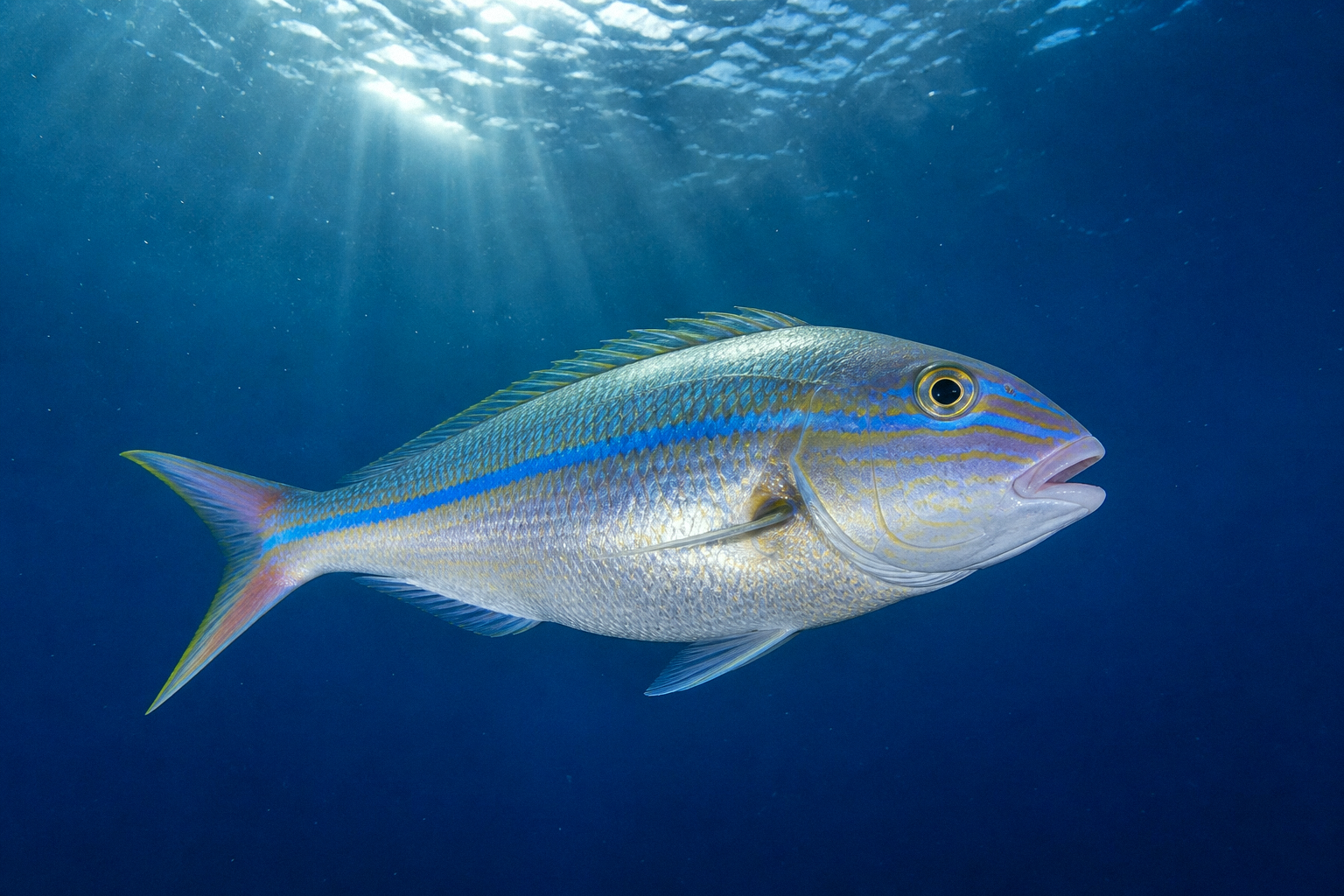
Blueline Tilefish
Identification
Blueline tilefish have an elongated, somewhat flattened body with a grayish-olive back and a distinctive blue stripe that runs from the snout through the eye and along the body — the feature that gives the species its name. The head is relatively small with a blunt snout and a small, slightly underslung mouth. The dorsal fin is long and continuous, and the tail is truncate (square-cut). The body is covered in small, rough scales. Virginia fish typically run 3–8 pounds, with 15-pounders possible on deep structure. The flesh is firm, white, and exceptionally good eating — often compared to lobster or crab in flavor.
Habitat and Behavior
Blueline tilefish are deep-water bottom dwellers that inhabit the continental shelf edge in 200–500 feet of water. They excavate burrows in the muddy or sandy substrate along the slope and are often found in loose aggregations around deep ledges, canyon walls, and hard-bottom patches. They feed on small fish, squid, crustaceans, and worms near the bottom. Blueline tilefish are relatively sedentary, staying close to their burrows, which makes them vulnerable to overfishing once a productive area is discovered.
Fishing Techniques
Deep-drop bottom fishing is the standard method. A two-hook bottom rig with 12–24 oz of lead, 50–80 lb braided line, and 50–80 lb fluorocarbon leaders is lowered to the bottom over deep structure. Circle hooks in the 5/0 to 8/0 range baited with squid or cut fish are standard. Electric reels make the deep-drop work manageable for recreational anglers — hand-cranking 400 feet of line with heavy lead is exhausting. Once you locate fish, stay on the spot; tilefish tend to concentrate in specific areas. A fishfinder with good bottom discrimination is essential for identifying the mud-and-rubble habitat that tilefish prefer.
Baits and Lures
Squid is the universal tilefish bait — whole small squid or large strips stay on the hook during long drops and release scent effectively at depth. Cut fish strips (spot, croaker, menhaden) and sardines also produce. Clam strips are an underrated option. Tilefish are not typically targeted with artificial lures, though butterfly jigs worked near the bottom over deep structure can draw strikes.
Best Times and Locations off Virginia Beach
Blueline tilefish are available year-round but are most actively targeted from May through October when sea conditions are favorable for deep-drop fishing. They hold along the continental shelf edge in 200–500 feet, typically 30–50 miles offshore from Rudee Inlet and the CBBT. The Norfolk Canyon area and the deep ledges along the 50–100 fathom curve are the primary locations. Charter boats running deep-drop trips from Rudee Inlet and Lynnhaven target tilefish alongside snowy grouper and other deep-water species.
Regulations
Blueline tilefish are managed by the South Atlantic Fishery Management Council. The minimum size is 14 inches total length with a daily bag limit of 3 fish per person. The season is open year-round. As with all deep-water species, verify current SAFMC and VMRC regulations before fishing, as management measures can change.