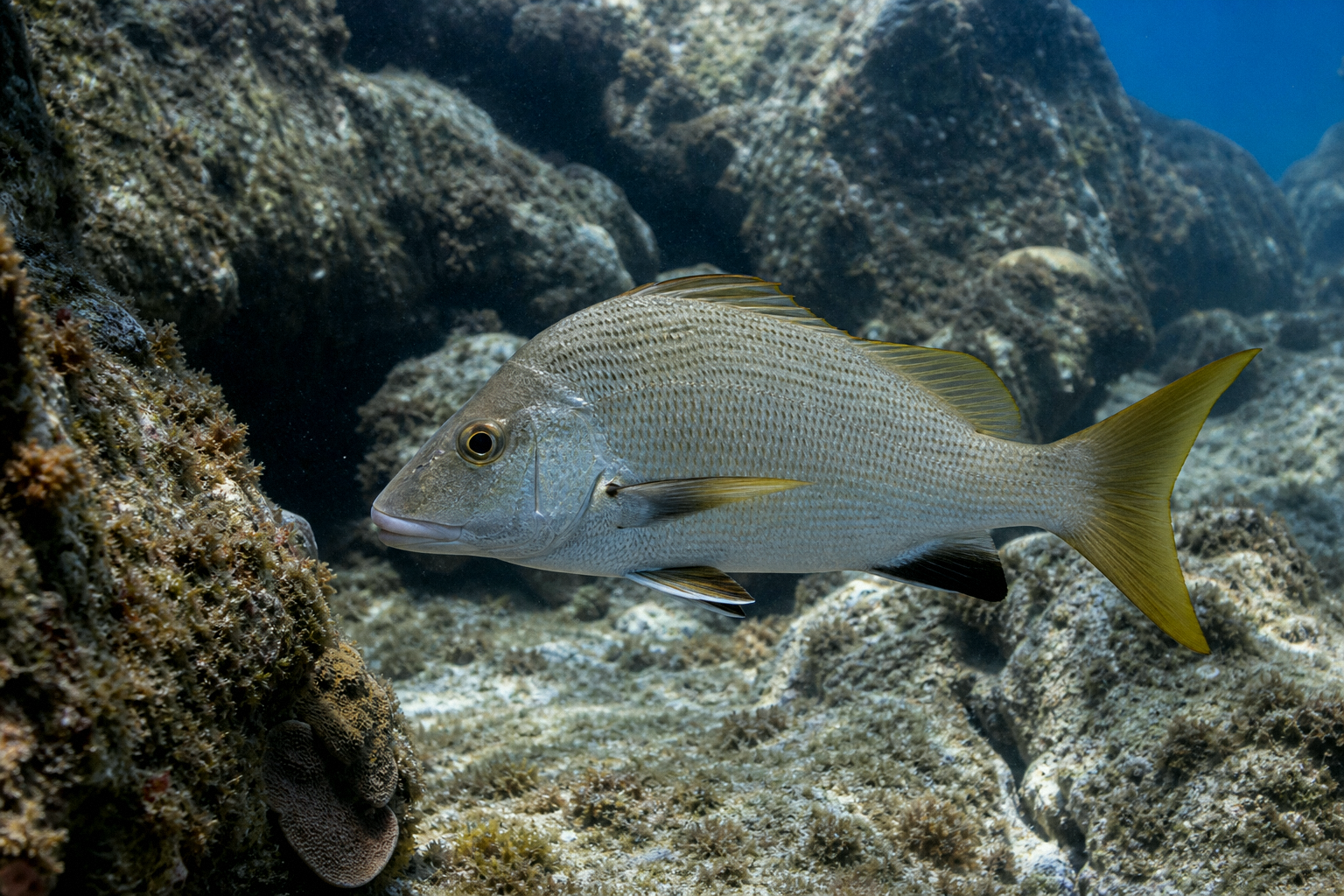
Blackfin Snapper
Identification
A blackfin snapper coming over the rail is a splash of tropical color in the Mid-Atlantic — the body glows reddish-orange, deepening to crimson along the back and softening to pink on the belly. The namesake mark is a jet-black crescent sitting at the upper insertion of the pectoral fin, visible even in low light. The silhouette is moderately streamlined with a forked caudal fin and a relatively large eye suited to the dim depths where these fish live. Virginia specimens typically weigh 2–8 pounds, though deeper water yields larger individuals. They’re encountered far less often than vermilion snappers, so a blackfin in the box always draws attention at the cleaning table.
Habitat and Behavior
These snappers occupy the deep edge of the continental shelf, holding in 200–400 feet of water — considerably deeper than the reefs where vermilions and red snappers congregate. They associate with rocky ledges, hard-bottom patches, and the scattered wreckage that dots the shelf break. Blackfins don’t form the dense, competitive schools that beeliners do; they’re more solitary or travel in loose handfuls. Their menu consists of small fish, squid, and bottom-dwelling crustaceans. Because of their depth preference, they’re almost never targeted deliberately — they show up as welcome bycatch on trips aimed at snowy grouper, tilefish, and other deep-water residents.
Fishing Techniques
The only practical approach is deep-drop bottom fishing. Standard rigs carry 8–16 oz of lead, 50–80 lb fluorocarbon leaders, and circle hooks from 4/0 to 6/0, baited and sent to the substrate over structure identified on the sounder. Electric reels transform this from a grueling workout into a manageable technique for recreational anglers. Since blackfins share habitat with deep-water groupers, the same rigs that produce scamp and snowy grouper will pick up snappers when they’re present. Deep jigging with butterfly jigs in the 200–400g class, worked near the bottom over ledges, can trigger reaction bites from actively feeding fish.
Baits and Lures
Squid is the workhorse — cut strips and small whole squid hold up during the long descent and release scent effectively at depth. Sardine chunks and small whole-fish baits also produce. Butterfly jigs dressed in blue/silver or pink, in the 200–400g range, draw strikes when fish are aggressive. The same bait spread used for deep grouper and tilefish will catch blackfin snappers whenever they’re on the structure.
Best Times and Locations off Virginia Beach
Blackfin snappers are present year-round in deep water but see the most action from May through October when sea conditions favor deep-drop trips. They hold along the shelf edge in 200–400 feet — the same depth band that produces snowy grouper, scamp, and blueline tilefish. Deep ledges tracing the 50-fathom curve and the scattered wrecks offshore from Rudee Inlet and the CBBT are the primary locations. These fish are almost always incidental catches rather than a planned target.
Regulations
Blackfin snappers are managed under SAFMC authority. The minimum size is 12 inches total length. The recreational bag limit falls within the snapper aggregate — typically 10 snapper total per person daily across all snapper species. The season remains open year-round. As always, confirm current VMRC and SAFMC regulations before fishing.