Black Sea Bass
Identification
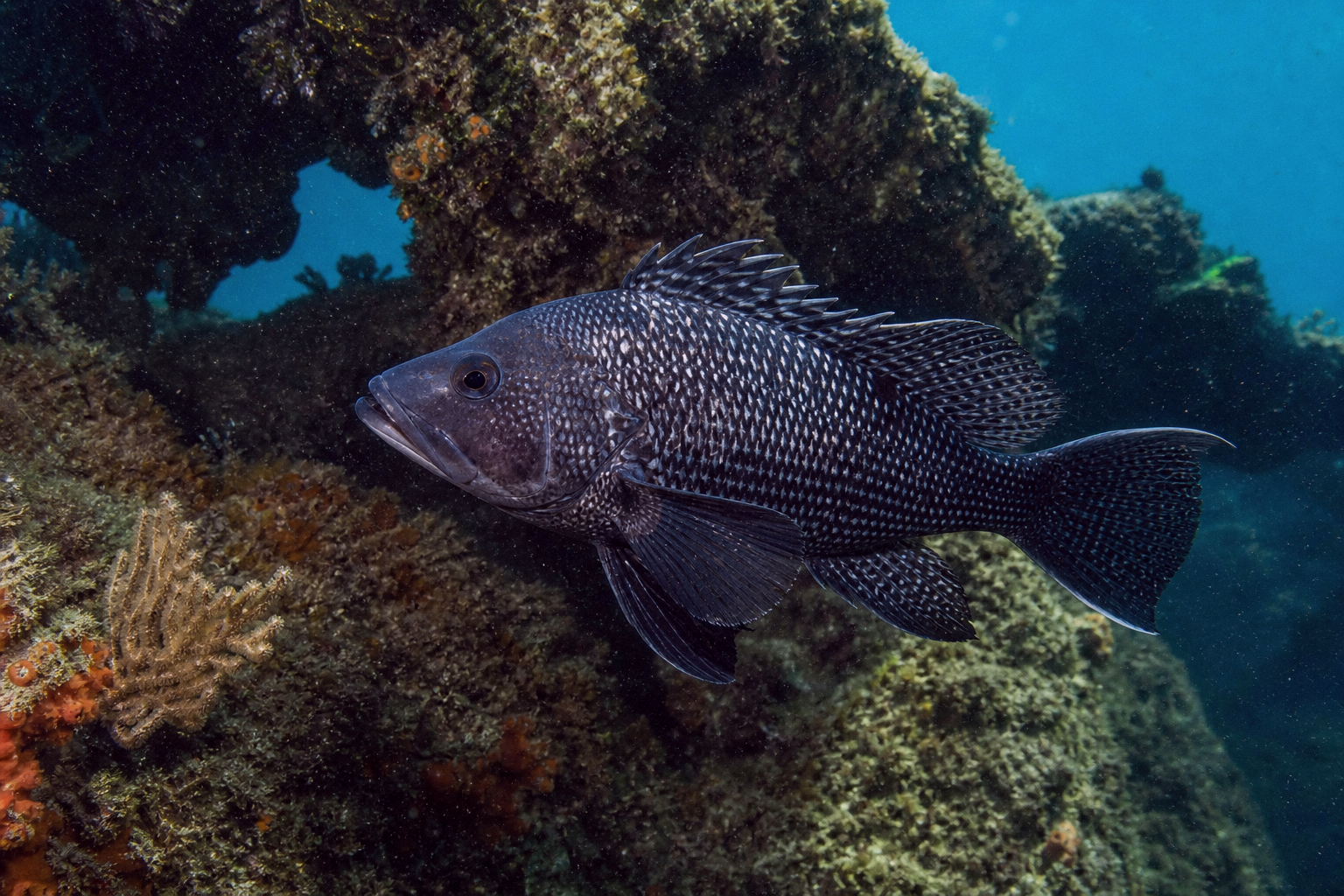
Black sea bass are chunky, muscular bottom fish built for life around structure. The profile is unmistakable: a humped back, a big mouth, and a row of needle-sharp dorsal spines. The base color runs from chocolate brown to bluish-black, often with irregular lighter patches and faint vertical banding. When spawning season kicks in, dominant males transform — their foreheads swell into an electric-blue hump and their coloration intensifies dramatically. The tail is rounded rather than forked, and the body is thick and meaty. Virginia fish typically weigh 1–3 pounds, with 5-pounders coming off deeper offshore wrecks. Every black sea bass begins life as a female and transitions to male as it grows — meaning the largest fish on any given piece of structure are almost certainly males.
Habitat and Behavior
These fish are structure specialists. They gravitate toward hard bottom, shipwrecks, artificial reef modules, and rocky ledges, pressing tight against cover and bursting out to ambush anything that drifts too close. Off Virginia, they occupy nearshore reefs within sight of the beach as well as deeper offshore wrecks 30-plus miles out. Spring brings a shoreward migration as the water warms, putting fish on close-in structure in 30–80 feet where small boats can reach them. By late autumn they retreat to deeper offshore wrecks for winter. Their diet spans small fish, squid, crabs, and marine worms — they’re aggressive and opportunistic.
Fishing Techniques
The standard Virginia approach is a two-hook chicken rig baited with squid or cut bait, fished on or near the bottom. A rod in the 30–50 lb class paired with a conventional reel loaded with braid gives you the sensitivity to detect subtle bites in deeper water. Drifting over hard bottom and reef complexes covers ground efficiently and helps pinpoint concentrations. Vertical jigging with metal or butterfly jigs produces quality fish on deeper wrecks where larger bass hold. Accept that you’ll lose tackle — sea bass live in and around sharp, snaggy structure that claims rigs regularly. Bring extra terminal gear.
Baits and Lures
Squid is the universal sea bass bait and rarely disappoints. Cut strips on a two-hook rig produce all day. Fresh cut spot, croaker, or menhaden also work. Bloodworms and sandworms entice larger, more cautious fish, especially on nearshore reefs. Gulp! shrimp and swimming mullets on jig heads are effective artificials, particularly when tipped with a small squid strip for scent. Small metal jigs and diamond jigs in the 2–4 oz range work for vertical presentations over deeper structure. The critical factor is keeping your offering on or near the bottom — sea bass rarely feed more than a few feet above the structure.
Best Times and Locations off Virginia Beach
Black sea bass are available from April through December, with May through October delivering the most consistent action. Nearshore reefs within 3–10 miles of Rudee Inlet and the CBBT are the most accessible grounds. The Tower Reef, the Navy Reef, and the various artificial reef sites off the Virginia Beach coast are well-known producers. Wrecks along the 20–30 fathom curve hold larger fish. Shore-based anglers occasionally pick up sea bass from the CBBT and the Rudee Inlet jetty during spring and fall transitions. Head boats out of Rudee Inlet and Lynnhaven run regular half-day sea bass trips.
Regulations
Virginia recreational regulations require a 13-inch minimum total length and a bag limit of 15 fish per person per day in state waters (within 3 miles). In federal waters (beyond 3 miles), the bag limit is 10 fish per person with a 12.5-inch minimum total length, but the recreational season may close during certain periods depending on annual harvest quotas. Always check current NOAA Fisheries and VMRC regulations before heading out, as federal season closures can occur with short notice. A Virginia recreational saltwater fishing license is required.