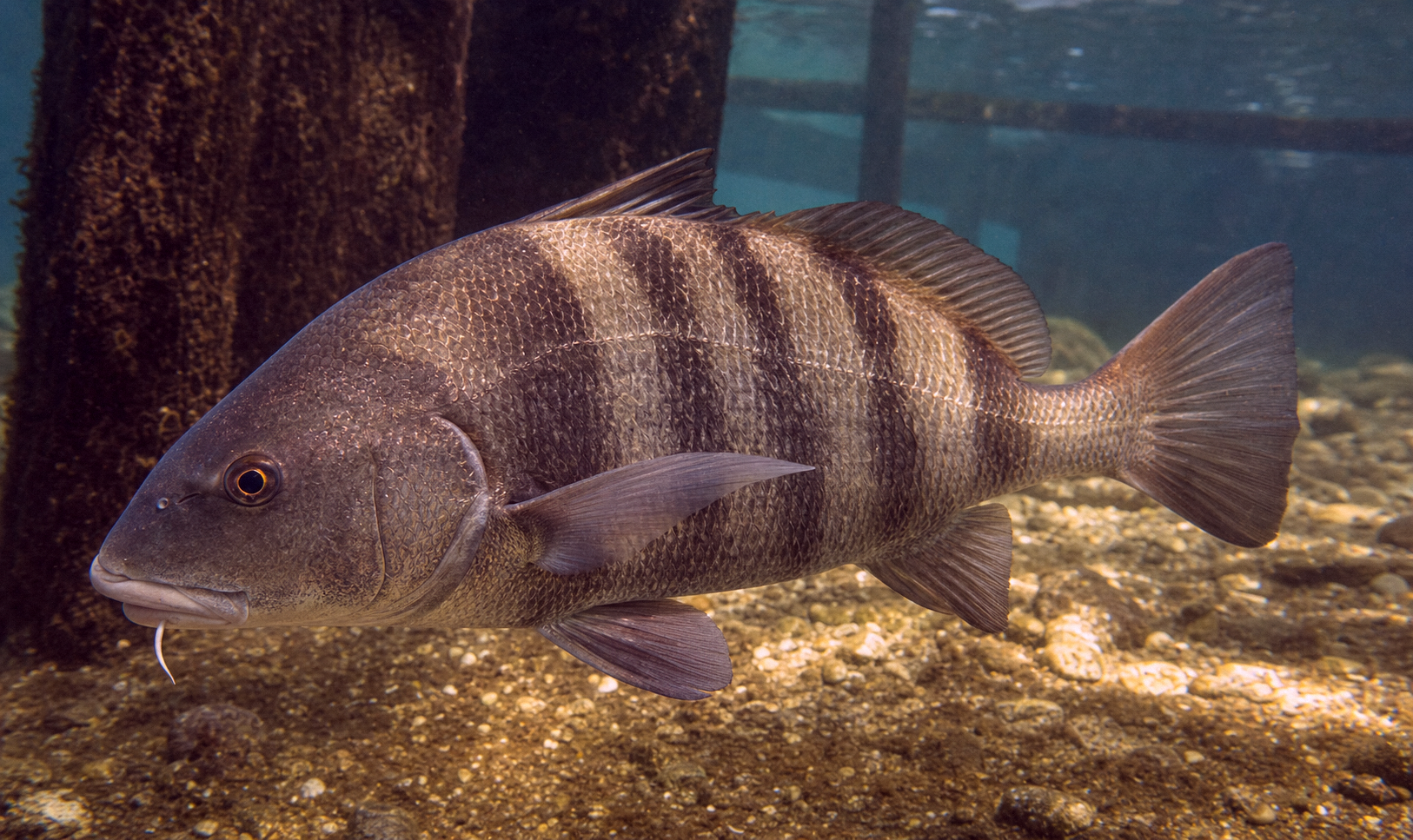
Black Drum
Identification
Black drum are the heavyweights of the drum family, capable of exceeding 100 pounds, though the fish most Virginia anglers encounter are juveniles in the 1–15 pound class. The body is deep and laterally compressed with a pronounced hump-backed profile. Adults wear a uniform dark gray to black coloration; juveniles — often called “puppy drum” — display bold vertical black bars on silver-gray flanks that disappear with age. The mouth is underslung and equipped with powerful pharyngeal teeth in the throat for crushing oysters, clams, and crabs. Short barbels on the lower jaw help locate prey buried in mud and sand. The chin lacks pores, distinguishing black drum from red drum.
Habitat and Behavior
Black drum are bottom-oriented fish that favor structure-rich environments: pier pilings, bridge abutments, jetty rocks, and oyster reefs. In the lower Chesapeake, they concentrate around the CBBT’s rock islands, the bridge-tunnel’s concrete supports, and the numerous artificial reefs. They feed by rooting through sediment, using their barbels to detect buried bivalves and crustaceans. Black drum are long-lived — fish over 40 years old have been documented — and they grow slowly after reaching maturity. They move between deeper Bay channels in winter and shallower structure in spring and fall.
Fishing Techniques
The standard Virginia approach is a fish-finder or Carolina rig with 1–3 oz of lead and a circle hook in the 1/0 to 4/0 range for puppy drum, scaling up to 4–6 oz and heavier leaders for larger fish around inlets. Black drum bites are famously subtle — the fish often picks up the bait, mouths it, and sits still before moving off. Anglers who strike at the first tap usually miss. Let the fish load the rod tip before setting the hook. Float rigs fished close to pier pilings and bridge supports produce well, especially when crabs are active around the structure. Night fishing with fresh bait on the bottom accounts for the largest drum.
Baits and Lures
Blue crab is the undisputed king of black drum baits in Virginia waters. A half-crab or cracked crab section on a bottom rig releases scent that drum find from a distance. Fresh surf clams and chowder clams are underrated but deadly, particularly around the CBBT. Shrimp works for smaller fish. Squid catches drum but is less selective. The common thread is fresh, natural bait with strong scent — black drum hunt by smell, and artificial lures are almost never effective. Cut bait is generally ignored.
Best Times and Locations in the Chesapeake Bay
Black drum are present from April through November, with spring (April–May) and fall (September–October) delivering peak action. The CBBT is the region’s premier drum destination — the rock islands and the high-rise section hold fish throughout the season. The Ocean View Fishing Pier and the Virginia Beach Fishing Pier produce puppy drum through summer. The surf at Sandbridge, particularly near Little Island, yields drum in the fall. The deeper channels around Kiptopeke and the Eastern Shore barrier islands hold large adults. Night fishing during a rising tide around structure is the most productive pattern.
Regulations
Virginia manages black drum through the VMRC. The minimum size is 14 inches total length with a daily bag limit of 10 fish per person. Only one fish over 25 inches may be retained per person per day, protecting the large breeding adults. There is no closed season. Always verify current VMRC regulations before fishing.