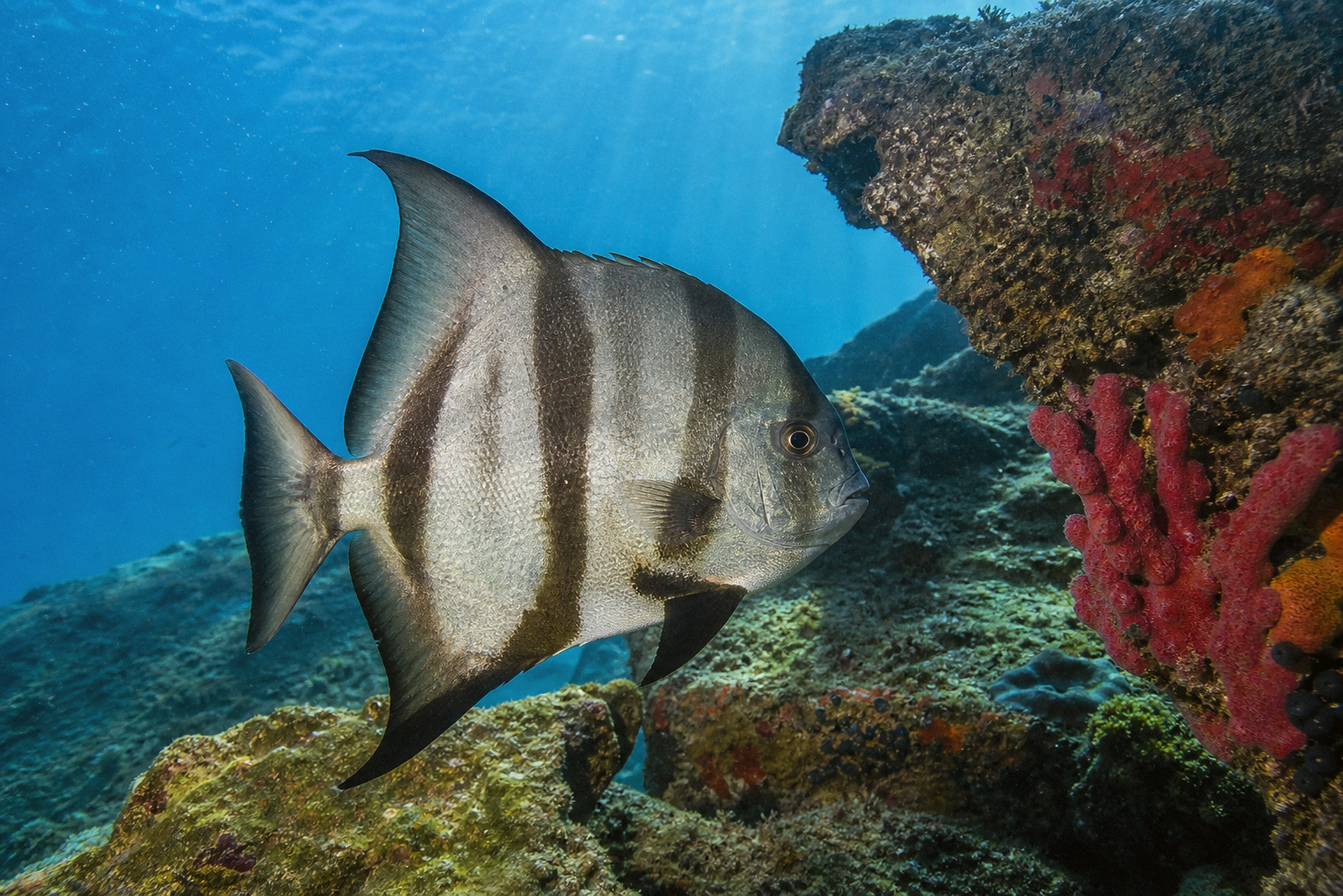
Atlantic Spadefish
Identification
Few fish in the lower Chesapeake look as unmistakable as the Atlantic spadefish. The body is a near-perfect disc — taller than it is long, laterally compressed to the thickness of a dinner plate. Silver dominates the coloration, with 4–6 bold black vertical bars that fade and intensify with the fish’s mood. The mouth is small and the snout blunt, giving the face an almost comical expression. Adults in Virginia waters commonly run 3–8 pounds, with double-digit fish possible around deep structure. The dorsal and anal fins are long-based and sweep back dramatically, reinforcing the spade-shaped silhouette.
Habitat and Behavior
Spadefish are structure-lovers through and through. Around the Chesapeake Bay mouth, they congregate on the CBBT’s rock islands, the numerous artificial reefs, and any wreck or navigation buoy that breaks the water column. They school tightly, often numbering in the dozens or hundreds, and hang suspended at mid-depth around vertical structure. Their diet is unusual — they feed heavily on gelatinous zooplankton, including small jellyfish, comb jellies, and sea squirts, though they’ll also take crustaceans and mollusks. Spadefish are curious by nature and will investigate anything drifting near their school, which makes chumming exceptionally effective.
Fishing Techniques
The classic Virginia approach is to anchor up-current of a known spadefish haunt — a CBBT rock island, a buoy, or a wreck — and deploy a steady chum line of ground clam and squid. Once fish rise into the slick, present small pieces of clam strip on a light Carolina rig or under a float. Keep the bait drifting naturally with the chum; spadefish will refuse anything that moves unnaturally. Light spinning tackle in the 10–20 lb class with 15–20 lb fluorocarbon leader is ideal. These fish fight far harder than their size suggests, using their broad bodies to bulldog against the rod. Small jigs tipped with clam or squid, bounced near structure, also produce.
Baits and Lures
Fresh clam strips are the gold standard — spadefish find them irresistible. Squid strips and small shrimp pieces work as backups. Some Virginia anglers swear by strips of cannonball jellyfish when they can find them, as this matches the spadefish’s natural forage. Small pieces are critical; spadefish have tiny mouths and will reject oversized offerings. For artificial enthusiasts, tiny epoxy jigs and Clouser minnows in white or tan, presented on a dead drift in the chum line, can draw strikes from pressured fish.
Best Times and Locations in the Chesapeake Bay
Spadefish arrive in June and stay through October, with July and August delivering the most consistent action. The CBBT is the region’s premier spadefish destination — the rock islands from the first island out to the high-rise section all hold fish. The artificial reefs off Virginia Beach (the Tower Reef, the Navy Reef) are productive. Navigation buoys marking the shipping channel into the Bay attract schools. The Chesapeake Light Tower and nearby wrecks hold larger specimens. Anchor up-current, start the chum, and wait for the silver discs to materialize out of the green water.
Regulations
Atlantic spadefish have no federal bag limit and no minimum size. Virginia state waters currently impose no additional restrictions, but always verify with VMRC before heading out. Spadefish are excellent table fare with firm, white fillets that hold up well to grilling or pan-searing.