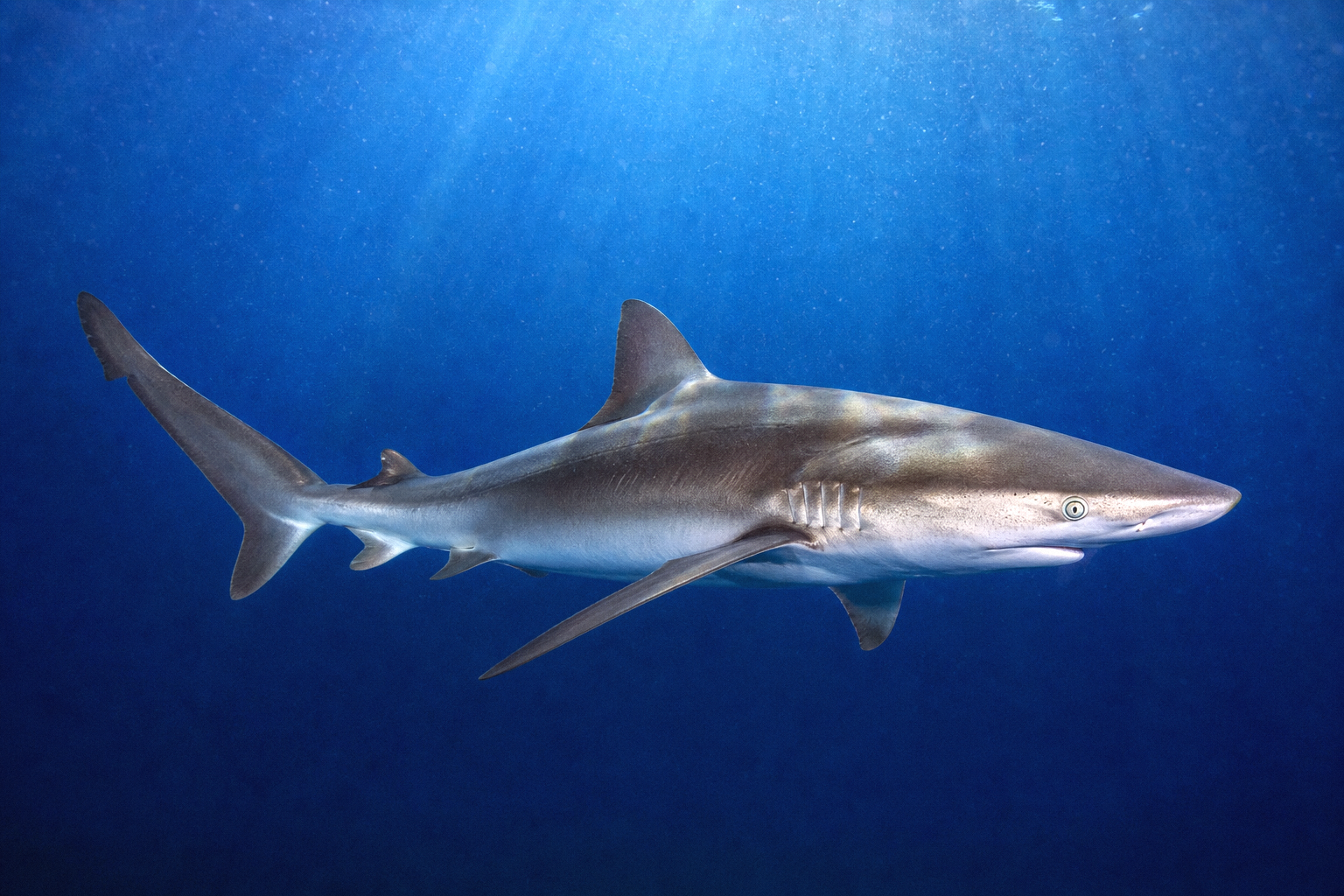
Atlantic Sharpnose Shark
Identification
The Atlantic sharpnose is the small requiem shark that Virginia Beach surf anglers encounter more than any other. Adults run 3–4 feet with a slender, almost delicate build. The dorsal surface is brown to grayish-brown, transitioning to white underneath, sometimes with faint white speckling along the sides. The snout is notably long and tapered — the feature that separates it from the similar blacknose shark, which carries a dark blotch on the nose tip. The first dorsal fin originates behind the pectoral fin bases. Juveniles display dusky edges on the dorsal and caudal fins that fade with age. The teeth are small and needle-like, designed for gripping small prey rather than shearing.
Habitat and Behavior
Sharpnose sharks patrol the shallow coastal band from the wash zone out to roughly 60 feet. They arrive off Virginia Beach in late spring and stay through early fall, concentrating in the troughs and sloughs between the beach and the outer bar. These sharks feed opportunistically on small fish, shrimp, crabs, and squid. Schools segregate by size and sex, with larger females often holding in slightly deeper water. Sharpnose are most active during nocturnal hours and around tide changes, when they push into the suds to ambush baitfish disoriented by breaking waves.
Fishing Techniques
Sharpnose sharks are the entry point for Virginia surf sharking. A medium-heavy surf rod of 8–11 feet paired with a 5000–6000 size spinning reel loaded with 20–30 lb braid handles them well. Rig a fishfinder with 4–6 oz of lead and a 40–60 lb monofilament or light wire leader. Cast into the slough just beyond the sandbar where sharks cruise the drop-off. Kayak deployment of baits is effective at Sandbridge and along the Fort Story beaches, letting you place offerings in deeper gutters beyond casting range. Fish the two hours flanking tide changes, especially at night. Rod tips in sand spikes need constant attention — sharpnose bites can be subtle, resembling skate or ray pickups.
Baits and Lures
Freshness matters above all else. Mullet chunks, spot fillets, and fresh squid are the top three. Bluefish strips and menhaden also produce when available. The key is bloody, oily bait that pumps scent into the wash. Keep pieces around 2 inches — sharpnose have small mouths. Live spot or mullet pinned on circle hooks works during daylight. Frozen bait that’s been thawed and refrozen loses its edge dramatically; fresh bait doubles your hookup rate.
Best Times and Locations off Virginia Beach
Sharpnose appear in late May and stay through October, with July and August delivering peak numbers. Sandbridge is the premier surf sharking beach in the region — the sloughs there hold fish consistently. The beaches from Little Island north to Dam Neck also produce. The Ocean View stretch and the surf near Fort Story have good trough structure. Fish dawn or dusk through midnight for the best action. Moderate surf with steady tidal flow creates ideal feeding conditions; flat-calm days often shut the bite down.
Regulations
Atlantic sharpnose sharks are managed by the VMRC and ASMFC. Virginia state waters have no closed season and no minimum size. The recreational bag limit is 1 shark per person per day, with a vessel limit of 1 sharpnose per vessel per day. All sharks must be landed with head, tail, and fins naturally attached. Practice catch-and-release whenever possible — use circle hooks to minimize gut-hooking, keep the shark in the water during release, and minimize handling time.