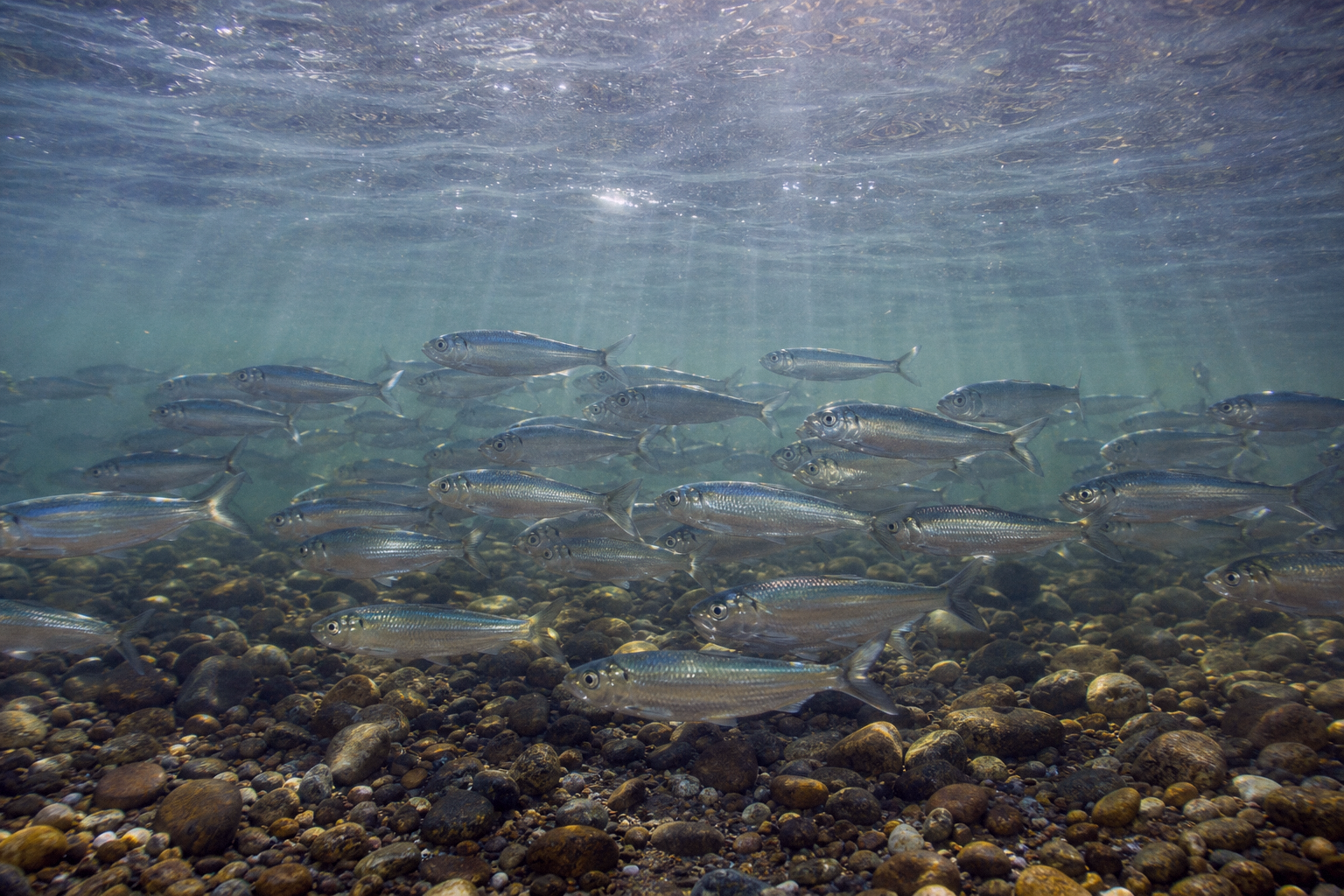
Alewife and Blueback Herring (River Herring)
Identification
These two anadromous clupeids are so alike that anglers lump them together as “river herring.” Both sport compressed silver flanks and deeply forked caudal fins, averaging 8–12 inches. Telling them apart takes a close look: alewives carry a proportionally larger eye — wider than the snout — while bluebacks show a deeper blue-gray dorsal surface and a smaller ocular diameter. The surest field mark requires opening the body cavity: alewives have a pale peritoneal lining, bluebacks a jet-black one. Neither species has the row of dark shoulder spots that mark the American shad.
Habitat and Behavior
River herring spend their adult lives roaming the Atlantic, then push into freshwater each spring to reproduce. In Virginia’s portion of the Chesapeake watershed, the spawning migration kicks off in March once water temperatures climb past 55°F. The James River, York River, and Nansemond River systems all receive substantial runs, as do smaller tributaries like the Pagan, Chickahominy, and Back Bay feeder creeks. Schools stack up at the heads of tide, funneling through narrow channels and culverts. Post-spawn adults exit quickly back to salt water, while young-of-year herring linger in the Bay’s brackish nursery zones through summer before heading seaward in autumn. These fish form the backbone of the forage pyramid — striped bass, bluefish, and red drum all key on herring schools throughout the Chesapeake.
Fishing Techniques
Cast nets dominate the herring fishery during the spring push. Anglers work creek mouths and bridge narrows where fish concentrate. Multi-hook sabiki rigs, tipped with tiny bits of yarn or fish skin, produce when schools hold in deeper channels. An old Tidewater trick is dip-netting at culvert crossings — herring bottleneck at these pinch points on their upstream journey. For bait collection, snagging with small treble hooks cast into visible surface schools works efficiently. Around the Lynnhaven Inlet and Rudee Inlet during coastal migration windows, fly anglers pick up herring on small white streamers and Clouser minnows.
Baits and Lures
River herring feed by straining plankton, so conventional hook-and-line baiting doesn’t apply. Their real value is as forage. Live herring drifted near the mouths of the James and York Rivers during April and May is premier striped bass bait. Cut chunks work for blue catfish and red drum in the Bay’s deeper channels. Frozen herring, stocked at tackle shops from Virginia Beach to Hampton, is a go-to for surf anglers working the Sandbridge and Buckroe beaches for drum and bluefish. The oily meat disperses scent effectively, though it’s slightly milder than menhaden.
Best Times and Locations on the Chesapeake Bay
The run peaks in March and April across the lower Bay tributaries. The James River near the Benjamin Harrison Bridge and the Chickahominy River confluence are traditional hotspots. The Nansemond River above Suffolk and its feeder creeks still see solid runs. Back Bay and its connecting ditches — particularly around False Cape — host smaller but fishable populations. For anglers using herring as bait for striped bass, the waters off Kiptopeke and the CBBT islands in April and May are the sweet spot. Bait shops throughout Hampton Roads carry frozen herring through the spring season.
Regulations
Atlantic coast river herring stocks have collapsed from historic levels, and Virginia enforces strict protections. In most Virginia inland and joint waters, possession of alewife and blueback herring is prohibited or tightly capped. The Virginia DWR and VMRC maintain moratoriums with limited open seasons in designated water bodies. Rules shift annually as managers evaluate population data. Always verify current regulations before retaining any river herring. Purchased frozen herring from licensed dealers is generally permissible, but wild-caught possession rules differ by water body and calendar date.